Archaeology Breakthrough Reveals 2,000 Year Old Ancient Egyptian Mummy Found to Be Expecting
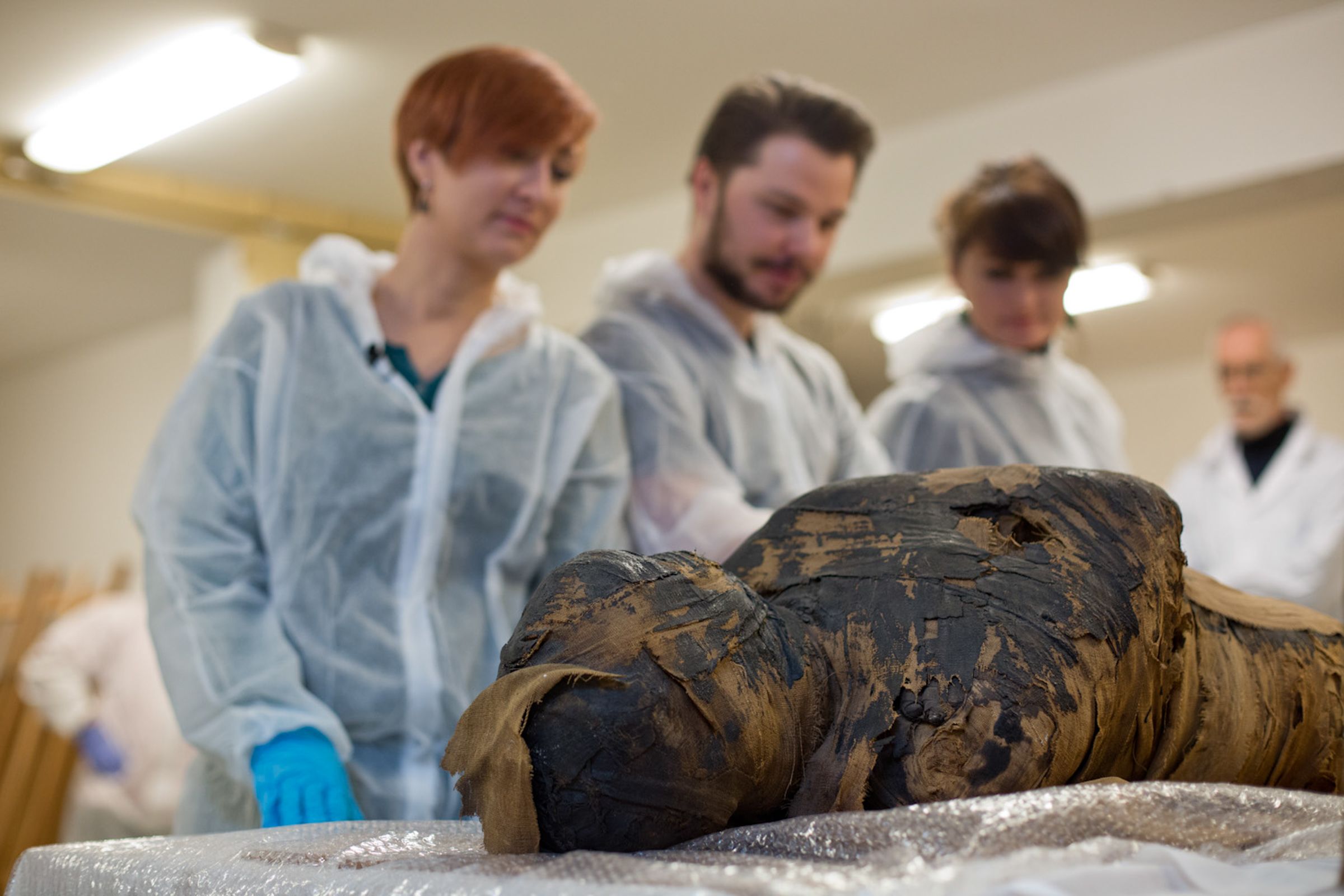
Archaeologists examining the remains of a 2,000-year-old Egyptian mummy were surprised to discover the embalmed woman had been expecting a child.
The woman is believed to have been no older than 30 when she passed away and was at least 28 weeks into her pregnancy. Archaeologists at the National Museum in Warsaw, Poland, announced the unexpected discovery this week, just five years after another major breakthrough was made. The first-century BC mummy has been in the museum’s collection since 1917, although until 2016 it was believed to belong to a man.
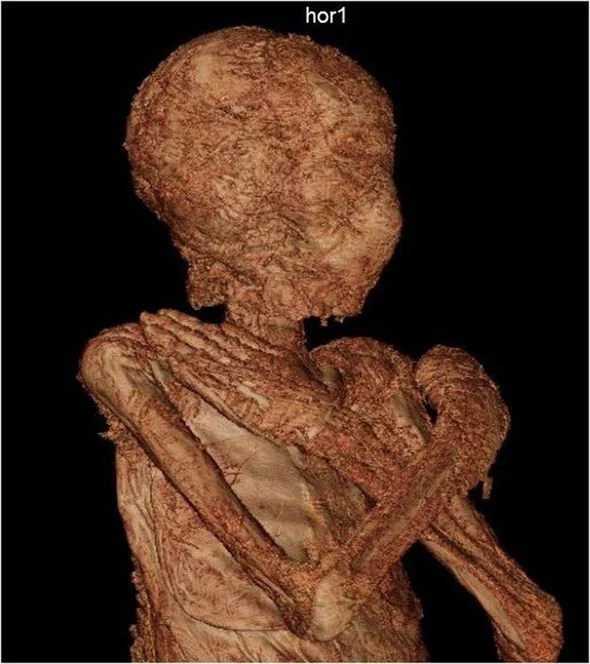
At the time, X-ray scans and 3D reconstruction of the embalmed body did not reveal a key anatomical detail typically associated with male remains.
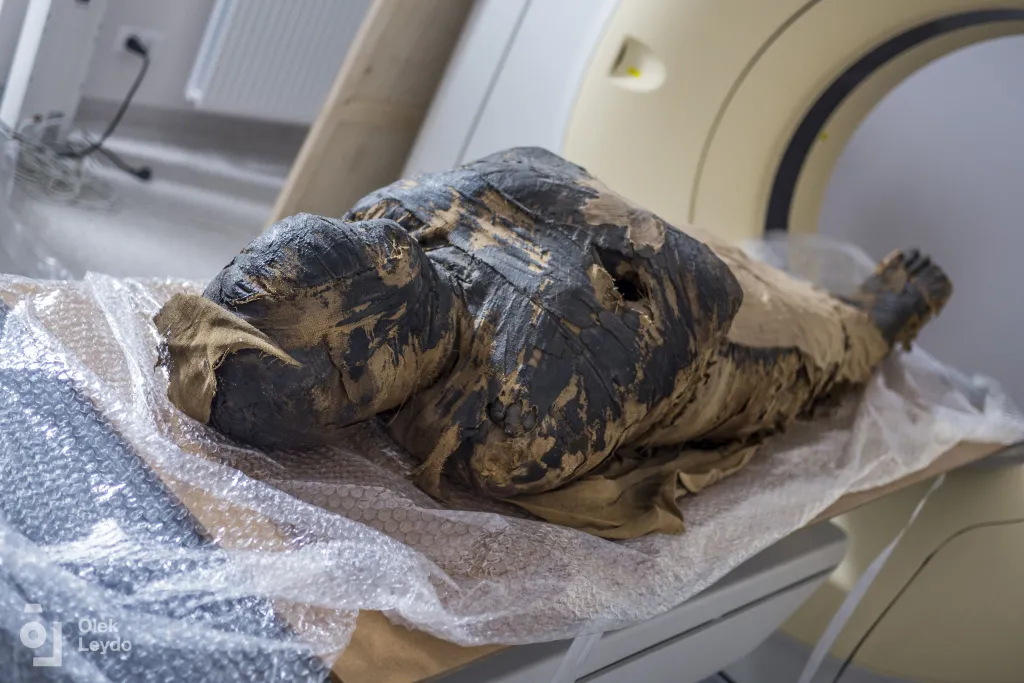
Dr Marzena Ożarek-Szilke, an archaeologist with the University of Warsaw and one of the study’s co-authors, said that in ancient Egyptian mummification, certain anatomical features were often preserved.
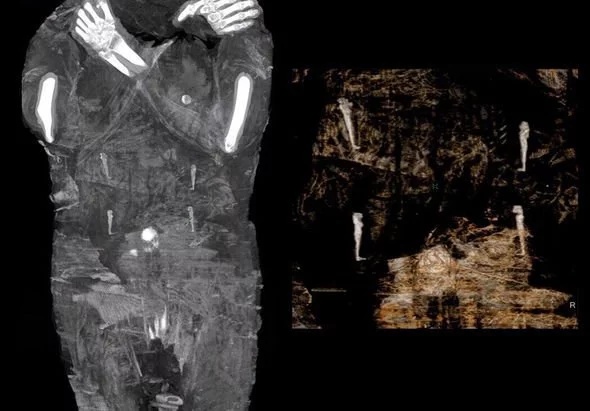
Instead, subsequent scans revealed what appeared to be a tiny foot within the woman’s abdominal area.
Dr Ożarek-Szilke, a mother herself, immediately recognized the significance of the finding.
She told the Polish Press Agency (PAP): “We took one last look at the X-ray images and saw in the woman’s abdomen something familiar to parents — a small foot.”
The archaeologists presented their findings on April 28 in the Journal of Archaeological Science.

The study states: “She came from the elite of the Theban community and was carefully mummified, wrapped in fabrics, and equipped with a rich set of amulets.
“Closer examination revealed that the woman passed away between 20 and 30 years of age, together with a child estimated to be between the 26th and 30th week of development.
“This find is the only known case of an embalmed pregnant individual.”
Until recently, hieroglyph inscriptions on the mummy’s sarcophagus suggested the remains belonged to the priest Hor-Djehuti.
Hor-Djehuti was a writer and official at Medinet Habu in Thebes, modern-day Luxor, where he served the Egyptian gods Horus and Thoth.
Archaeologists estimate he lived between the second half of the first century BC and the first half of the first century AD.
However, this assumption changed when further analysis confirmed the mummy was female.
Experts now suspect the mummy could be several hundred years older than previously believed.
As for the woman’s unborn child, limited details are available. Researchers determined the baby was positioned in a natural prenatal posture, although its sex has not been identified.
It is extremely unusual to find a preserved unborn child still within the mother, and experts believe this may be the first documented case of its kind.
Although rare, this mummy retained preserved soft tissue, allowing researchers to detect minimal biological traces within the remains.
Dr Wojciech Ejsmond from the Polish Academy of Sciences said: “For unknown reasons, the unborn child was not removed during the mummification process. That is what makes this mummy truly unique.
“From our research, we were unable to find a similar documented case.
“This means our mummy is currently the only known example in the world with a child still in the womb.”
Several theories have been proposed. Dr Ożarek-Szilke suggested the embalmers may have encountered technical difficulties during the preservation process.
Researchers noted that the woman’s uterus appeared unusually rigid, which could support this idea.
Alternatively, she added, it may have been an intentional decision related to cultural or symbolic beliefs surrounding pregnancy.
“Or maybe it had something to do with beliefs and rebirth in the afterlife.”
The mummy was examined as part of the so-called Warsaw Mummy Project – a collective effort to study the mummy’s in National Museum’s collection
It was discovered in the 1800s and transported to Poland’s capital in 1826.
The experts will now try to determine the woman’s cause of death.
Pregnancies carried many risks more than 2,000 years ago, and may have contributed to the woman’s demise.