6 AMERICAN SOLDIERS DEAD: The Human Cost Nobody Wants to Talk About — And the ‘Friendly Fire’ Disaster That Almost Made It Worse

On Monday evening, the US military confirmed what every American family with a loved one deployed to the Middle East feared: six American service members have been killed in action since Operation Epic Fury began on Saturday.
An additional 18 have been seriously wounded. And the most disturbing incident of the war so far had nothing to do with Iranian missiles — it was friendly fire.
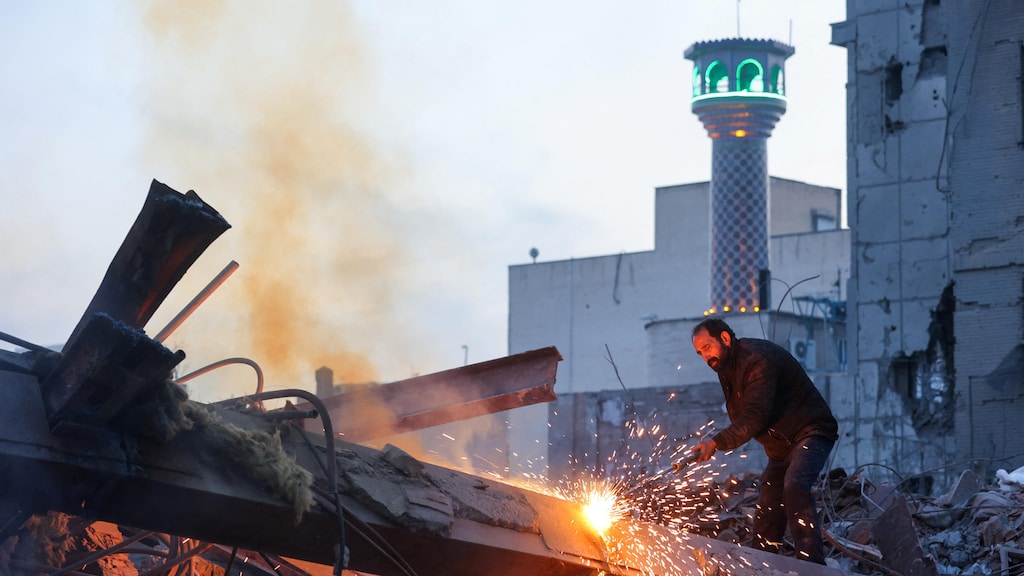
Three US F-15E Strike Eagle fighter jets were shot down over Kuwait on Monday. Not by Iran. By Kuwait’s own air defense systems. In the chaos of an unprecedented barrage of Iranian ballistic missiles, drones, and aircraft flooding the skies over the Gulf, Kuwaiti air defenses locked onto and destroyed three American warplanes supporting Operation Epic Fury. Videos geolocated by news outlets showed a fighter jet crashing from the sky and a pilot parachuting to the ground in Kuwait’s al-Jahra city, just 32 kilometers from the capital.
All six crew members ejected safely and were recovered in stable condition — a miracle amid the chaos. US Central Command acknowledged the incident with diplomatic restraint, saying the Kuwaitis had “acknowledged this incident, and we are grateful for the efforts of the Kuwaiti defense forces.”
But behind the careful language lies a terrifying reality: in a conflict this fast-moving, this multi-front, with missiles and drones crisscrossing the skies of a dozen nations simultaneously, the fog of war is thicker than anyone anticipated. When your allies are shooting down your planes, something has gone fundamentally wrong with coordination.
The friendly fire incident in Kuwait is not the only alarming development. The conflict has spread to fronts nobody expected. Iran fired missiles that struck targets in Bahrain, Qatar, Kuwait, the UAE, Saudi Arabia, Oman, Jordan, and Iraq. Residential buildings in Manama were hit by Iranian drones. An oil tanker was attacked off Oman’s coast, killing at least one crew member. Qatar — the country that was mediating peace negotiations between Washington and Tehran just hours before the strikes began — saw two of its energy sites hit by Iranian missiles.
The human geography of the casualties tells its own story. The three people killed in the UAE were migrant workers from Pakistan, Nepal, and Bangladesh. In Bahrain, an Asian worker was killed by falling missile debris. In Israel, nine people were killed when an Iranian missile struck a bomb shelter near Jerusalem. In Iran itself, the toll is catastrophic — at least 555 people killed, including 158 students at an elementary girls’ school in the southern city of Minab.
Speaking from the White House on Monday, Trump projected confidence, saying the operation was “ahead of schedule” and could wrap up in four to five weeks. At the Pentagon, the Chairman of the Joint Chiefs emphasized that this was not a “single, overnight operation” and that more US losses should be expected.
But the mood on Capitol Hill is markedly different. Senator Mark Warner, the top Democrat on the Intelligence Committee, said he has heard “at least four different goals” for the mission in the past nine days. Senator Chris Murphy declared flatly that “this administration has no plan for the chaos that is unfolding.” Even Republican Senator Tom Cotton acknowledged there is “no simple answer for what’s going to come next.”

For the families of the six fallen Americans, the political debate is irrelevant. They know only one thing: their loved ones left for a deployment in the Middle East and are not coming home. And if the Chairman of the Joint Chiefs is right, more families will soon join them in that terrible grief.
The friendly fire incident adds an extra layer of horror. These six pilots didn’t just survive Iranian missiles — they survived being shot down by an ally. The fog of this war is only getting thicker.