THEY DIED IN A BOMB SHELTER: 9 People Killed in the One Place That Was Supposed to Save Them — The Beit Shemesh Tragedy
The whole point of a bomb shelter is that you survive.
When the sirens wailed across Israel on Saturday, the residents of Beit Shemesh, a city nestled in the Judean Hills just west of Jerusalem, did exactly what they had been trained to do. They ran to their shelters. They gathered their families. They waited for the all-clear.
It never came for nine of them.
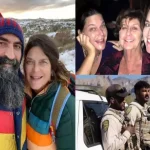
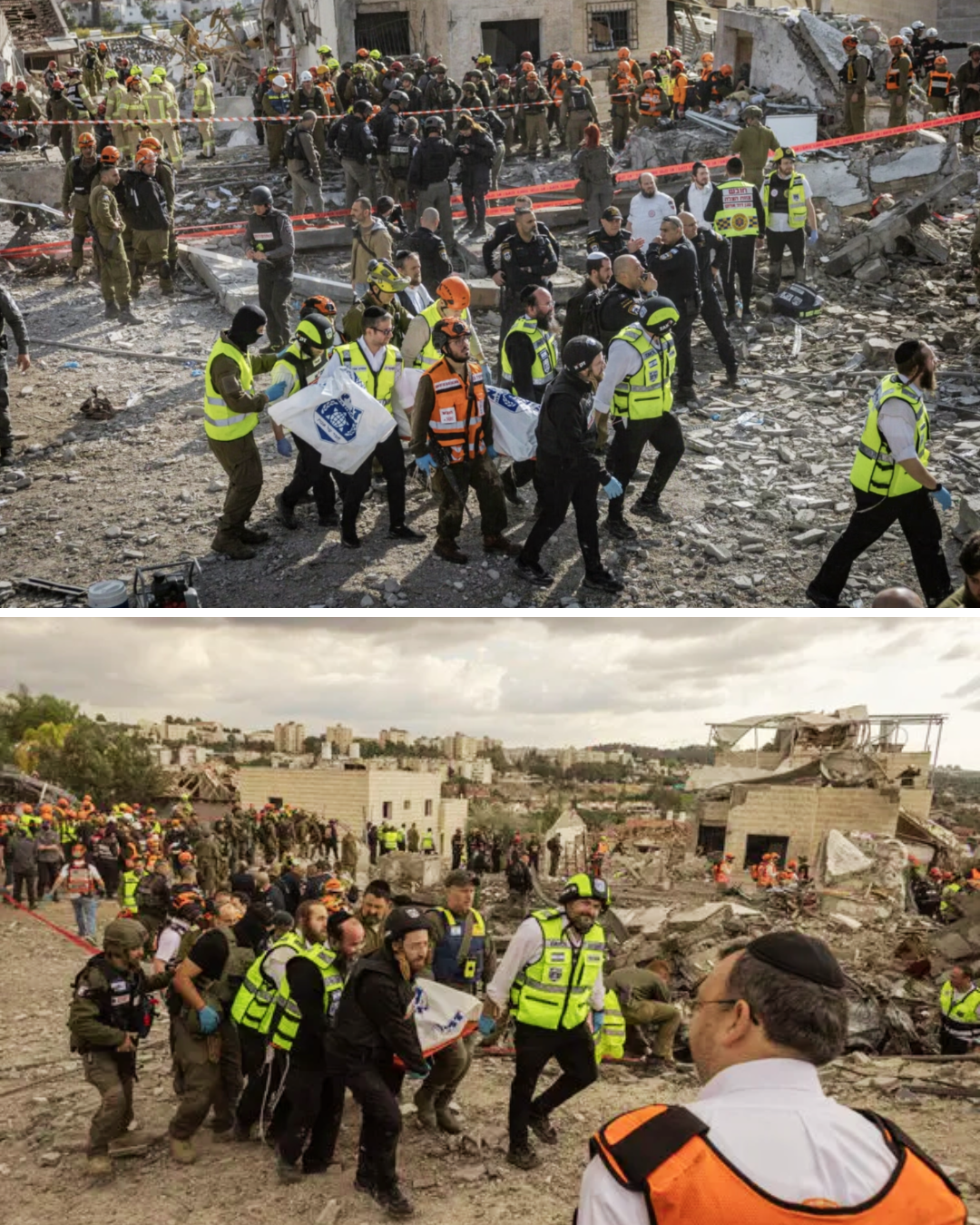
An Iranian ballistic missile struck the bomb shelter directly, killing nine people in what became the deadliest single incident in Israel since Tehran began its retaliatory strikes. Israeli emergency service Magen David Adom confirmed the victims. Their names have been released: teenagers Yaakov, Avigail, and Sara Biton — three siblings. Ronit Elimelech and her mother Sara. A mother and son, Bruria and Yosef Cohen. Gavriel Baruch Ravach. Oren Katz.
Three teenagers from the same family. A mother and daughter. A mother and son. The cruelty of the casualty list is almost unbearable in its specificity.
The strike on Beit Shemesh has become a focal point of grief and rage across Israel. The city, with a population of around 150,000, is known primarily as a religious community with a mix of secular and ultra-Orthodox residents. It is not a military target. There is no base there, no defense installation, no strategic infrastructure. It is a city of families, synagogues, schools, and apartment blocks.
The question that haunts the survivors is technical but devastating: how did an Iranian missile penetrate Israel’s vaunted air defense systems — the Iron Dome, David’s Sling, and the Arrow system — and land directly on a civilian bomb shelter? Across the country, the majority of Iranian projectiles have been intercepted. But the ones that get through carry catastrophic consequences, and in Beit Shemesh, the consequences were measured in the lives of three teenagers.
Israeli officials have not yet provided a detailed explanation for the defense failure. The sheer volume of Iranian fire — the IRGC claims to have launched attacks on 27 military bases plus Israeli military facilities — may have overwhelmed the system at specific moments. The attack on Beit Shemesh appears to have occurred during one of those moments, when the sky was full of incoming projectiles and the interceptors could not catch them all.
For Israelis, the Beit Shemesh tragedy strikes at something fundamental. The entire national civil defense infrastructure is built on a promise: if you get to the shelter, you live. Every apartment building has a safe room. Every school has a reinforced space. Children practice drills from kindergarten. The social contract is simple — follow the instructions, and the state will protect you.
The Biton siblings followed the instructions. So did Ronit and Sara Elimelech. So did Bruria and Yosef Cohen. They all did what they were supposed to do, and they all died in the place that was supposed to keep them alive.
In the wider context of the conflict, with more than 200 people injured and 10 killed across Israel, the Beit Shemesh strike is statistically a fraction of the toll. But statistics don’t bury their children. Beit Shemesh does.
The grief has rapidly transformed into political fuel. Families are demanding answers about defense gaps. Opposition politicians are questioning resource allocation. Some are asking whether the decision to strike Iran — knowing that Iranian retaliation would inevitably include attacks on Israeli civilians — adequately accounted for the defensive limitations.
At the funerals, there will be no grand geopolitical analysis. There will only be the unbearable weight of a concrete room that was supposed to save three siblings and didn’t. The bomb shelter that became a tomb.
A nation that has lived under the threat of rockets for decades just learned that even its most sacred promise — get to the shelter and you’ll be safe — has a limit. And nine families in Beit Shemesh paid the price of discovering it.