GOLD IS GOING TO $6,300: JP Morgan’s Insane Prediction — And Why the Smartest Investors Are Already Panicking
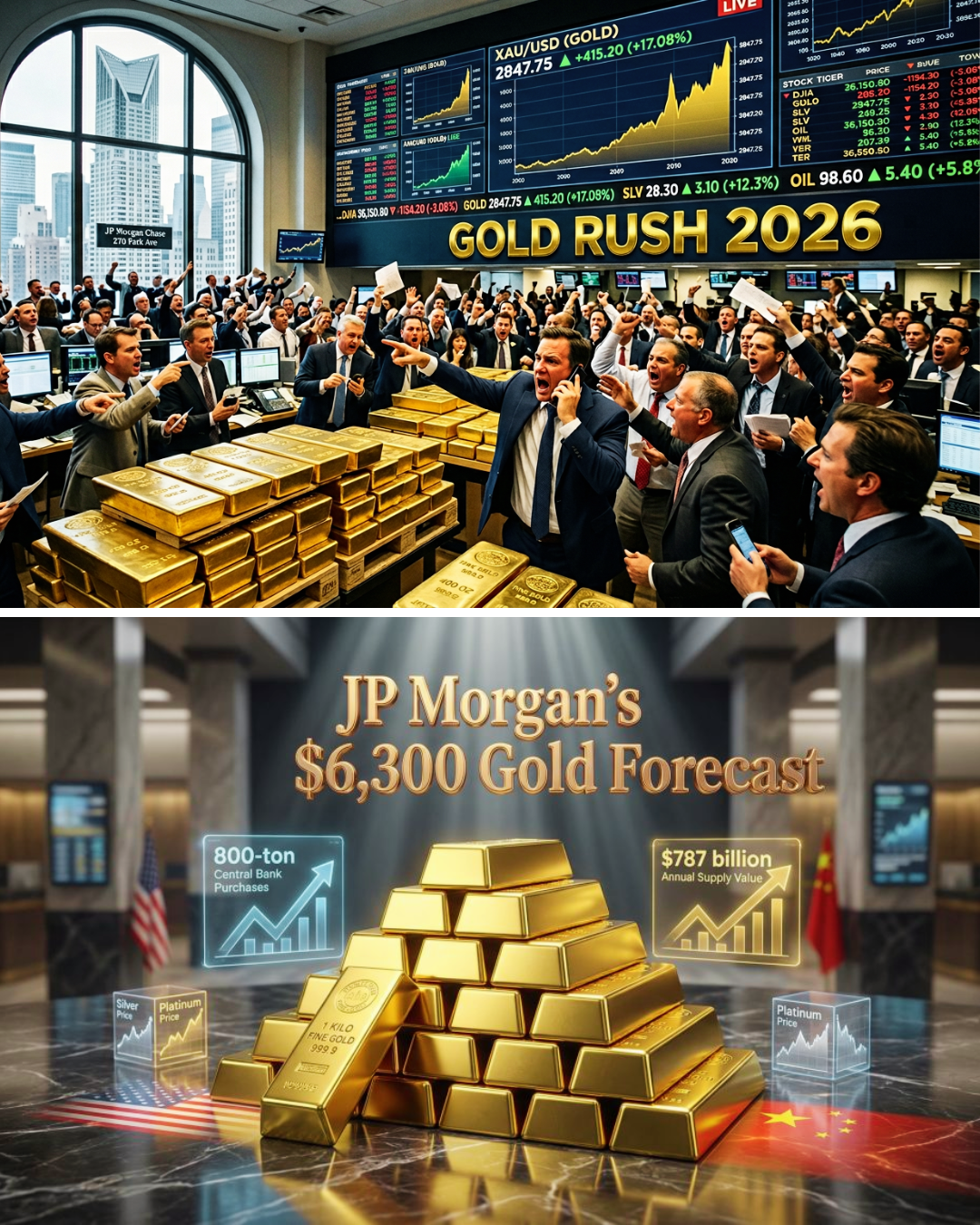
In the middle of a war that has killed hundreds of people and shut down the world’s most important oil chokepoint, JP Morgan’s analysts delivered a prediction that sent shockwaves through financial markets: gold is heading to $6,300 per ounce by the end of 2026.
To put that in perspective, gold recently hit a record high of $5,594 in January. JP Morgan is now forecasting another 12 percent climb from those already historic levels, driven by what its analysts describe as geopolitical risks that are “likely to stay on the boil” regardless of how the Iran conflict resolves.
The prediction landed on trading desks Monday alongside a cascade of alarming market data. Oil surged past 9 percent. European natural gas prices jumped more than 20 percent. Stock futures sank. The Strait of Hormuz — through which one-fifth of global oil flows — was effectively closed. Saudi Arabia shut its biggest refinery after a drone strike. Qatar halted LNG production.
For investors who have been sitting on gold positions, the Iran conflict is vindication of the oldest investment thesis in history: when the world burns, gold shines. The metal has been on a relentless climb for over a year, driven by central bank purchases, geopolitical uncertainty, and concerns about government debt levels. The Iran war has turbocharged every one of those factors simultaneously.
But the JP Morgan call also comes with significant caveats that the headline-grabbing number obscures. Financial advisor Patrick Huey warned that gold “has had long periods where it’s done absolutely nothing, and long periods when it’s been very volatile. And you can certainly lose money in gold.” Most financial advisors recommend keeping gold and other alternative investments to just 5 to 10 percent of a portfolio.
The critical variable is how long the conflict lasts and whether it triggers a broader economic crisis. Jamie Dimon, JPMorgan Chase’s CEO, struck a carefully calibrated tone on Monday. He said the war is unlikely to cause a “major inflationary hit” as long as it doesn’t become prolonged. But he also warned that inflation could become “a skunk at a party” if the conflict drags on, particularly as oil prices push up the cost of everything from gasoline to food to shipping.
The gas price math is already worrying. The national average is $2.98 per gallon. Analysts warn that a complete Strait of Hormuz closure could add 50 cents per gallon. If oil hits $100 — which Barclays considers a realistic scenario — the pump price impact could be even steeper.
For the broader stock market, the reaction has been surprisingly measured so far. The S&P 500 was roughly flat on Monday, and banking stocks actually climbed. Traders appear to be pricing in a short conflict — the “four to five week” timeline that the White House has projected. If the war stretches beyond that, the calculus changes dramatically.
The real winners so far are energy companies. Exxon was up 4 percent in pre-market trading. Chevron gained nearly 4 percent. European oil majors like Shell and BP rose as well. Small exploration companies have seen even more dramatic gains as traders bet on sustained high oil prices.
But the most telling market signal may be the most obscure: war-risk insurance premiums for shipping in the Gulf have surged by up to 50 percent. When the people whose job is to quantify risk are charging that much more to cover it, the message to the rest of the market is clear — the danger is real, and it’s not priced in yet.
JP Morgan’s $6,300 gold forecast isn’t just a number. It’s a vote of no confidence in the world’s ability to contain this conflict quickly. And if they’re right, the shiny metal that civilization has prized for millennia is about to become the most important asset class of 2026.