THE INVISIBLE DEAD: A Pakistani, a Nepali, a Bangladeshi — The Migrant Workers Killed by Iran’s Missiles That Nobody Will Remember
Their names have not been released. Their faces have not appeared on any news broadcast. Their deaths have been reduced to a single word in official statements: “nationals.”
A Pakistani national was killed when debris from intercepted missiles fell on a residential area near Zayed International Airport in Abu Dhabi. A Nepali national died when Iranian drones that penetrated air defenses struck ground targets in the UAE. A Bangladeshi national was killed in Bahrain when debris from an intercepted missile fell onto a foreign vessel undergoing maintenance in Salman Industrial City.
Three people. Three countries. Three workers who traveled thousands of miles from home to build, clean, and maintain the gleaming cities of the Persian Gulf. And three deaths that have been treated as footnotes in a war between nations far more powerful than theirs.
CNN noted on Tuesday that “many of the reported civilian deaths in the Gulf states in the escalating conflict are South Asian nationals, highlighting the region’s reliance on a migrant workforce that can often operate in precarious conditions.” The International Labor Organization estimates there are more than 24 million migrant workers in the Arab states. They are, as CNN described them, “essential to the Gulf’s prosperity. Yet, they remain among its most exposed and unprotected demographic.”
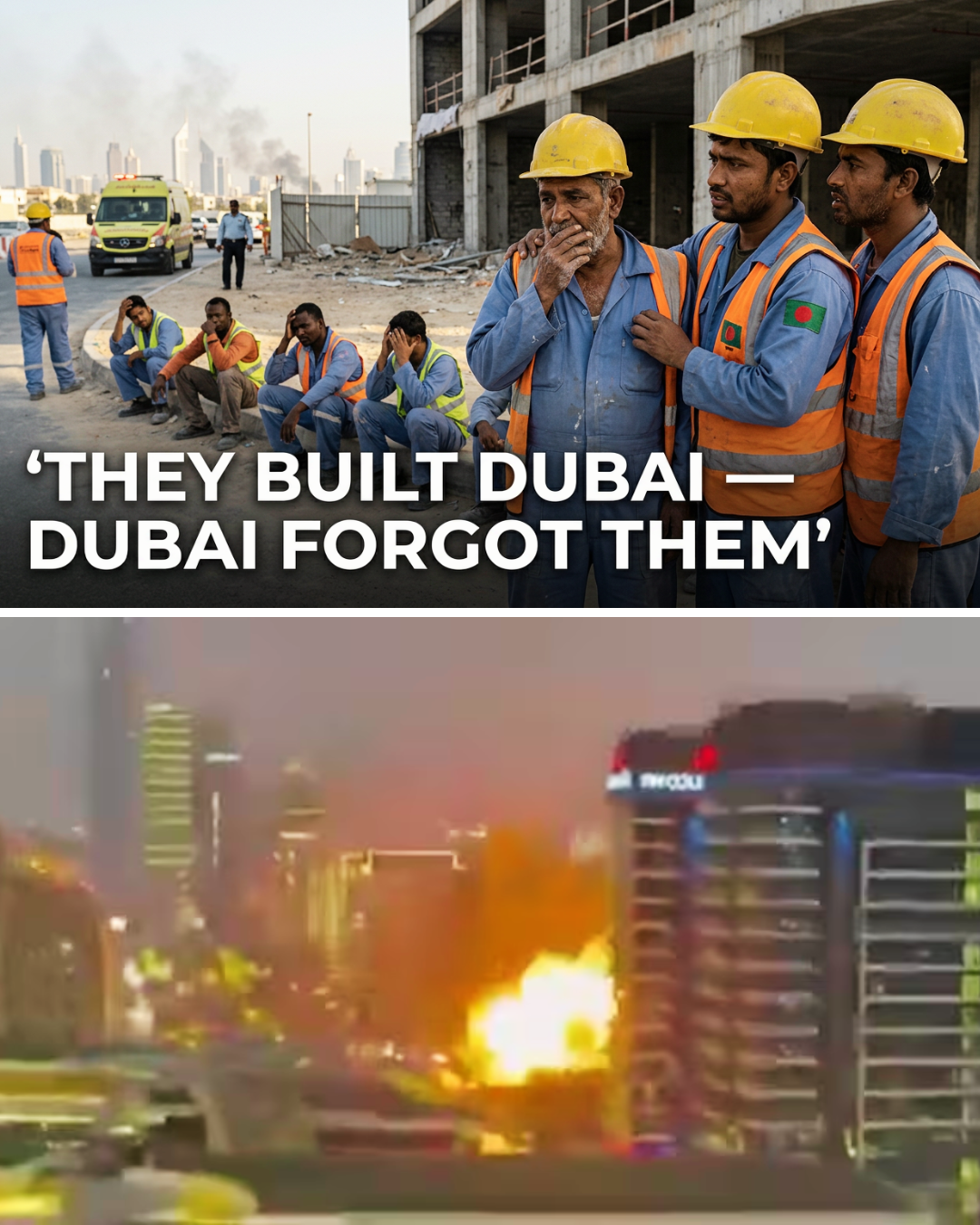
The geography of vulnerability tells the story. Migrant workers in the Gulf are concentrated in precisely the areas most likely to be affected by missile strikes: near airports where they load luggage and maintain facilities, near ports where they service ships and move cargo, near construction sites in industrial zones adjacent to military installations. The wealthy residents of Dubai’s luxury towers have reinforced basements and secure rooms. The workers who built those towers often live in labor camps with no bomb shelters, no air defense alerts on their phones, and no embassy registration systems to ensure their governments know where they are.
The Philippines recognized this vulnerability immediately. Manila upgraded its travel advisory for the UAE, Bahrain, Kuwait, Qatar, and Saudi Arabia to a level that automatically triggers a deployment ban on newly hired Filipino workers. Approximately 110,000 Thai nationals are in the region. India has millions of citizens across the Gulf. Pakistan’s diaspora is similarly enormous.
For these workers, the war creates a double trap. They cannot leave because flights are cancelled and borders are effectively closed. But they also cannot stop working because their income — often the sole financial support for extended families back home — depends on continued employment. Construction sites in Dubai that were not directly damaged are still operating. Hotels still need to be staffed. Hospitals still need to be cleaned. The economy of the Gulf does not pause for war. It pauses for nothing.
The response from Gulf governments has been mixed. The UAE is covering food and accommodation costs for stranded travelers — a generous gesture, but one primarily designed for tourists and transit passengers, not for the millions of workers who live in the country permanently. Saudi Arabia has focused its emergency communications on its own citizens and Western expatriates. The labor camps where South Asian workers are concentrated have received little attention from either governments or international media.
When the history of this conflict is written, it will focus on the geopolitical chess moves, the military operations, the political consequences. The deaths of a Pakistani man near an airport, a Nepali worker in a drone strike, and a Bangladeshi laborer on a ship will not make the history books. They will not be named in memorial speeches. Their families will receive whatever compensation their employer’s insurance provides — if they had insurance at all.
The Gulf’s economic miracle was built on the backs of South Asian labor. The towers, the airports, the hotels, the ports — every gleaming structure that Iran’s missiles are now targeting was constructed by workers from Pakistan, India, Bangladesh, Nepal, Sri Lanka, and the Philippines. These workers gave the Gulf its skyline. And now the Gulf’s war is taking their lives without even learning their names.
Twenty-four million migrant workers. Not citizens. Not voters. Not decision-makers. Just bodies in the blast radius, counted as “nationals” in a footnote nobody reads.