ISRAEL JUST AUTHORIZED ‘SEIZING LAND’ IN LEBANON: Defense Minister Calls Iran an ‘Octopus’ and Vows to ‘Crush Its Tentacles’ — This Is How Wars Never End
The language was unmistakable. There was no diplomatic ambiguity, no careful hedging, no room for misinterpretation.
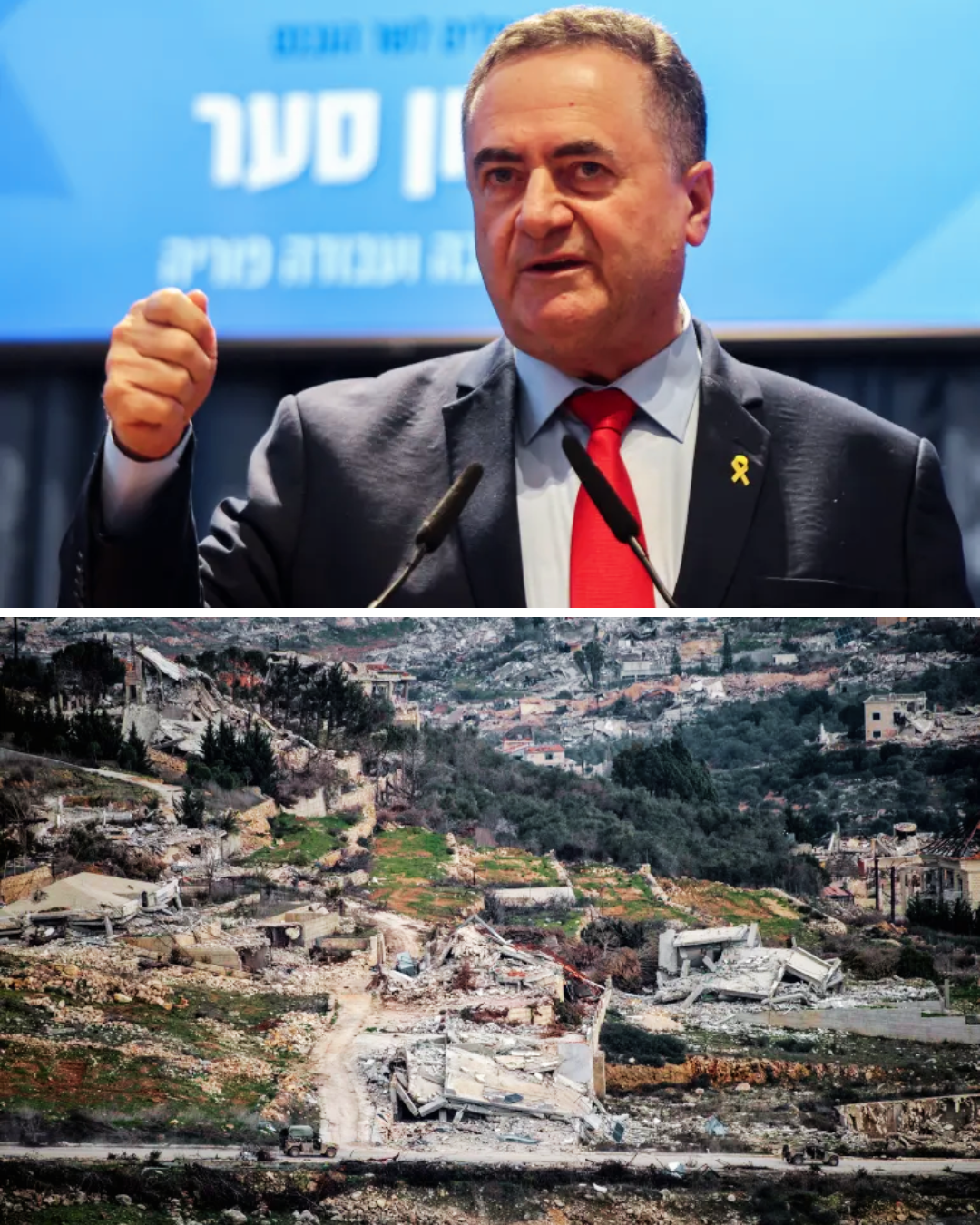
Israeli Defense Minister Israel Katz announced on Tuesday that he and Prime Minister Benjamin Netanyahu had authorized the military to “advance and seize additional controlling areas in Lebanon to prevent firing on Israeli border settlements.” In a separate statement posted to social media, Katz deployed a metaphor that revealed the scope of Israel’s ambitions: “We have severed the head of the Iranian octopus and we are now working to crush and sever the octopus’s tentacles.”
The tentacles, in this framework, include Hezbollah. And “seizing additional controlling areas” means exactly what it sounds like: Israeli forces are taking Lebanese territory.
The military had already deployed additional forces to southern Lebanon on Tuesday, describing the operation as “forward defence” along the border. Israeli military spokesman Lieutenant Colonel Nadav Shoshani confirmed that troops “are operating in southern Lebanon” and that additional soldiers have been “positioned on the border area in additional points.” The IDF’s chief of staff, Lieutenant General Eyal Zamir, visited the northern border on Monday, briefed division commanders, and “approved plans.”
When asked directly about a potential ground offensive, IDF Spokesman Brigadier General Effie Defrin responded with four words that carry enormous weight: “All options are on the table.”
The authorization to “seize controlling areas” goes significantly beyond the defensive posture Israel maintained since the November 2024 ceasefire with Hezbollah. Under that agreement — brokered by the United States — Israel was supposed to withdraw from Lebanese territory while Hezbollah disarmed and moved its forces north of the Litani River. Neither side fully complied. Israel never completely withdrew from five border positions. Hezbollah never disarmed.
US officials have now effectively washed their hands of the ceasefire. According to Lebanese broadcaster MTV, American officials told the network they considered the ceasefire “over” and would not interfere to stop Israel’s attacks on Lebanon. The message to Beirut was blunt: designate Hezbollah as a terrorist organization, “otherwise, there will be no distinction between the two.”
For Lebanon, the consequences are already catastrophic. Israeli strikes have killed at least 52 people and injured 154 since Monday. Evacuation orders have been issued to dozens of villages across southern and eastern Lebanon. More than 29,000 people are now housed in 171 emergency shelters. Schools in Beirut have been converted to refugee centers. The scenes of bumper-to-bumper traffic fleeing southward recalled the worst days of the 2024 war, when more than a million people were displaced in a single day.
Israel simultaneously struck Hezbollah’s Al-Qard al-Hasan financial network — the banking association the IDF says Hezbollah uses to store money, manage salaries, transfer Iranian funds, and purchase weapons. The strikes on the financial infrastructure signal an intent to dismantle Hezbollah’s economic foundation, not just its military capacity.
The IDF also killed Hussein Makled, whom it identified as the head of Hezbollah’s intelligence arm, in a “precise strike” in Beirut. A senior Palestinian Islamic Jihad commander in Lebanon was also killed in overnight strikes on Dahiyeh — expanding the target list beyond Hezbollah to other Iranian-backed groups operating on Lebanese soil.
Hezbollah has responded with escalating attacks. On Tuesday, it launched drone swarms against the Ramat David airbase in northern Israel, targeting radar sites and control rooms. Drones were intercepted crossing into Israeli territory from Lebanon. The group says its attacks are both retaliation for Khamenei’s assassination and defense against continued Israeli strikes that violated the ceasefire long before the current conflict erupted.
The “octopus” metaphor Katz deployed is revealing. An octopus has eight arms. If Hezbollah is one arm, the others presumably include Hamas, the Houthis, Iraqi militias, and other Iranian-aligned groups across the region. “Crushing the tentacles” implies a campaign that extends far beyond Lebanon, far beyond Iran, and far beyond any timeline that anyone in Washington or Tel Aviv has publicly acknowledged.
Wars that begin with land seizures tend not to end quickly. Wars described in biological metaphors — cutting heads, crushing tentacles — tend not to end at all. They metastasize.