QATAR SHOT DOWN TWO IRANIAN FIGHTER JETS: The Tiny Gulf Nation Just Did Something Nobody Expected — And It Changes Everything
In a conflict defined by superpowers and regional heavyweights, the most unexpected military action of Day 4 came from one of the smallest countries on Earth.
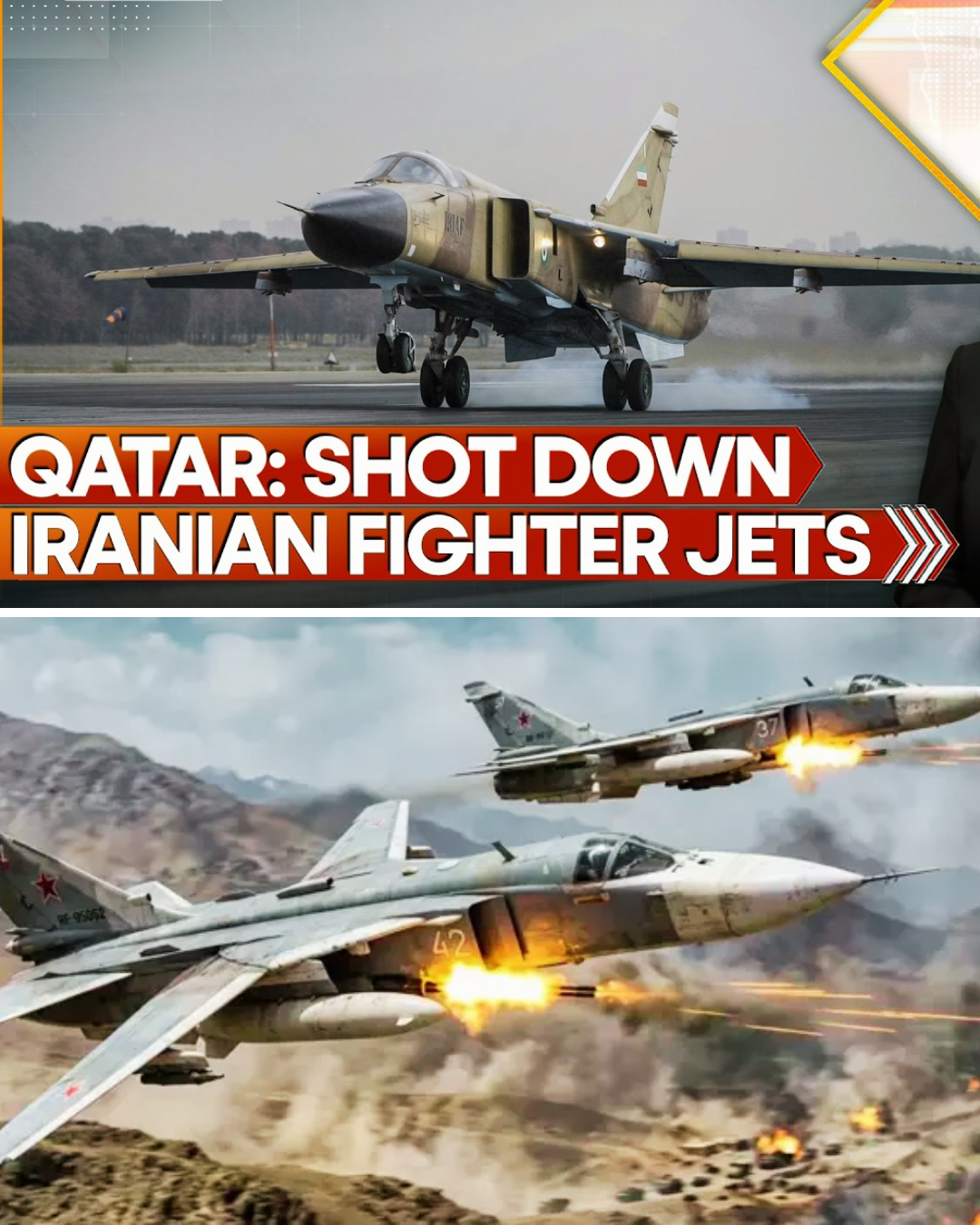
Qatar announced on Tuesday that its air force had shot down two Iranian Russian-made Sukhoi Su-24 bomber aircraft. The announcement, confirmed by Qatari military sources, marked the first time in the conflict that a Gulf state had engaged and destroyed Iranian military aircraft — and it came from a nation with a total population smaller than Houston, Texas.
The shootdowns represent a dramatic escalation from Qatar’s previous posture. Since the conflict began on Saturday, Qatar had focused on defensive measures — intercepting missiles and drones with its air defense systems, closing its airspace, grounding all Qatar Airways flights, and suspending Ramadan public gatherings. The Qatari Ministry of Defence confirmed that its forces had intercepted approximately 65 missiles and 12 drones over Qatari airspace.
But shooting down manned aircraft is categorically different from intercepting drones. The Su-24 is a supersonic, all-weather attack aircraft — a platform that carries a two-person crew. The Qatari action means that Iranian military personnel were killed by a Gulf Arab state’s armed forces, crossing a threshold that missile interceptions do not.
The military capabilities Qatar deployed are themselves noteworthy. Qatar operates a small but extremely modern air force equipped with French Rafale fighters, American F-15QA Strike Eagles, and European Eurofighter Typhoons — an eclectic but potent mix that reflects the emirate’s willingness to spend lavishly on defense despite its tiny size. The F-15QA variant is considered among the most advanced fighters in the world, with capabilities that exceed even the US Air Force’s own F-15E models.
Qatar also hosts Al Udeid Air Base, the largest US military facility in the Middle East and a critical command center for American operations across the region. The base was hit by two Iranian ballistic missiles earlier in the conflict, with a drone also targeting an early warning radar installation. The presence of American forces on Qatari soil makes the emirate both a high-value target for Iran and a nation with powerful defensive capabilities.
For Iran, the loss of two Su-24 bombers is militarily significant. Iran’s air force fleet is aging, with many aircraft dating to the pre-1979 era when the US supplied the Shah’s military. Su-24s, acquired from Russia, represent a more modern component of Iran’s offensive air capability. Each aircraft lost reduces Tehran’s ability to project air power — a capability already severely degraded by the destruction of runways, hangars, and air defense systems in US-Israeli strikes.
The diplomatic implications are equally significant. Qatar has historically maintained a unique position in the Gulf — friendly with both the United States and Iran, serving as a mediator in regional disputes, and hosting both American military forces and a Hamas political office simultaneously. Qatar mediated the 2023 Saudi-Iran rapprochement and played a key role in hostage negotiations during the Gaza conflict.
That mediating role is now almost certainly over. By shooting down Iranian military aircraft, Qatar has crossed from neutrality into active combat participation. Iran’s response could include escalated strikes on Qatari territory, the targeting of Qatari commercial and diplomatic assets, or the severing of diplomatic relations that had survived decades of regional tension.
For the broader Gulf Cooperation Council — Saudi Arabia, UAE, Bahrain, Kuwait, Oman, and Qatar — the shootdowns establish a precedent. If tiny Qatar can engage and destroy Iranian combat aircraft, the larger Gulf militaries certainly can as well. Saudi Arabia, which possesses one of the most heavily armed military establishments in the world, has so far absorbed Iranian attacks without shooting back at aircraft. Qatar’s action may shift that calculus.
The two downed Su-24s will not change the course of the war. But they change the nature of the war. What began as a US-Israeli operation against Iran is becoming a regional conflict in which Gulf states are not just victims of Iranian retaliation — they are active combatants fighting back.
The smallest nation in the fight just delivered one of its biggest surprises.