HEZBOLLAH JUST SWARMED AN ISRAELI AIRBASE WITH DRONES: The Ramat David Attack Could Be the Biggest Threat Israel Has Faced Since October 7
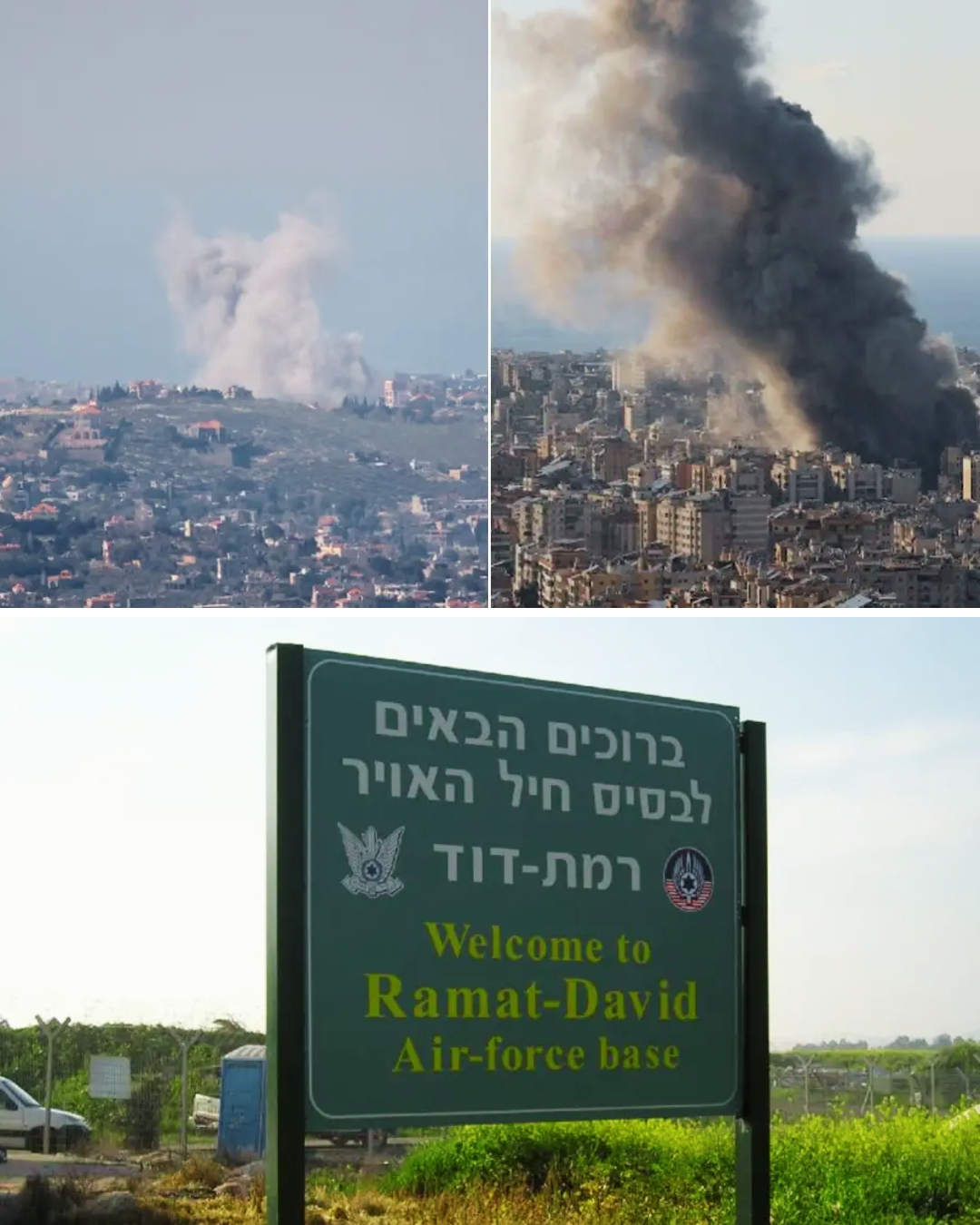
At dawn on Tuesday, Hezbollah deployed a tactic that military strategists have been warning about for years: a coordinated swarm of unmanned aerial vehicles targeting a single high-value military installation.
The target was Ramat David Air Base, one of the Israel Air Force’s most important facilities, located in northern Israel near the Jezreel Valley. Hezbollah said it launched the attack using “a swarm of drones,” targeting radar sites and control rooms at the base. The group said the attack was carried out in retaliation for Israel’s continuing strikes across Lebanon.
The details of the attack — a coordinated multi-drone strike aimed at disabling an airbase’s detection and command capabilities — represent a significant tactical evolution for Hezbollah. Rather than firing ballistic missiles at population centers, which can be intercepted by Israel’s Iron Dome and David’s Sling systems, the group targeted the electronic eyes and brains of the airbase itself. Radar sites and control rooms are the nervous system of air defense — without them, even the most advanced fighter jets are effectively blind.
The Israeli Air Force confirmed it intercepted two drones that crossed into Israeli territory from Lebanon early Tuesday. The IDF did not confirm or deny whether any drones reached Ramat David, nor did it provide details on damage or casualties at the base. The gap between Hezbollah’s claims and the IDF’s limited statement creates an information vacuum that both sides will attempt to fill with their preferred narrative.
Ramat David is not a random target. The base hosts F-16 fighters and serves as a key operations hub for the Israeli Air Force’s northern operations. It is the closest major air installation to the Lebanese border, making it both strategically vital and geographically vulnerable. Strikes against Ramat David appeared in earlier Hezbollah threat assessments — the group has long identified it as a priority target.
The drone swarm concept is what concerns military analysts most. Traditional air defense systems are designed to intercept individual high-speed targets — missiles, jets, cruise missiles. A swarm of small, slow, cheap drones presents a fundamentally different challenge. Each drone requires a separate interceptor, and the interceptors often cost far more than the drones they are destroying. A $50,000 drone can force the expenditure of a multi-million-dollar missile to shoot it down.
If enough drones are launched simultaneously, they can overwhelm defensive systems through sheer volume. This is the logic of the swarm: not quality, but quantity. Not precision, but saturation. It is the same logic that made the Houthi drone attacks on Saudi Aramco facilities in 2019 so devastating — cheap drones accomplished what expensive precision strikes might not have.
Hezbollah’s drone capabilities have grown significantly since its 2024 war with Israel. The group has received advanced drone technology from Iran, including designs based on the Shahed platform and newer variants capable of carrying larger payloads over longer distances. Intelligence assessments have long identified Hezbollah’s drone arsenal as one of the most serious threats to Israeli military infrastructure.
The timing of the Ramat David attack — at dawn, when visibility is limited and base personnel are transitioning between shifts — suggests careful operational planning. The targeting of radar and control facilities rather than aircraft on the tarmac suggests an understanding of which components are most critical and hardest to replace quickly.
For Israel, the attack underscores the multi-front nature of the current conflict. While the IAF is conducting massive strike operations in Iran — dropping 1,200 munitions across 24 provinces — it must simultaneously defend its own bases from Hezbollah drone attacks in Lebanon and intercept Iranian ballistic missiles launched from 1,500 kilometers away.
The 110,000 reservists called up reflect this reality. Israel is fighting a war of extraordinary geographic scope, from Tehran to Beirut to the Jezreel Valley, and the drone swarm on Ramat David proves that none of its territory is beyond the reach of its adversaries.
The era of the drone swarm has arrived. And the defenses may not be ready.