THEY JAMMED THE CELL TOWERS SO NOBODY COULD WARN HIM: The 12 Antennas That Sealed Khamenei’s Fate — And the CIA Mole Inside His Inner Circle
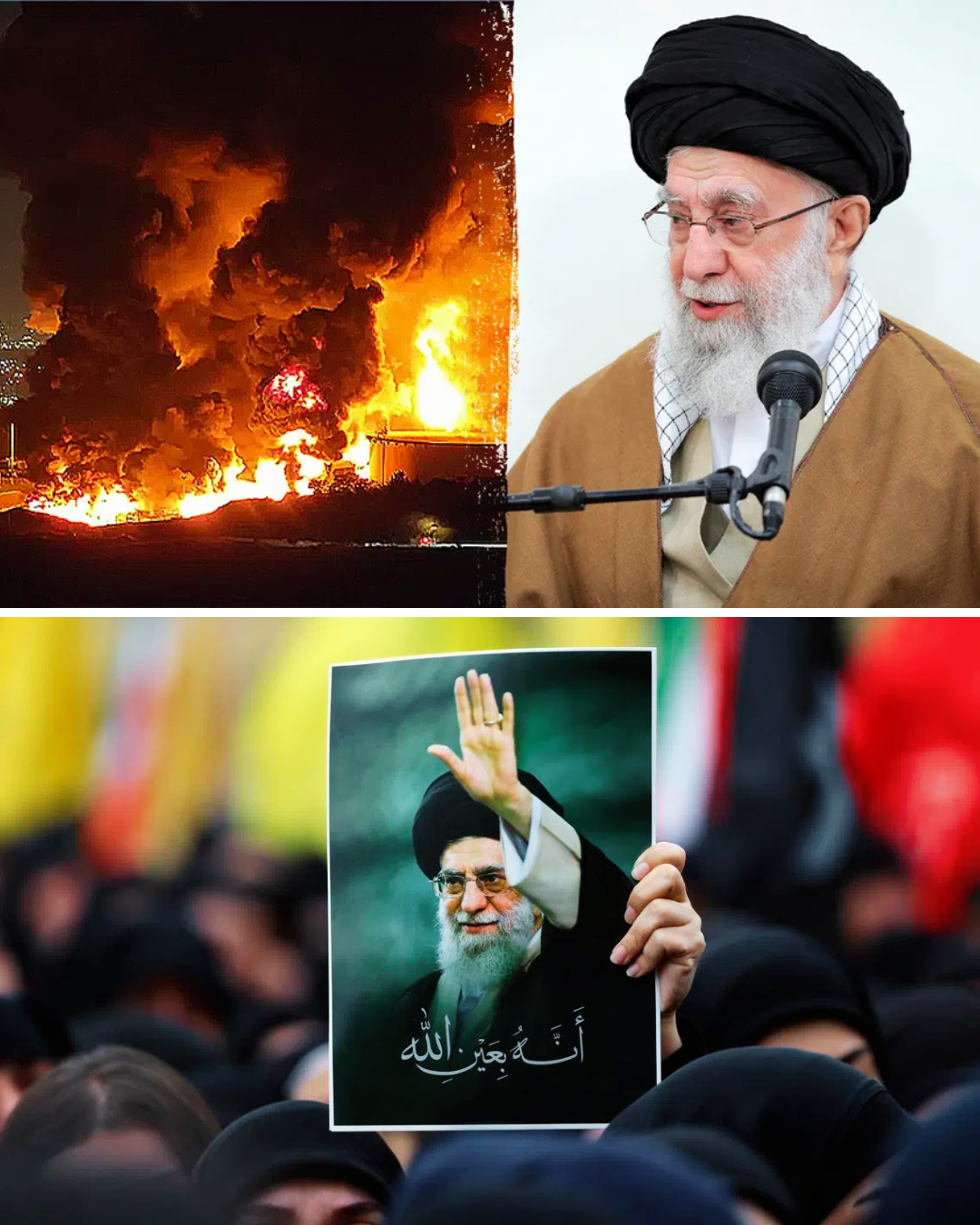
Thirty missiles were coming. And nobody could make a phone call to sound the alarm.
The Financial Times report on the assassination of Ayatollah Ali Khamenei revealed a detail so precise, so surgically targeted, that it reads like the climactic scene of a spy thriller: Israeli intelligence disrupted approximately 12 specific cellular antennas near Pasteur Street in Tehran, the location of Khamenei’s compound, immediately before the strike.
The disruption was not a blanket jamming operation that would have affected the entire city. It was targeted to specific towers serving the area around the compound. When Khamenei’s bodyguards attempted to receive incoming calls — presumably warnings from intelligence contacts who had detected the incoming Israeli aircraft — their phones returned busy signals. The calls simply would not connect.
The precision of this operation reveals capabilities that go far beyond ordinary electronic warfare. To disable specific antennas rather than entire networks, Israeli intelligence would have needed detailed knowledge of Tehran’s cellular infrastructure — which towers serve which areas, what frequencies they operate on, and how to disrupt them remotely without affecting adjacent coverage zones.
This capability was reportedly built over years of penetration into Iran’s telecommunications systems. The same networks that Israeli intelligence had hacked to monitor the movements of Khamenei’s security team — tracking their phones, mapping their social networks, building patterns of life — were now weaponized to prevent those same phones from receiving the one call that might have saved the Supreme Leader.
But the cellular jamming was only one element of the intelligence web. The most explosive revelation in the Financial Times report was the confirmation that the CIA had a human source inside Khamenei’s inner circle — a mole who provided final confirmation that the Saturday morning meeting was proceeding as planned and that the targeted officials were assembling at the compound.
The existence of a CIA agent with access to the Supreme Leader’s schedule represents an intelligence penetration of extraordinary depth. Iran’s security apparatus is legendarily suspicious, with multiple layers of vetting, surveillance, and counterintelligence designed to prevent exactly this kind of infiltration. The IRGC’s intelligence directorate and the Ministry of Intelligence and Security (VEVAK) maintain overlapping surveillance systems that monitor even senior officials for signs of disloyalty.
For someone to survive within this system while passing intelligence to the CIA requires either incredibly deep cover built over many years, or a position so senior that they were considered beyond suspicion. Either scenario suggests that the US intelligence community’s penetration of the Iranian regime was far more extensive than publicly known.
The combination of technological and human intelligence created what intelligence professionals call a “kill chain” of devastating efficiency. The traffic cameras provided long-term pattern analysis. The cellular network penetration provided real-time tracking. The AI algorithms processed billions of data points into actionable targeting packages. The human source provided final confirmation. And the cellular jamming ensured that when the moment came, no warning could reach the target.
A senior Israeli intelligence official described the approach in terms that suggest a military-industrial assembly line: “an assembly line with a single product — targets.” The language is chilling in its matter-of-factness. The most sophisticated intelligence capabilities ever deployed against a nation-state were organized around a single objective: identifying and eliminating specific human beings.
The implications for Iran’s remaining leadership are profound. If Israeli and American intelligence could penetrate Khamenei’s security to this degree — hacking his cameras, tracking his guards, jamming his communications, and placing a human source in his inner circle — the surviving members of the regime must assume they are equally compromised.
The temporary leadership council that has assumed power after Khamenei’s death faces an impossible security challenge. Every phone call could be intercepted. Every camera could be watching. Every trusted adviser could be reporting to foreign intelligence services. And every meeting could be the one where 30 missiles come through the roof.
The 12 antennas near Pasteur Street were not destroyed. They were temporarily disabled, then presumably returned to normal operation. But their brief silence may prove to be the most consequential communications disruption in the history of espionage — the moment when the most powerful man in Iran could not be reached by the one phone call that might have saved his life.