30,000 GERMAN TOURISTS ARE TRAPPED ON CRUISE SHIPS IN THE PERSIAN GULF: Iran Closed the Strait — And Now Nobody Can Get Off
They booked luxury vacations. They got a floating prison in a war zone.
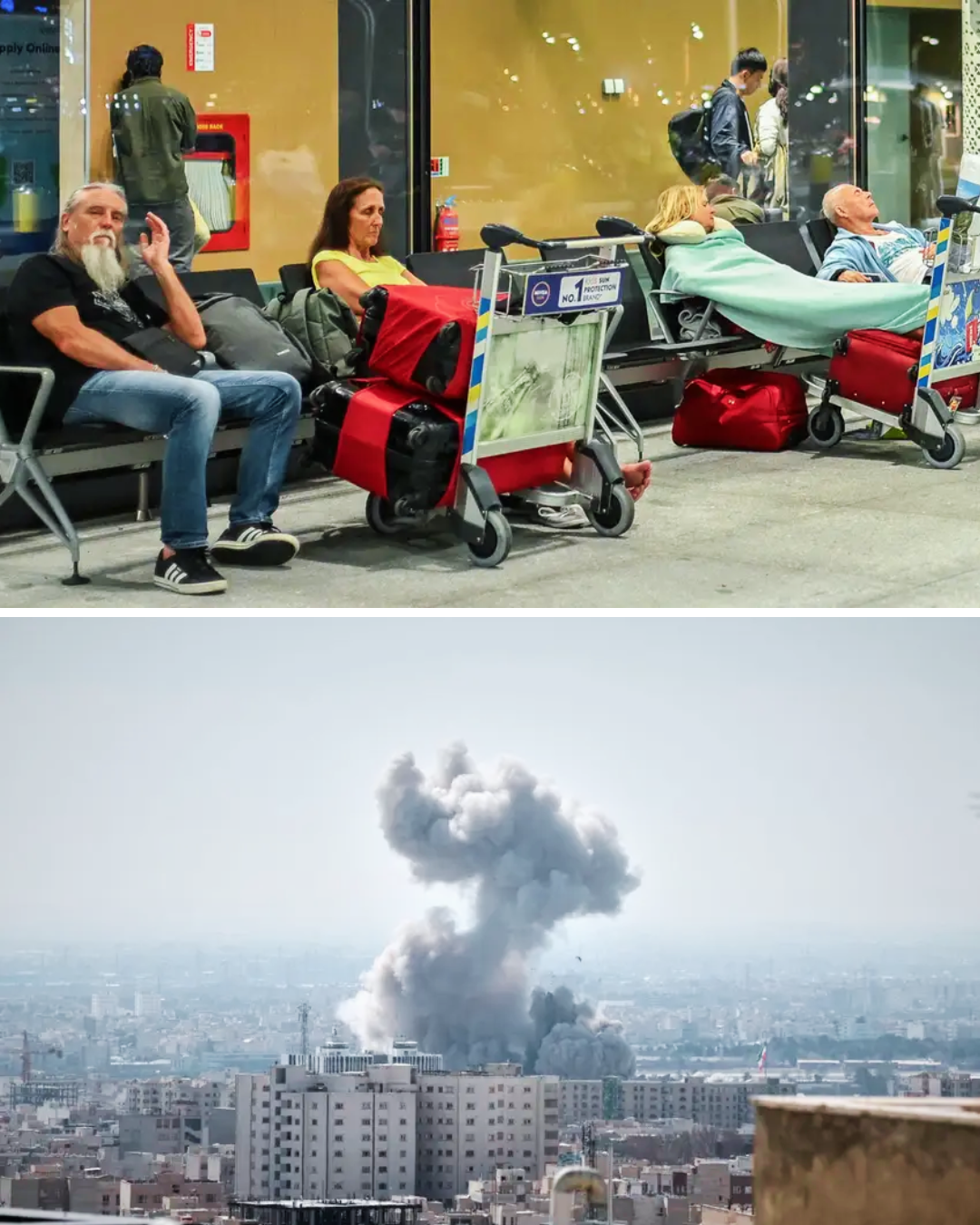
An estimated 30,000 German tourists are currently stranded on cruise ships, in hotels, and at closed airports across the Middle East — unable to leave as the Iran war engulfs the region. Among them, thousands are aboard cruise vessels that cannot transit the Strait of Hormuz after Iran’s Revolutionary Guard declared the waterway closed and threatened to burn any ship that attempted passage.
The German Foreign Ministry confirmed the staggering figure on Monday, describing the situation as an urgent logistical and humanitarian challenge. The government announced plans to charter evacuation flights to Oman and Saudi Arabia, prioritizing ill travelers, pregnant women, and children — an acknowledgment that conventional routes home have been severed.
For passengers aboard cruise ships in the Persian Gulf, the situation is particularly dire. These vessels — designed for leisure, not survival in a conflict zone — are anchored in open waters alongside approximately 150 stranded tankers and commercial ships. The ships cannot sail through the Strait of Hormuz because of the direct military threat. They cannot easily dock at ports that are themselves under attack from Iranian missiles and drones. And the passengers aboard them have no way to disembark to airports that are either closed or operating only minimal rescue flights.
The irony is crushing. Many of these tourists chose Gulf cruises precisely because the region was marketed as safe, luxurious, and exotic — a winter sun destination offering world-class hospitality. Dubai, Abu Dhabi, and Doha had spent billions cultivating images as conflict-proof oases of prosperity. Iranian drones and missiles shattered that illusion in hours.
The scene aboard these ships is tense. Passengers report rationed information from crew members who themselves have limited knowledge of the situation. Internet connectivity in the Gulf is compromised — not just by Iran’s own internet shutdown but by damage to regional telecommunications infrastructure from strikes. Families are unable to contact loved ones at home. Children are frightened by distant sounds of explosions that carry across water.
Medical concerns are mounting. Cruise ships carry limited medical supplies and are not equipped for extended emergencies. Passengers with chronic conditions — diabetes, heart disease, respiratory issues — require medications that may run short if the stranding continues beyond a few days. The German government’s decision to prioritize ill travelers for evacuation flights underscores the severity of this concern.
But Germany is not alone in this crisis. More than 58,000 Indonesian pilgrims are stranded in Saudi Arabia, where they had traveled to visit Mecca and Medina during Ramadan. Thousands of British, French, Italian, Indian, and Romanian citizens are scattered across the Gulf, trapped by closed airspace and cancelled flights. More than 9,500 flights across seven major Middle East airports have been cancelled since Saturday. In Qatar alone, 8,000 transit passengers are stranded — people who were simply passing through Doha’s Hamad International Airport on connecting flights and now find themselves stuck in a country under missile attack.
The scale of the stranding is unprecedented in modern aviation and maritime history. Even during the Gulf War of 1991, the disruption to civilian travel was more limited in geographic scope. The current conflict has simultaneously closed airspace over Iran, Iraq, Israel, Lebanon, and much of the Gulf — creating a travel blackout zone spanning thousands of miles.
Governments are scrambling to respond. Britain has activated emergency consular protocols for an estimated 300,000 British nationals living in the Gulf region. France is organizing charter flights. Italy faced its own political scandal when Defense Minister Guido Crosetto was discovered to be personally stranded in Dubai with his family during the initial strikes — eventually requiring a military aircraft to fly him back to Rome.
For the cruise ship passengers floating somewhere in the Persian Gulf, watching military helicopters pass overhead and hearing distant detonations, the vacation of a lifetime has become the nightmare of a lifetime. The brochure promised turquoise waters and five-star dining. It did not mention missiles.
And the Strait of Hormuz remains closed. Nobody knows when it will reopen. Nobody knows when they will get home.