ITALY’S DEFENSE MINISTER WAS VACATIONING IN DUBAI WHEN THE WAR STARTED: He Needed a Military Plane to Escape — Now the Opposition Wants His Head
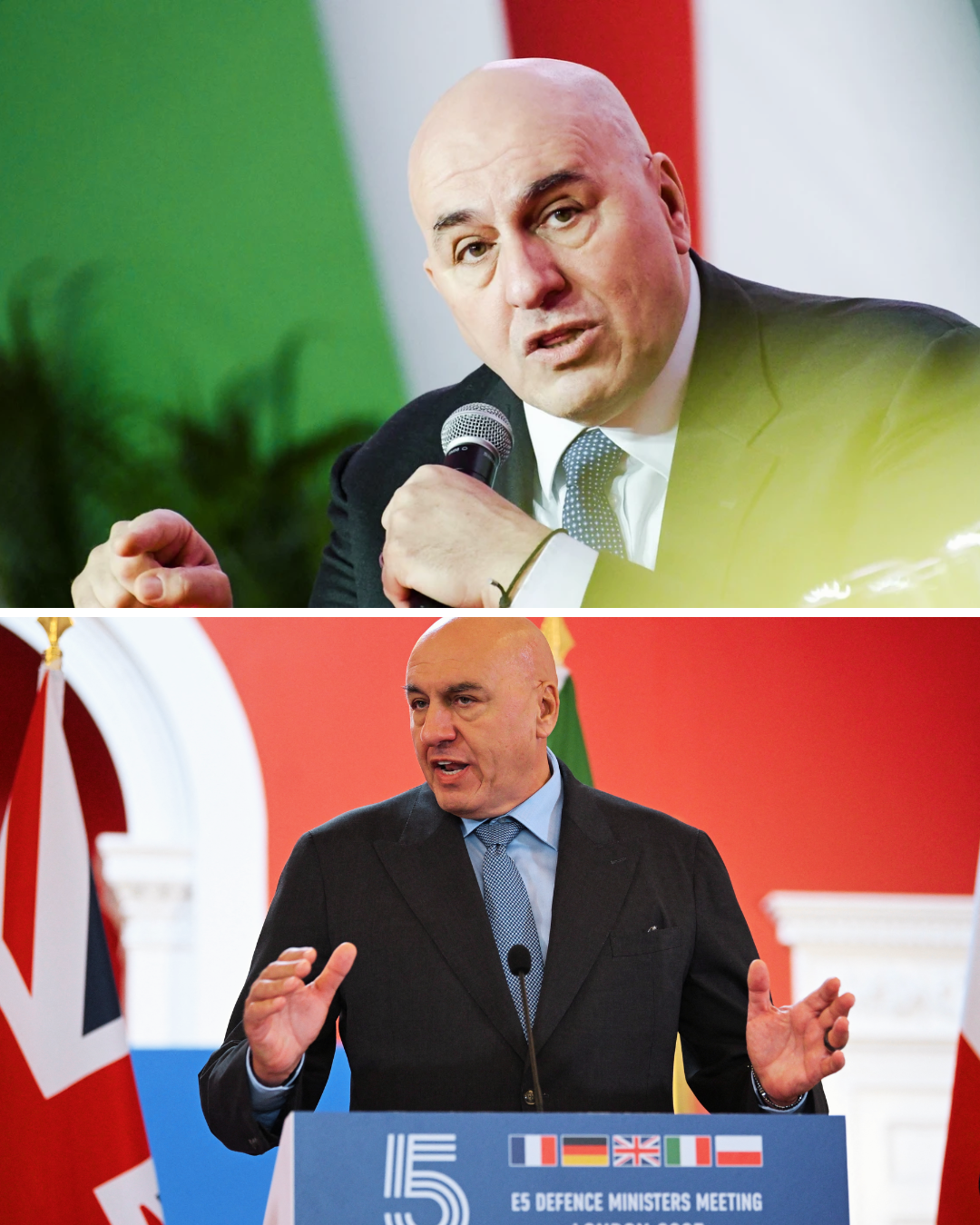
Of all the places Italy’s Defense Minister could have been when war broke out in the Middle East, Guido Crosetto chose the worst one possible: he was on vacation in Dubai with his family.
As American and Israeli warplanes began pounding Iranian targets on Saturday morning, and as Iranian missiles and drones started raining down on UAE soil in retaliation, Italy’s top military official was not in Rome monitoring the situation from the Defense Ministry. He was not at NATO headquarters coordinating with allies. He was at a resort in the very city that was being attacked.
The revelation sent shockwaves through Italian politics. Crosetto, unable to leave Dubai through normal commercial channels because all flights were cancelled, was eventually evacuated on a military aircraft — returning to Rome on Sunday while tens of thousands of Italian citizens remained stranded in the Gulf with no such rescue available.
The left-wing opposition immediately called for his resignation. Members of the Partito Democratico and the Five Star Movement argued that a defense minister should not have been traveling to a volatile region during a period of obvious escalating tensions. The buildup to the Iran strikes had been visible for weeks. Intelligence assessments of an imminent attack were widely circulated. Yet Italy’s defense chief was sunbathing in a potential war zone.
Prime Minister Giorgia Meloni has defended Crosetto, arguing that the timing of the trip was coincidental and that the minister resumed his duties immediately upon return. The defense ministry emphasized that Crosetto was in constant contact with military officials throughout the crisis and that Italy’s defense posture was unaffected by his location.
But the optics are devastating. While ordinary Italian tourists — an estimated 30,000 nationals in the Gulf region — were left to fend for themselves, sleeping in airports, sheltering in hotel basements during missile alerts, and scrambling for the handful of evacuation flights organized by the government, their defense minister was whisked to safety on a military jet.
The contrast between Crosetto’s VIP extraction and the experience of regular Italian citizens has fueled public anger. Social media erupted with images of stranded Italians alongside memes of Crosetto in beach attire. The Italian press, never gentle with political scandal, has been relentless.
The political damage extends beyond Crosetto personally. Italy’s entire crisis response has been questioned. Why were Italian military assets not pre-positioned to evacuate citizens from the Gulf? Why was there no contingency plan for mass stranding? Why did the government not issue travel advisories before the strikes when intelligence clearly indicated they were imminent?
The government has since organized evacuation flights to Milan and Rome, belatedly activating a rescue operation for stranded nationals. But the delay — and the perception that the defense minister took care of himself first — has become a potent political weapon for the opposition.
For Meloni, the Crosetto affair is an unwelcome distraction at a moment when Italy, as a NATO member and EU power, needs to project competence and seriousness. The country is expected to participate in discussions about the international response to the Iran conflict. Having its defense minister’s vacation plans become the story undermines Italy’s credibility.
Crosetto himself has pushed back against the criticism, noting that he was available and functional throughout the crisis. But in politics, perception is reality. And the perception of a defense minister trapped in Dubai while his country’s citizens are under fire is one that no amount of explanation can fully erase.
The vacation is over. The political reckoning has just begun.