Middle East on the Brink: China Warns of “Jungle Law” as US-Iran Tensions Escalate to a Peak
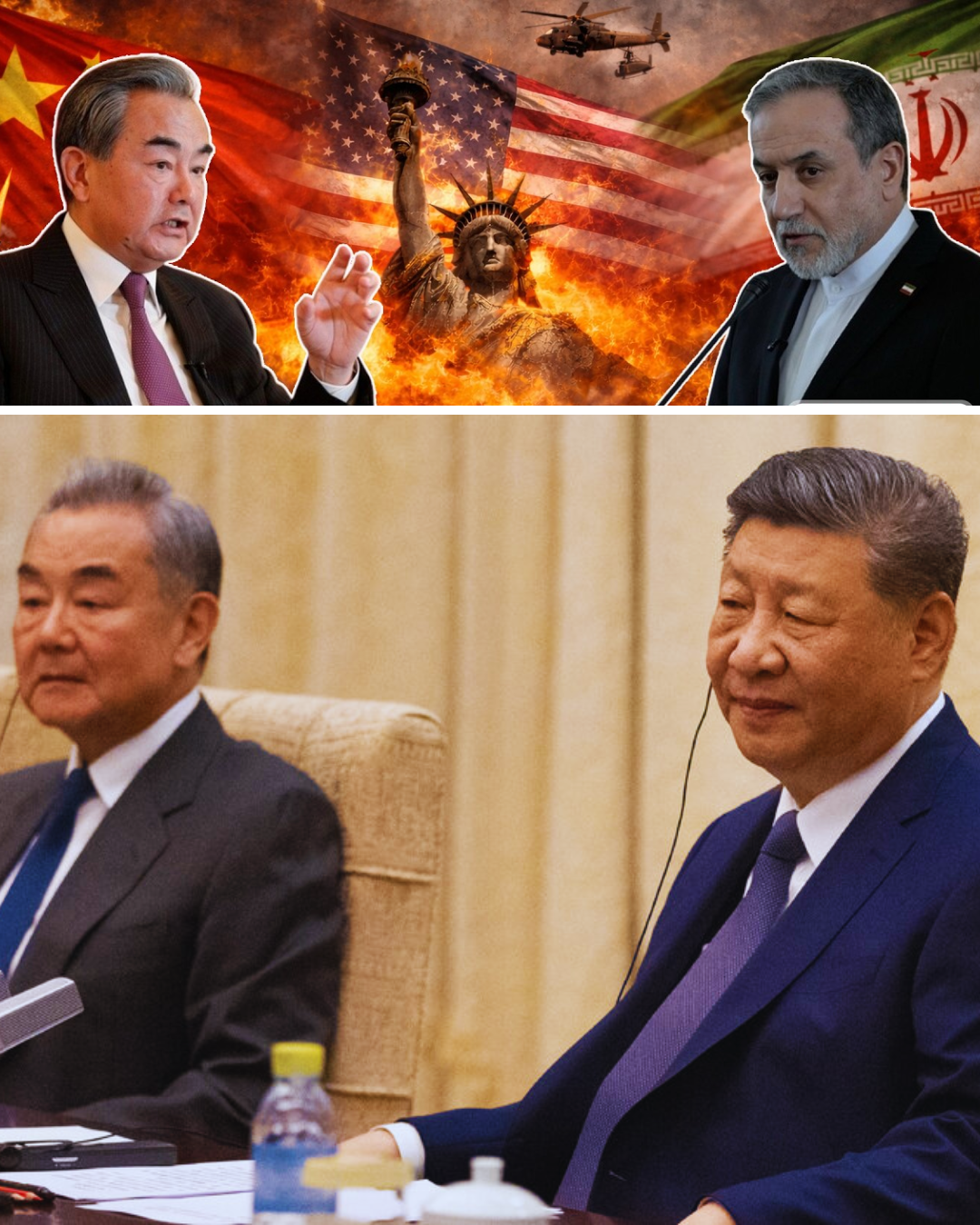
Amidst alarming levels of military activity between Washington and Tehran, the international community is witnessing a direct confrontation with devastating consequences for global security and the economy. While the US asserts its firm military objectives, China has warned of the collapse of the international order, and the risk of paralyzing the energy “lifeline” in the Strait of Hormuz is more real than ever.
A Strong Response from Beijing
Chinese Foreign Minister Wang Yi recently held an important phone call with Iranian Foreign Minister Abbas Arachi to express support for Tehran’s sovereignty and territorial security. During the dialogue, Wang Yi emphasized that Beijing cherishes the traditional friendship and opposes any violations of international law.
Notably, in another bilateral exchange with the French Foreign Minister, Wang Yi issued a stern warning: the world cannot return to the “law of the jungle,” where major powers can arbitrarily attack other nations based on military superiority. China urged the US and Israel to immediately cease military activities to prevent a full-scale war in the Middle East, while asserting that the Iranian nuclear issue must be resolved through diplomatic means.
Washington’s “bold” but “non-boiling” strategy
At the Pentagon, US Defense Secretary Pete Hegseth made statements clarifying the military vision of the Trump administration. Hegseth affirmed that US goals are extremely specific: to destroy Iran’s missile capabilities, navy, security infrastructure, and ensure that Iran never possesses nuclear weapons.
However, the difference in this strategy is the combination of decisiveness and pragmatic calculation. Mr. Hegseth emphasized that the US would not repeat the “Iraq mistake”—an endless war with hundreds of thousands of occupying troops. Instead, the US prioritizes airstrikes and special forces to achieve its goals without causing massive casualties. However, analysts warn that once ground troops are deployed, the ability to control escalation will significantly diminish, and the US could once again find itself in a new quagmire on the shores of the Persian Gulf.
The Strait of Hormuz: A “Card” that Paralyzes the Economy
The biggest threat to the US and its allies today lies not only on the battlefield but also in the energy market. Iran holds a strategic “card”: the Strait of Hormuz—through which 20% of the world’s oil and gas flows.
As soon as there were signs of disruption, Brent crude oil prices surged to $82 per barrel. Major shipping companies like Maersk temporarily suspended operations through the strait, diverting their routes around Africa. If Hormuz is completely blocked, gasoline prices in the US are projected to exceed $3 per gallon, creating a direct shock to American consumers’ wallets. This is a highly sensitive political issue with the midterm elections approaching, placing immense pressure on the Trump administration to balance military toughness with domestic economic stability.
Developments on the Ground and Military Losses
The situation is worsening with reports of military losses. A US F-15E Strike Eagle fighter jet reportedly crashed in Kuwait after videos emerged showing the aircraft burning and spinning in mid-air. Although the two pilots are believed to have ejected safely, this is still a significant symbolic loss. In Tehran, air raid sirens are constantly blaring, signaling a war that is no longer just on paper but is now a real-life conflict on the ground.
Conclusion
The current US-Iran confrontation has gone far beyond the scope of a regional conflict. It is a test of the multipolar world order, where the interests of major powers such as China, France, and the US are intricately intertwined. Analysts believe that without a breakthrough diplomatic solution, the world could face an unprecedented energy and security crisis in modern history.