Trump Boasts “Infinite” Arsenal as Iran Conflict Looms; Pentagon Warns of Long-Term Strain
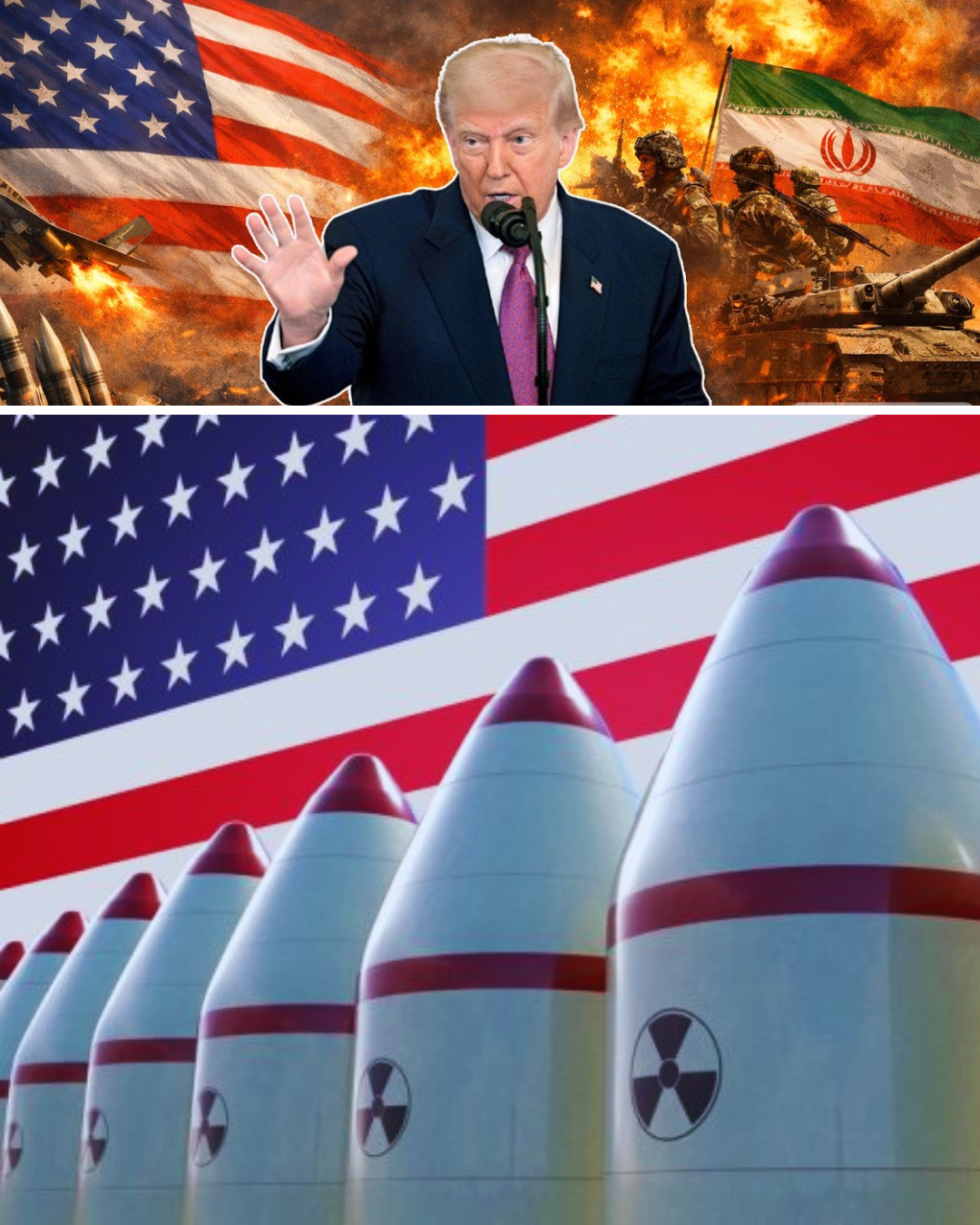
WASHINGTON D.C. — President Donald Trump has struck a triumphant tone regarding the United States’ military readiness for a potential protracted conflict with Iran. Amid reports of a “race against time” to neutralize Tehran’s missile and drone capabilities, the President asserted that the U.S. possesses a near-limitless supply of weaponry, capable of sustaining operations indefinitely.
“Infinite” Weaponry and Global Reserves
In a series of public statements on March 2, President Trump addressed concerns raised by a Wall Street Journal report suggesting that the U.S. might face a shortage of interceptor missiles if the current pace of conflict continues. Trump countered this by stating, “As I have said, the U.S. has a near-infinite supply of weapons. Conflicts can last forever and be very successful with this supply alone”.
The President further elaborated that U.S. ammunition stockpiles at “medium to high-medium” levels are better than ever. While he acknowledged that top-tier stockpiles have not yet reached desired maximums, he revealed that a significant amount of American weaponry is currently being “stored by other nations” for U.S. use. “The U.S. is fully prepared and ready to win big,” Trump declared, hinting at an indefinite military commitment if necessary.
Pentagon Internal Warnings
Despite the President’s optimism, internal voices at the Pentagon, including General Dan K. and other senior officials, have signaled caution. Prior to the commencement of “Operation Epic Fury,” military leaders warned about the potential strain a major Iranian campaign could place on U.S. personnel and assets already deployed in the region.
Strategic analysts have noted that a prolonged offensive could drain critical resources originally intended to support Israel and Ukraine. Furthermore, while the U.S. currently enjoys air superiority, it remains unclear how long regional Arab allies can maintain their own air defense systems before they are significantly degraded.
Objectives and Ground Troop Speculation
U.S. Defense Secretary Pete Hegseth recently clarified the specific military objectives of the campaign:
-
Total destruction of Iran’s offensive missile production and launch capabilities.
-
Neutralization of the Iranian Navy.
-
Dismantling of security infrastructure to prevent nuclear weaponization.
While Hegseth stated that the U.S. currently has no troops deployed on Iranian soil, he notably left the door open for future possibilities. He emphasized that the administration would no longer “telegraph” its moves to enemies, calling the practice of revealing troop timelines and limits “foolish”. However, analysts warn that introducing ground forces, whether special ops or infantry, would dramatically increase the risk of U.S. casualties and potentially lead to a “new quagmire” similar to the decades-long presence in Afghanistan.
Economic Leverage: The Hormuz Threat
The conflict has already sent shockwaves through global energy markets. Iran continues to hold the “Hormuz Card”—the ability to paralyze the Strait of Hormuz, through which 20% of the world’s oil and gas flows.
Global Brent crude prices have already spiked 13% to over $82 per barrel following news of potential disruptions. Within the U.S., gas prices are projected to rise toward $3.50 per gallon in the coming months, a sensitive issue as the mid-term elections approach. Shipping giant Maersk has already suspended all transits through the strait, rerouting vessels around the Cape of Good Hope.
Rejection of Diplomacy
On the diplomatic front, the situation remains at a stalemate. Ali Larijani, Secretary of Iran’s Supreme National Security Council, has categorically rejected any negotiations with Washington, dismissing rumors of back-channel talks via Oman. As of March 2, Larijani maintained that the Iranian people are in a state of self-defense against “American aggression.”
With three U.S. service members confirmed dead and five others seriously injured in the latest exchange of fire, the conflict shows no signs of an early resolution, despite the President’s “victorious” rhetoric.