Iran Unleashes “Rain of Missiles” on U.S. Airbase in Bahrain as Regional Conflict Intensifies
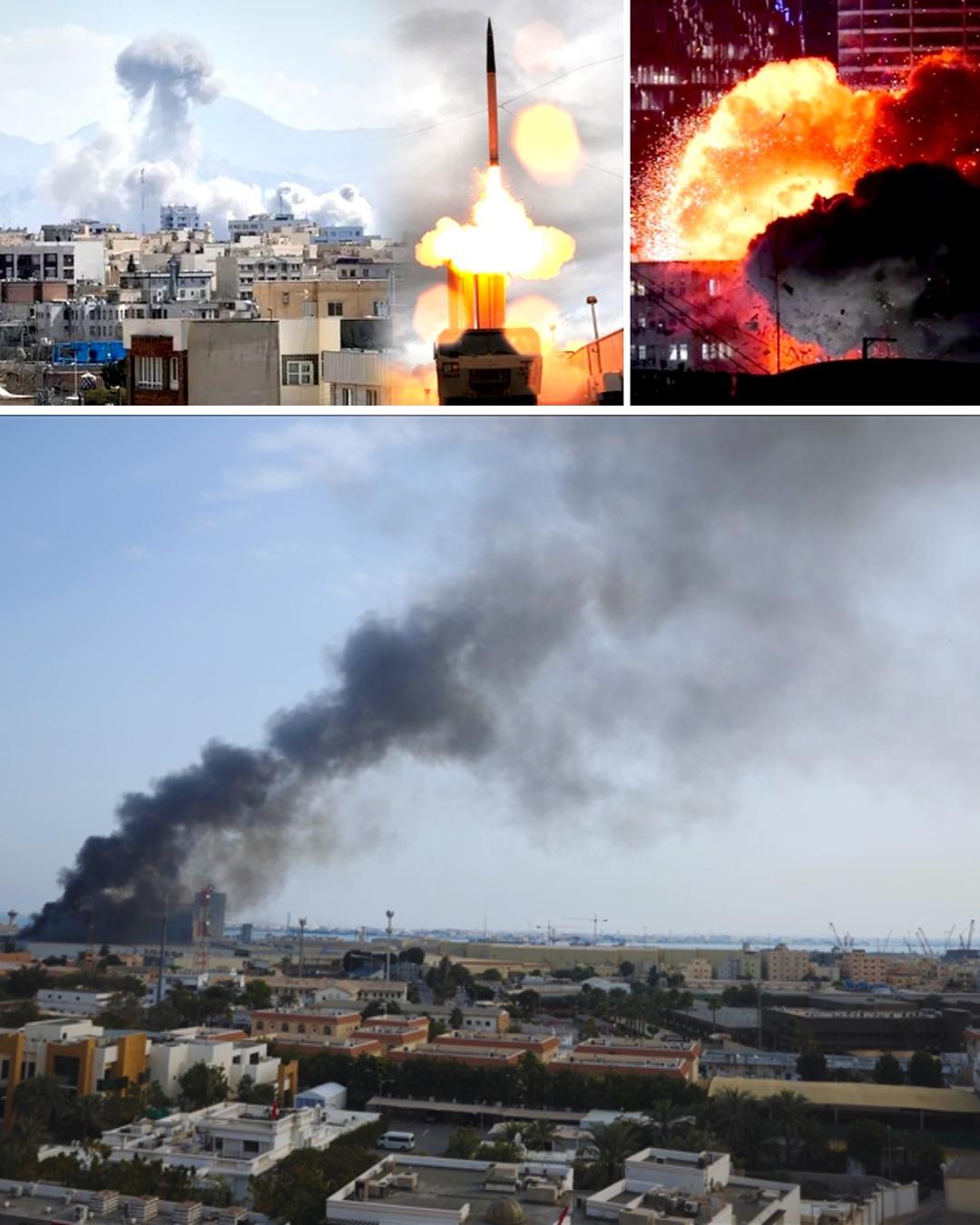
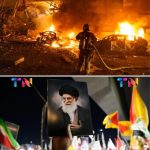
MANAMA — The Middle East has entered a perilous new phase of escalation following a massive drone and missile strike launched by the Islamic Revolutionary Guard Corps (IRGC) against a key American military installation in Bahrain. The attack marks a significant expansion of Tehran’s retaliatory campaign, which was triggered by the recent U.S.-Israeli strikes on the Iranian capital.
The Strike on Sheikh Isa Airbase
On March 2, the IRGC claimed responsibility for a sophisticated, large-scale operation targeting the Sheikh Isa Airbase in Bahrain. According to Iranian state media, the assault involved 20 unmanned aerial vehicles (UAVs) and three ballistic missiles. Tehran asserts that the strike successfully destroyed the base’s primary command building and ignited several fuel storage tanks . While Bahraini officials have yet to provide a formal comment, the U.S. Central Command (CENTCOM) confirmed that U.S. forces have continued to conduct decisive strikes against IRGC command structures and missile launch sites to neutralize “imminent threats”.
A War of Attrition?
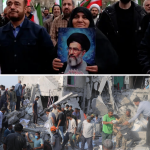
The conflict, which began on February 22 with heavy U.S.-Israeli bombardments of Tehran—resulting in the death of Supreme Leader Ali Khamenei—shows no signs of abating. Israeli Prime Minister Benjamin Netanyahu stated on March 2 that while the war might last “some time,” it would be “decisive” and not turn into a years-long entanglement like Iraq or Afghanistan.
However, U.S. President Donald Trump, who initially projected a timeline of four to five weeks for the operation, has acknowledged the possibility of a longer duration. This uncertainty comes amid waning public support in the United States; a recent Reuters poll indicates that only 25% of Americans approve of the strikes, reflecting a deep-seated skepticism toward direct military intervention in foreign conflicts.
The Specter of Ground Intervention
The prospect of an escalation involving ground troops remains a contentious issue. U.S. Defense Secretary Pete Hegseth recently emphasized that while there are currently no soldiers on Iranian soil, the administration will not “publicly telegraph” its future moves. Hegseth reiterated that the primary military objectives remain the destruction of Iran’s missile production, its navy, and its nuclear infrastructure.
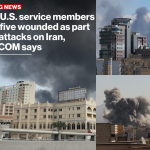
Military analysts warn, however, that while air superiority protects U.S. pilots, any shift toward ground operations would significantly increase the probability of service member casualties and could lead to a “new quagmire” on the shores of the Persian Gulf. Already, reports indicate that three U.S. military personnel have been killed and five others seriously injured in recent exchanges.
Economic Warfare: The Hormuz Chokepoint
Beyond the kinetic battlefield, Iran continues to hold its most potent economic weapon: the Strait of Hormuz. Responsible for the transit of 20% of the world’s oil and gas, any blockade of this narrow waterway would send shockwaves through the global economy.
The mere risk of disruption has already caused Brent crude prices to skyrocket by 13% to over $82 per barrel . In the U.S., experts predict gasoline prices could jump to the mid-$3 range, creating immense political pressure on the Republican administration during an election year. Shipping giant Maersk has suspended all transits through the region, opting for the longer route around Africa to avoid the escalating danger.
Diplomatic Deadlock
On the diplomatic front, the bridge between Washington and Tehran appears permanently burned. Ali Larijani, Secretary of Iran’s Supreme National Security Council, categorically rejected any possibility of negotiations with the U.S., labeling President Trump’s actions as “dragging the region into chaos”. Over the past 48 hours, Iran has reportedly launched a total of 1,311 missiles and UAVs at various targets across the region, asserting a state of “national self-defense”.
As the conflict enters its second week, the international community remains on high alert, watching to see if the cycle of “Epic Fury” and Iranian retaliation will consume the stability of the entire Middle East.