Trump Draws Hard Line as White House Rejects “Long-Term Quagmire” in Iran Conflict
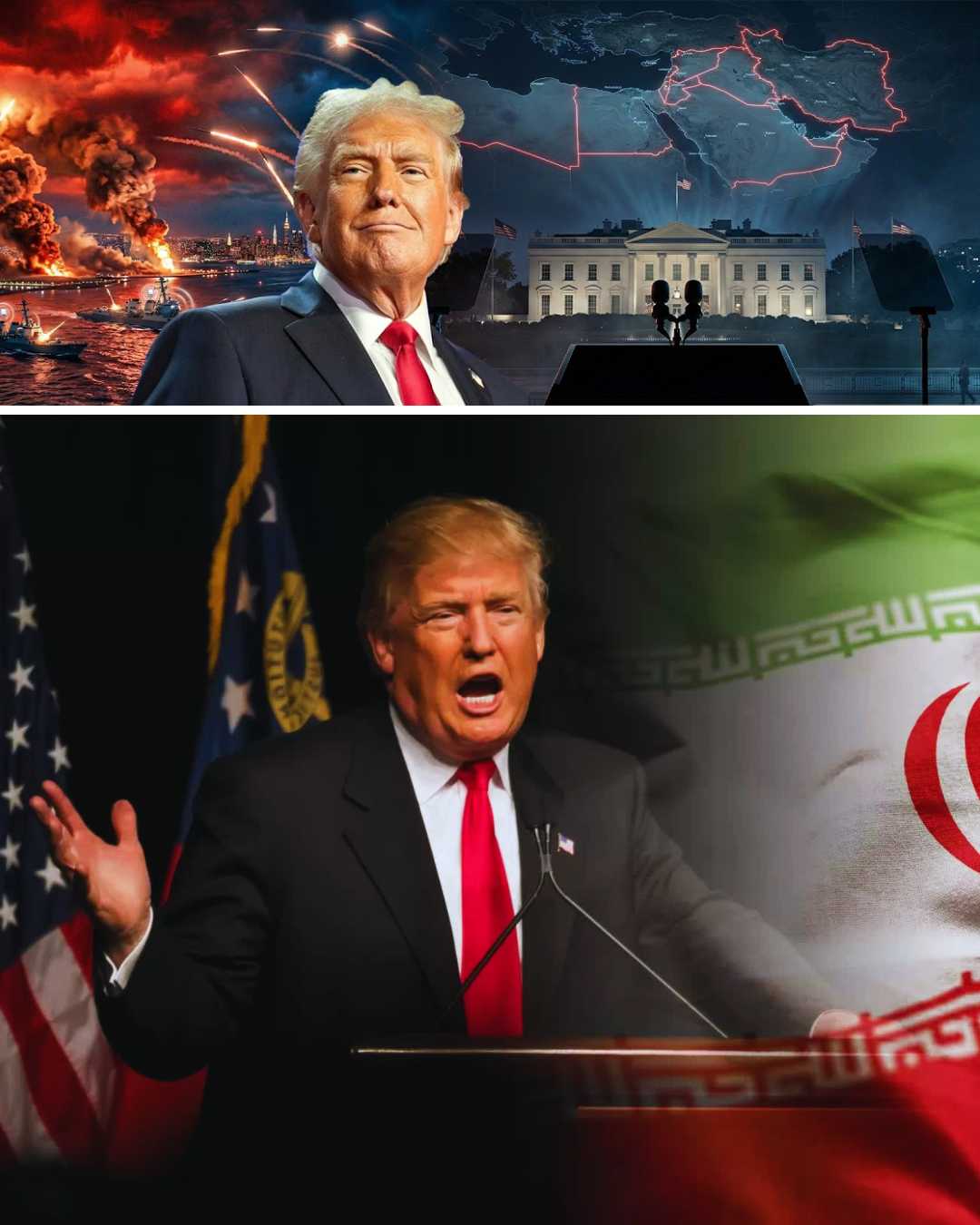
WASHINGTON, D.C. — As the Middle East teeters on the edge of a full-scale regional war, the White House has moved aggressively to clarify its mission parameters. Vice President J.D. Vance, in his first major interview since the initiation of U.S. airstrikes, emphasized that President Donald Trump has no intention of allowing the United States to become “stuck” in a multi-year conflict reminiscent of previous interventions in Iraq and Afghanistan.
Defining the Mission: No Nuclear Iran
Speaking with Fox News, Vice President Vance asserted that the current military campaign is governed by a singular, clearly defined objective: ensuring that Iran never possesses nuclear weapons and making a long-term commitment to prevent the rebuilding of such capabilities. Vance sought to distance the administration from the “endless wars” of the past, stating that President Trump will not lead the nation into a conflict without an explicit end goal and a definitive exit strategy.
The administration’s stance comes as the conflict enters a critical phase. National security officials estimate that the current campaign, which President Trump suggests could last approximately four weeks, is designed to be decisive rather than open-ended.
Escalation and the “Rain of Fire”
The scale of the U.S. and Israeli offensive, titled “Operation Epic Fury,” has been described as the largest concentration of regional firepower in a generation. Within the first 48 hours of the campaign, U.S. Central Command (CENTCOM) reported strikes on over 1,250 strategic targets across Iran. These targets included command centers, ballistic missile launchers, naval assets, and fortified underground facilities.
Tactical reports indicate that the U.S. has deployed its most advanced weaponry, including B-2 Spirit stealth bombers to strike hardened bunkers with 900kg precision bombs. The operation has also seen the combat debut of the “Lucas” drone—a cost-effective kamikaze UAV inspired by Iranian designs and produced for approximately $35,000 per unit. These have been used alongside high-end assets like Tomahawk cruise missiles and F-35 Lightning II stealth fighters to systematically dismantle Iran’s military infrastructure.
Leadership Vacuum and Regional Retaliation
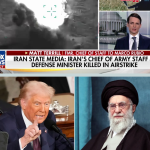
The geopolitical landscape of the region was fundamentally altered by reports that Iran’s Supreme Leader, Ali Khamenei, along with several high-ranking officials, were killed in the initial waves of the bombardment. In response, the Islamic Revolutionary Guard Corps (IRGC) has declared a “total counter-attack,” launching its sixth wave of strikes aimed at 27 U.S. and Israeli military bases scattered throughout the Middle East.
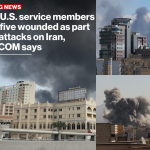
The retaliatory strikes have not been confined to military targets. Major urban centers and luxury hubs across the Persian Gulf, including Dubai and Bahrain, have reported damage. In Dubai, debris from intercepted missiles lit up the night sky over popular tourist destinations, while in Bahrain, the Crown Plaza hotel in Manama was reportedly damaged by fire.
Immediate Evacuation and Security Risks
The severity of the security environment prompted the U.S. State Department to issue an urgent exit order for American citizens in 16 Middle Eastern countries. The list includes major regional partners such as the UAE, Qatar, Saudi Arabia, and Jordan. Washington has advised citizens to utilize commercial flights immediately and maintain 24/7 contact with consular services as the risk of further escalation remains at a historic high.
While Secretary of State Marco Rubio has suggested that the mission’s objectives can be achieved without the deployment of ground forces, the White House remains prepared for a massive surge in operations over the next 24 hours. As President Trump stated in a recent social media message, any further aggression from Tehran will be met with “a strength that the world has never seen before”.