Ukraine Offers Drone Defense Expertise to Middle East Amid Iranian Escalation; Conditions Set for Ceasefire
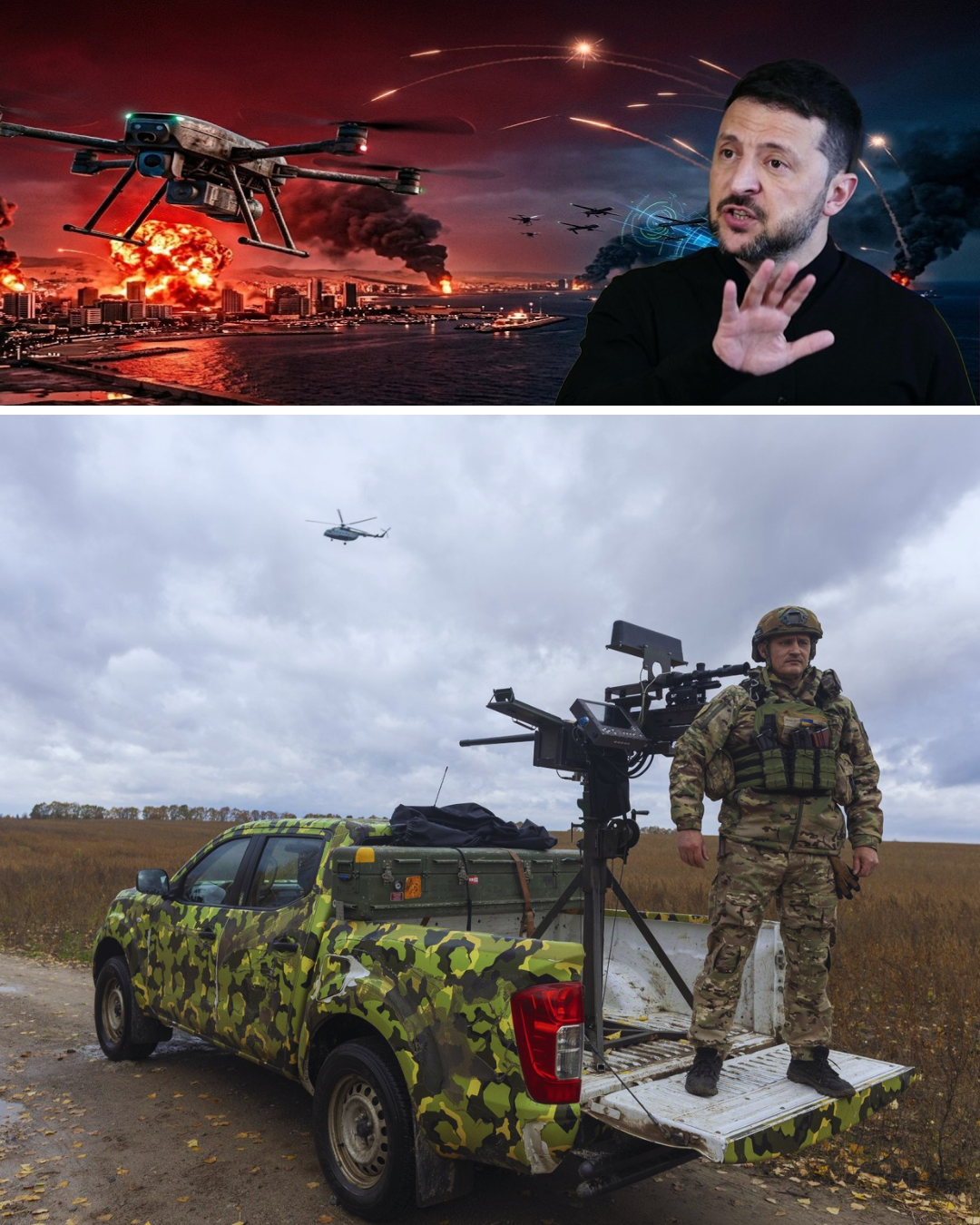
KYIV / DUBAI — As the Middle East faces an unprecedented wave of Iranian drone and missile attacks, Ukrainian President Volodymyr Zelenskyy has extended a strategic offer to regional leaders. Kyiv is prepared to deploy its top experts in neutralizing Iranian-made Unmanned Aerial Vehicles (UAVs) to the Gulf, provided that regional power brokers can secure a humanitarian ceasefire in the ongoing war with Russia.
The “Shahed” Experience: Kyiv’s Leverage
In a televised address on March 1, President Zelenskyy emphasized that Ukraine has accumulated “irreplaceable” combat experience in intercepting Iranian-designed weaponry. Having spent years defending its territory against Shahed-class loitering munitions—often rebranded by Moscow as “Geran-2″—Ukraine claims a near-perfect understanding of the technical vulnerabilities of Tehran’s drone fleet.
“I propose the following: Middle Eastern leaders, who maintain strong ties with Moscow, can request a one-month ceasefire,” Zelenskyy stated. In exchange for this diplomatic breakthrough, Ukraine vows to share its real-world defense tactics and specialized personnel to protect major Middle Eastern cities, including Dubai, which recently faced missile and drone threats.
A Region Under Fire
The urgency of Zelenskyy’s offer coincides with a massive retaliatory campaign by Iran following the death of its Supreme Leader, Ali Khamenei, in joint U.S.-Israeli strikes on February 28. In the last 48 hours, Tehran has launched over 1,300 missiles and drones, targeting:
-
Infrastructure in the UAE and Qatar: Reports indicate Iranian UAVs struck a warehouse at the Al-Salam naval base in Abu Dhabi, damaging French and Emirati assets.
-
U.S. and Allied Bases: Missiles have targeted installations in Iraq, Bahrain, Kuwait, and Cyprus, where a British airbase (RAF Akrotiri) was reportedly hit.
A joint statement from the U.S., Bahrain, Jordan, Qatar, Saudi Arabia, and the UAE has condemned Tehran’s “reckless and indiscriminate” attacks as a dangerous escalation that threatens the sovereignty and safety of the entire region.
Iran’s Transition to a “Garrison State”
Strategic analysts warn that the death of Ayatollah Khamenei has pushed Iran into a state of “survival nationalism.” While a provisional leadership council has been established to ensure institutional stability, the loss of the Supreme Leader’s “strategic patience” doctrine suggests a shift toward more violent and unpredictable military responses.
Michael Mulroy, a former U.S. Deputy Assistant Secretary of Defense, noted that Iran’s dual military structure—comprising the regular army (Artesh) and the Revolutionary Guard (IRGC)—is designed to function automatically even if the political leadership is decapitated. This institutional resilience is currently being channeled into a “total counter-attack” across the Middle East.
Global Navies Converge
In response to the chaos, international powers are repositioning their forces. France has diverted its aircraft carrier, Charles de Gaulle, from its Baltic mission to the Eastern Mediterranean to protect its interests and prepare for the potential evacuation of French citizens. President Emmanuel Macron convened an emergency Defense and National Security Council, describing the current regional escalation as “unprecedented”.
Collateral Conflicts: Pakistan and Cuba
The Middle Eastern crisis appears to be triggering instability elsewhere. On the Pakistan-Afghanistan border, open warfare has broken out following Pakistani airstrikes on Kabul and Kandahar in retaliation for cross-border attacks. Meanwhile, the Kremlin has called for restraint in the Caribbean after a fatal clash between Cuban border guards and a Florida-registered speedboat, which Moscow labeled an “American provocation”.
As the world watches the “Epic Fury” of the U.S. and Israel clash with Tehran’s “Rain of Fire,” Ukraine’s offer highlights the interconnected nature of modern warfare. Whether Middle Eastern leaders will trade a Russian ceasefire for Ukrainian drone expertise remains a pivotal question in this rapidly shifting global conflict.