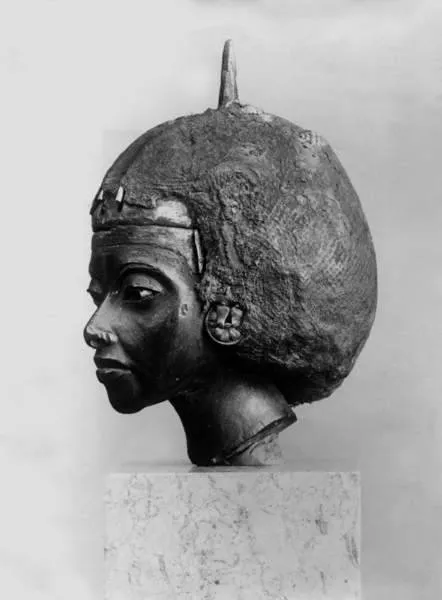
Queen Tiye in Miniature — Power Carved in Silence
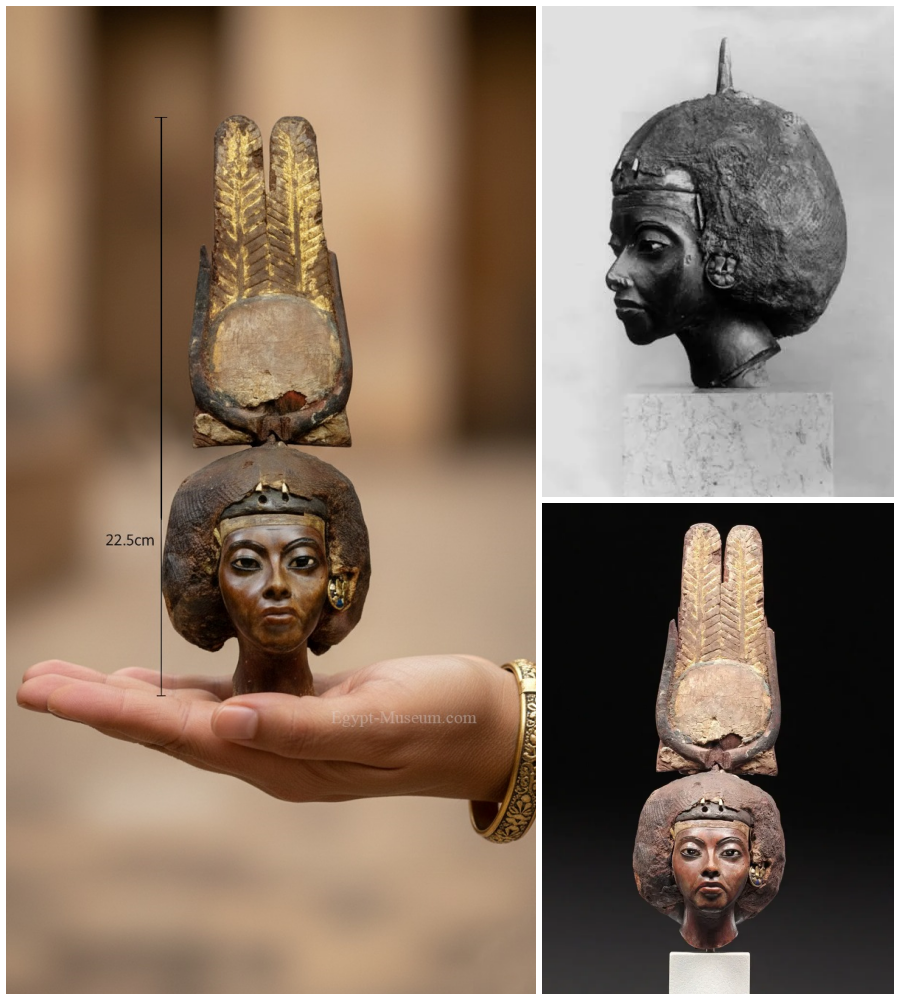
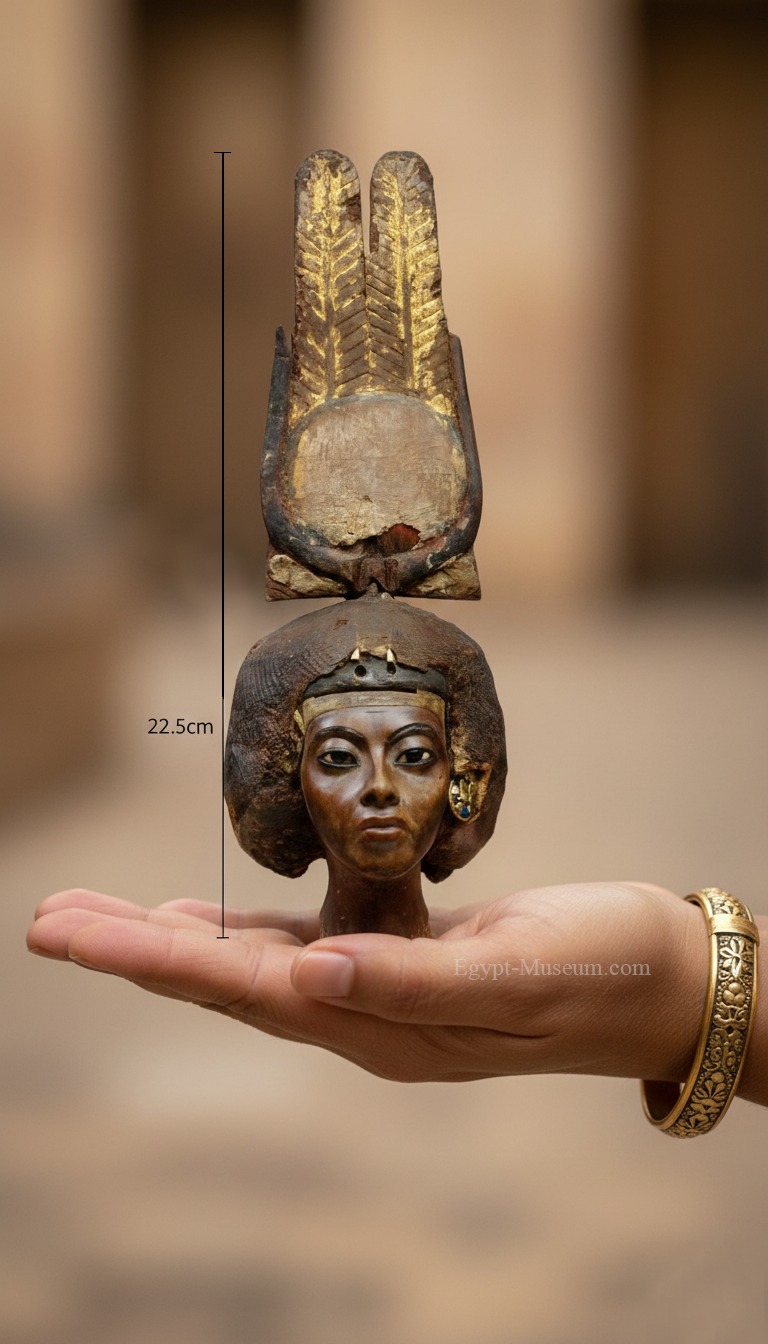
Small enough to rest in the palm of a hand, yet commanding enough to embody an empire — the Yew Wood Head of Queen Tiye stands as one of the most intimate and powerful portraits to survive from Ancient Egypt’s New Kingdom.
Created during the reign of Amenhotep III (c. 1391–1353 B.C.), this remarkable sculpture was discovered at Medinet el-Gurob and now resides in Berlin’s Neues Museum (ÄM 21834, ÄM 17852). At first glance, its scale surprises viewers: the face measures barely five centimeters high, and even with the elegant double plumes rising from her round beaded crown, the entire figure reaches only about 22.5 centimeters.
Yet size was never the measure of authority in Ancient Egypt.
Queen Tiye was no ordinary royal consort. She was a political force, a diplomatic presence, and one of the most influential women of the 18th Dynasty. Foreign rulers addressed her directly in international correspondence, and her image appeared prominently alongside the king — a rare honor that reflected her extraordinary status.
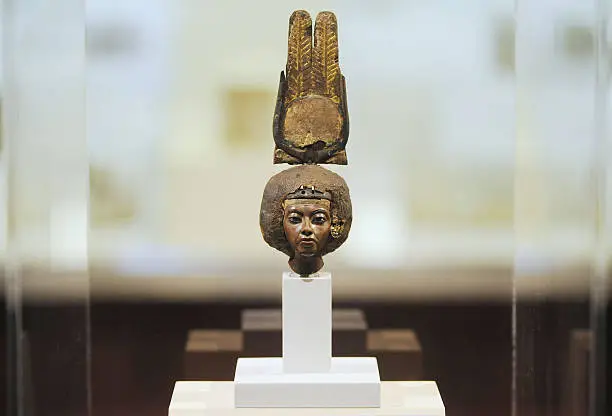
The sculpture captures that quiet dominance. Carved from warm yew wood, the face radiates calm assurance: high cheekbones, steady gaze, and a composed expression that suggests intelligence rather than ornamentation. There is no exaggerated grandeur, no overwhelming scale — only controlled elegance and undeniable presence.
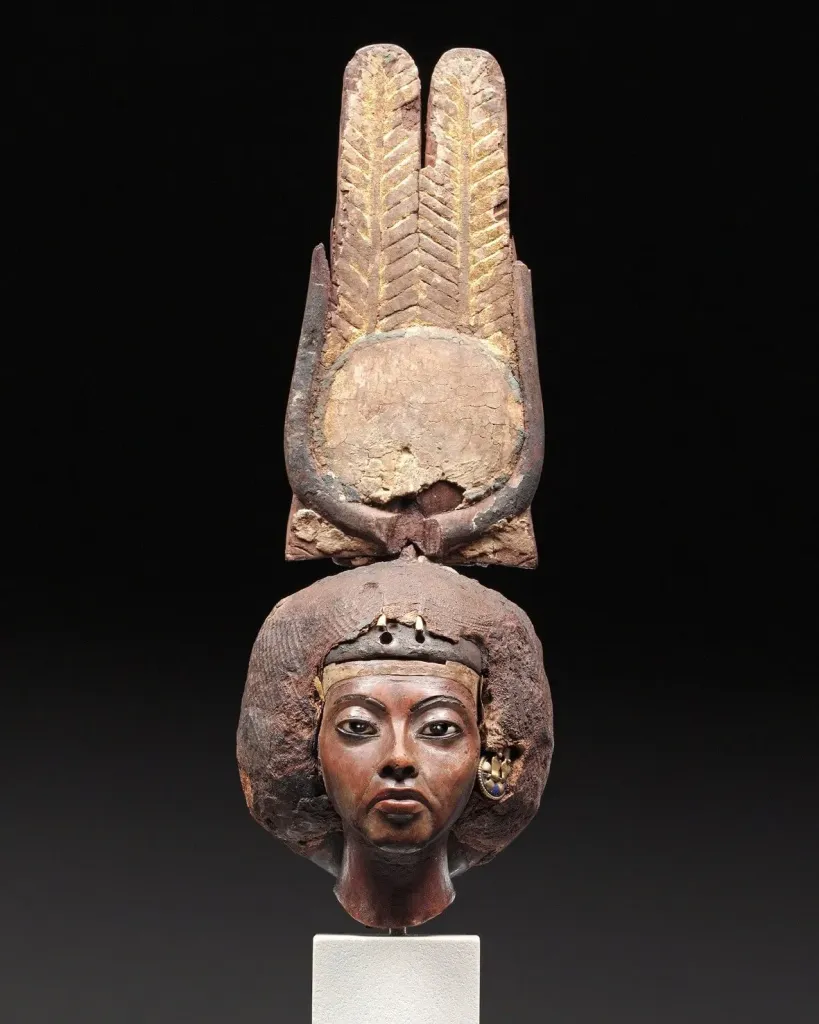
This is monumentality condensed into miniature form. The artist achieved something remarkable: transforming a small object into a vessel of royal authority. Holding it would not feel like holding a figurine, but like holding a fragment of power itself.
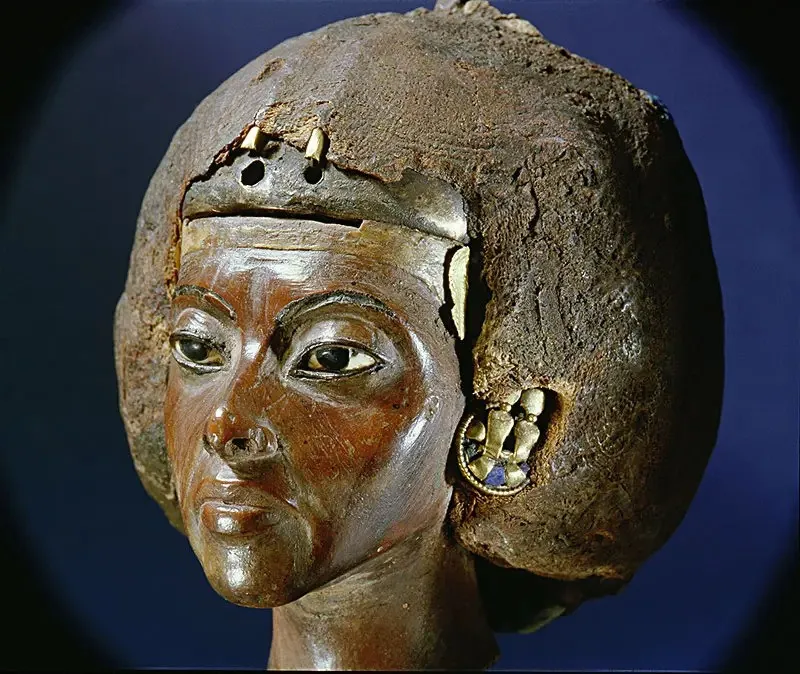
More than three thousand years later, the piece reminds us that influence does not always announce itself loudly. Sometimes it exists in restraint, in balance, in the confidence of a ruler whose strength required no exaggeration.
In Queen Tiye’s likeness, we see a timeless truth — greatness is not defined by size, but by presence.