Jar Burial — Where Life and Death Curved into One Another
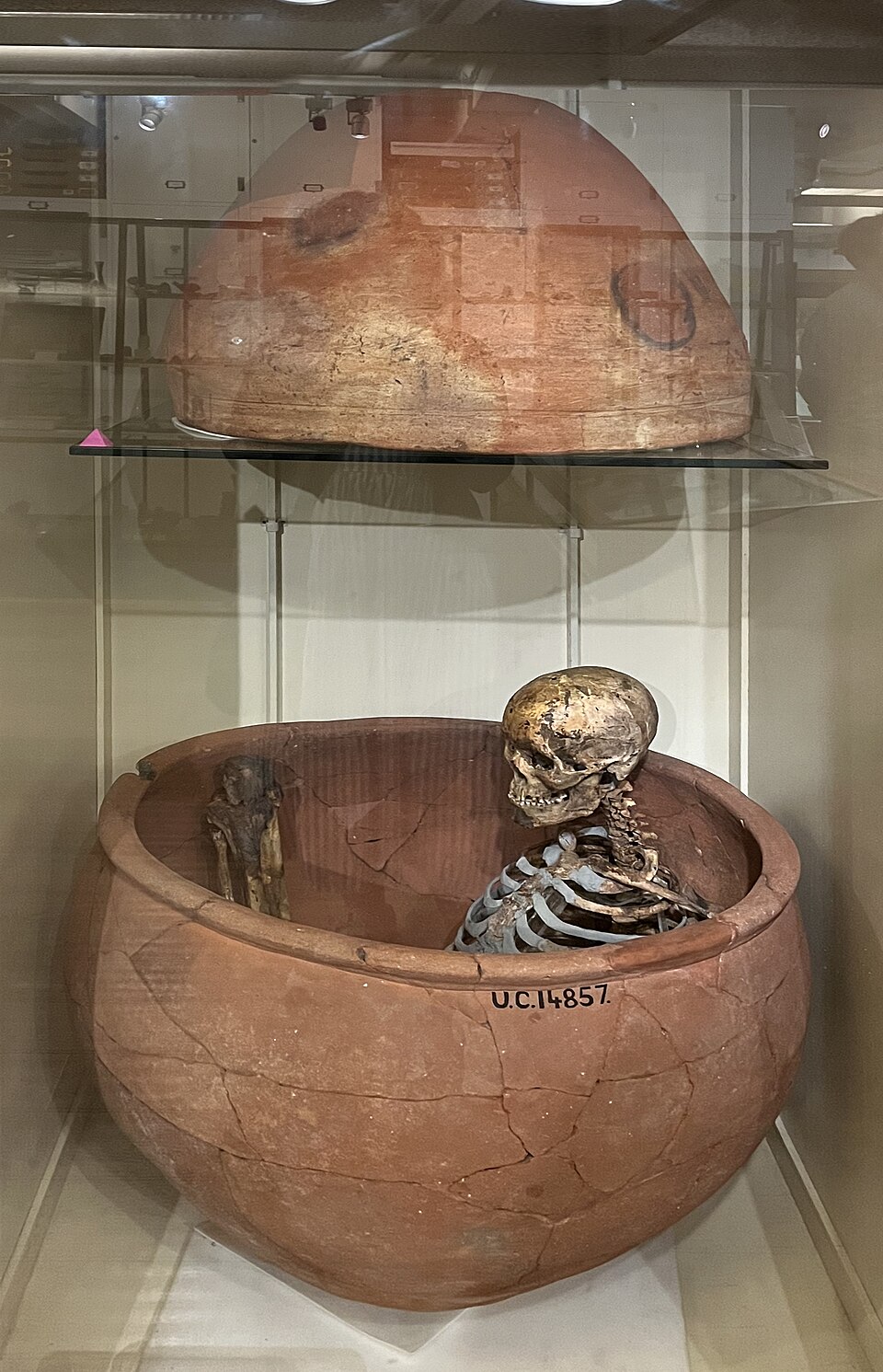
Probably Predynastic–Early Dynastic Period, c. 4000–2800 B.C.
Petrie Museum of Egyptian Archaeology — U.C. 14857
Long before pyramids rose against the horizon, before gilded sarcophagi and painted tomb walls told stories of the afterlife, Egypt’s earliest funerary expressions were shaped in clay.
This large pottery vessel was never meant to store grain or water. Instead, it cradled the dead.
During the Predynastic and Early Dynastic periods, infants — and sometimes adults — were buried within ceramic jars, placed in a contracted, fetal position and lowered directly into the earth. The vessel became both coffin and womb. Its rounded interior echoed the curve of the body inside, suggesting not only death, but return — a symbolic gesture toward rebirth.
Discovered in the Badari region of Upper Egypt, this example connects to one of the Nile Valley’s earliest agricultural societies: the Badarian culture. Flourishing in the fifth millennium B.C., the Badarians are known for their refined red-polished, black-topped pottery and for cemeteries that reveal thoughtful, deliberate burial customs — despite the absence of monumental architecture.
In shallow desert graves overlooking the fertile floodplain, these early communities expressed beliefs about identity, continuity, and the mysteries of existence. There were no grand temples, no carved colossi — only carefully shaped clay and the quiet act of entrusting the deceased to the earth.
The jar burial stands as a poignant reminder: Egyptian funerary tradition did not begin with mummies or pyramids. It began with pottery — intimate, symbolic, and profoundly human.
In its modest scale lies the foundation of an entire civilization’s theology: death not as an end, but as a return to the source.