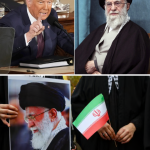
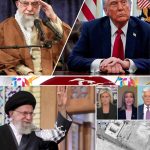
Middle East at a Crossroads: Iran Unleashes Retaliatory Waves as Regional Stability Hangs in the Balance
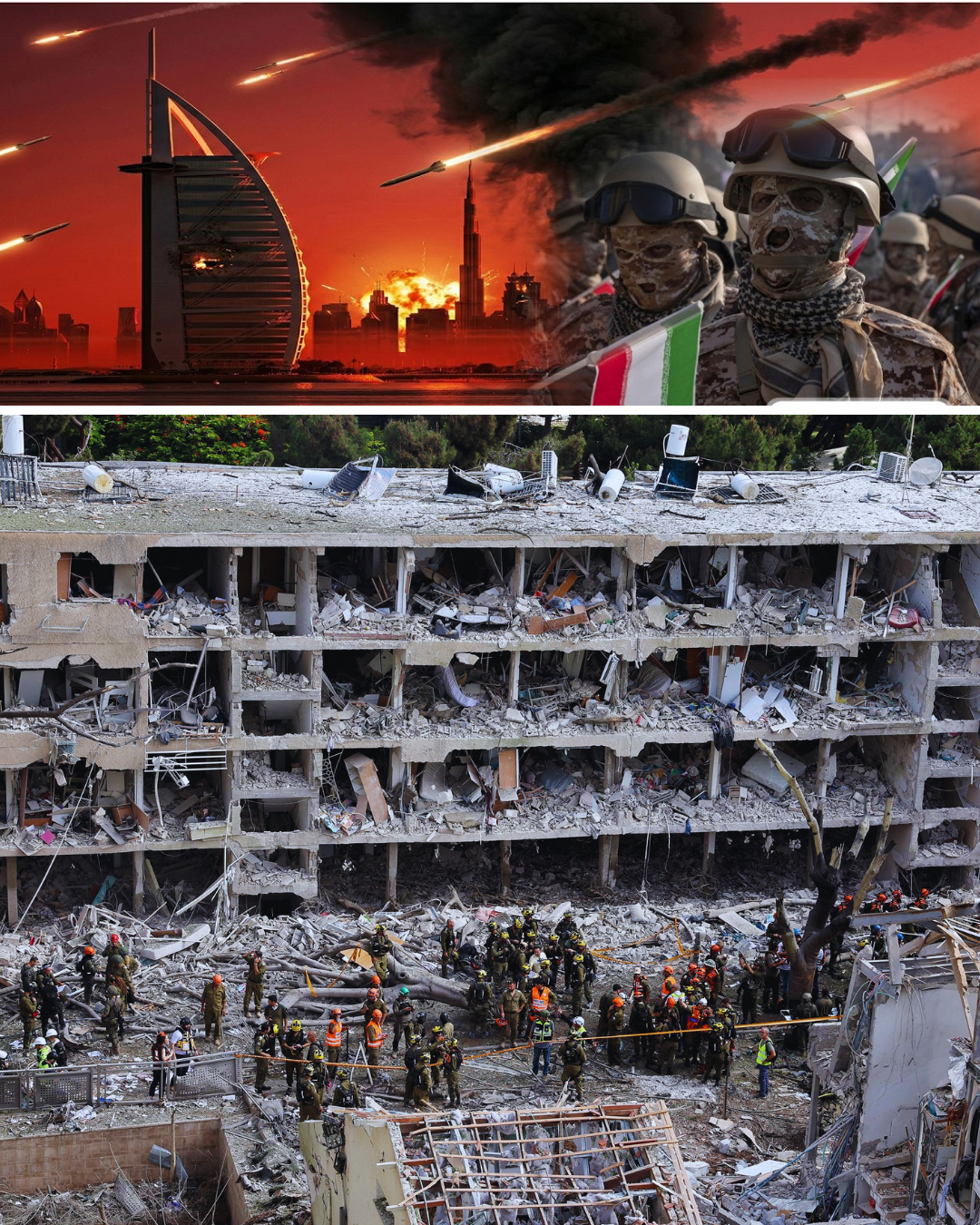
DUBAI / JERUSALEM — The Middle East has entered a state of heightened volatility as Iran launched its 11th wave of coordinated drone and missile strikes, part of its “True Promise IV” campaign. The escalation follows the confirmed death of Supreme Leader Ali Khamenei in a joint U.S.-Israeli preemptive strike, an event that has fundamentally altered the security landscape of the Persian Gulf.
The “Rain of Fire” Retaliation
In a massive show of force over the past 48 hours, the Islamic Revolutionary Guard Corps (IRGC) reportedly launched over 1,300 missiles and 700 kamikaze drones at strategic targets across the region. The strikes aimed at 60 high-value locations, including U.S. intelligence centers and logistics hubs in the Gulf, as well as Israeli industrial and media complexes in Beer Sheva and Galilee.
Notably, the U.S. Embassy in Saudi Arabia was targeted by two Iranian drones, resulting in minor fire damage but no reported casualties. In the United Arab Emirates, defense systems were placed on maximum alert as debris from intercepted missiles fell near Dubai’s Jebel Ali port and luxury hubs like the Palm Jumeirah. Despite the intensity of the attacks, UAE President Mohamed bin Zayed Al Nahyan made a public appearance in Dubai to reassure citizens of the nation’s security and stability.
The Decapitation of Tehran’s Leadership
The current crisis was ignited on February 28, when U.S. and Israeli forces launched “Operation Epic Fury.” This preemptive strike, authorized by President Donald Trump, targeted over 1,250 strategic locations within 48 hours. The most significant outcome was the death of Ayatollah Ali Khamenei, who was reportedly killed in an above-ground facility near the Pasteur district in Tehran.
Intelligence reports suggest the strike was made possible by a multi-year breach of Tehran’s municipal infrastructure. Israeli intelligence reportedly accessed the city’s traffic camera network, allowing them to map out the “behavioral patterns” of the Iranian leadership. This allowed coalition forces to pinpoint the exact moment the Supreme Leader and his inner circle gathered, bypassing their usual underground security protocols.
Washington’s Formal Stance and Domestic Debate
President Donald Trump has officially notified the U.S. Congress of the military actions, citing his authority as Commander-in-Chief. In a formal letter, Trump characterized the Iranian threat as “unacceptable” and stated that the mission was designed to dismantle Tehran’s nuclear and ballistic missile industry.
However, the administration faces internal pressure. A bipartisan group of lawmakers is pushing for a War Powers Resolution to limit the President’s authority to order further military actions without formal congressional approval. Critics, led by Senator Adam Schiff, argue that while Tehran’s actions are hostile, they do not pose an “imminent threat” to the U.S. mainland that justifies a full-scale campaign for regime change.
Economic Shockwaves and the “Hormuz Card”
The conflict has sent immediate tremors through global markets. Iran’s official closure of the Strait of Hormuz—the world’s most critical artery for oil and gas—has caused Brent crude prices to surge by 13%, surpassing $82 per barrel. Shipping giant Maersk has suspended all regional transits, opting for the longer route around the Cape of Good Hope. Analysts warn that a sustained blockade could push U.S. gasoline prices to the $3.50 per gallon range, creating immense political and economic pressure globally.
Diplomatic Deadlock or Last-Minute Exit?
On the diplomatic front, Iranian Foreign Minister Abbas Araghchi has signaled that a “fair agreement” is still possible, provided Washington treats Tehran with respect. Iran has reportedly offered to reduce the purity of its 60% enriched uranium stockpile to 20% under IAEA supervision as a potential de-escalation measure. However, with the U.S. 5th Fleet headquarters in Bahrain suffering significant damage and President Trump vowing a “massive surge” in operations, the path toward a diplomatic resolution appears increasingly narrow.
As the international community watches with bated breath, the “Epic Fury” of Washington and the “Rain of Fire” from Tehran have set in motion a transformation of the Middle East whose ultimate conclusion remains dangerously uncertain.