Strait of Hormuz Crisis: Iran Claims Total Control as Global Energy Markets Shudder
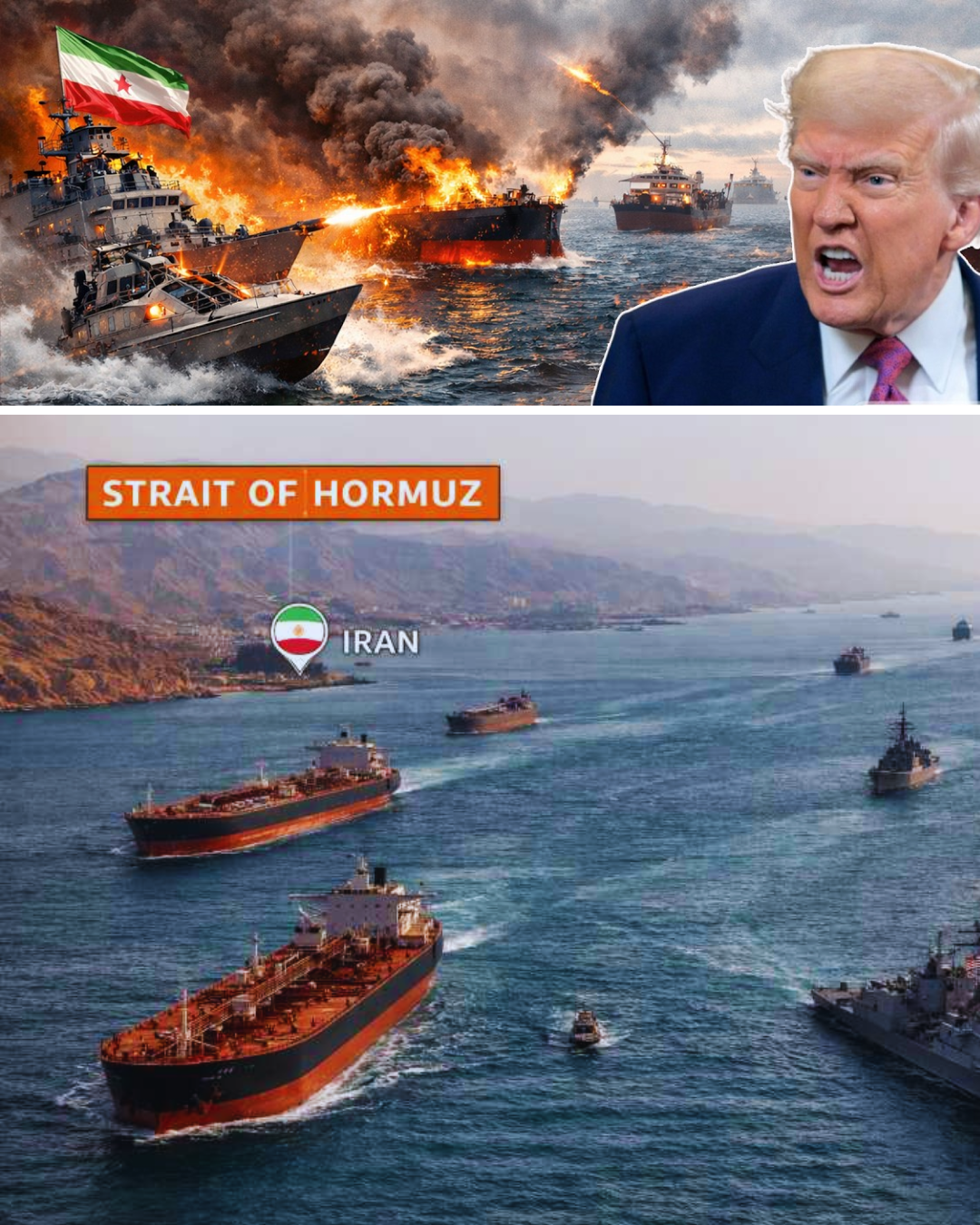
TEHRAN / WASHINGTON D.C. — The geopolitical landscape of the Middle East has reached a critical breaking point as Iran’s Islamic Revolutionary Guard Corps (IRGC) declared “complete control” over the Strait of Hormuz. The announcement, which effectively halts one of the world’s most vital energy transit routes, has triggered an immediate and forceful response from the United States, with President Donald Trump ordering emergency measures to protect global commerce.
Mohammad Akbazade, Deputy Commander of the IRGC Navy, confirmed to the FAS news agency that the strategic waterway is now entirely under Iranian jurisdiction. “The movement of oil tankers, commercial vessels, and fishing boats through these waters has become impossible,” Akbazade stated. Reports indicate that over a dozen oil tankers have already been struck and severely damaged or destroyed within the reservoir area, marking a lethal escalation in Tehran’s efforts to paralyze international shipping.
Trump’s Directive: Naval Escorts and Insurance Shields
In Washington, the response was swift and defiant. President Donald Trump announced that the U.S. Navy would begin active escort missions for tankers traversing the Strait “if necessary.” In an unprecedented move to stabilize markets, the President also mandated affordable maritime insurance for all commercial activities in the Persian Gulf, aiming to mitigate the “war risk” premiums that have skyrocketed since the conflict began.
The U.S. administration’s strategy appears twofold: maintaining the flow of global energy while dismantling Iran’s military infrastructure. Secretary of Defense Pete Hegseth, while leaving the door open for ground operations, emphasized that the U.S. would not be drawn into an “endless war” similar to the Iraq conflict. “We don’t need to send 200,000 troops for 20 years,” Hegseth remarked, highlighting a preference for bold, decisive strikes over long-term occupation. However, military analysts warn that once boots are on the ground—even in a limited capacity—the risk of escalation and a “new quagmire” on the shores of the Gulf increases significantly.
A Decimated Command and Escalating Casualties
The humanitarian and leadership toll of the conflict is mounting. Following a joint U.S.-Israeli campaign launched last Saturday, Iranian state television reportedly announced the death of Supreme Leader Ayatollah Ali Khamenei. The Red Cross estimates that at least 787 people have been killed in the waves of airstrikes.
On the operational front, the U.S. military has confirmed the loss of an F-15E Strike Eagle multi-role fighter over Kuwait. Footage circulating on social media showed the aircraft in a flat spin with a fire on its fuselage before both pilots successfully ejected. This marks a rare combat loss for the F-15 platform, underscoring the intensity of the current engagement.
The “Oil Card” and Global Economic Shockwaves
The closure of the Strait of Hormuz represents Iran’s most potent strategic lever. Approximately 20% of the world’s oil and liquefied natural gas (LNG) passes through this 21-mile-wide bottleneck daily. Global energy markets reacted instantly to the news; Brent crude prices surged 13% to over $82 per barrel as Asian markets opened. In the U.S., experts predict average gasoline prices could jump from $2.95 to well over $3.00 per gallon within months if the blockade persists.
The economic fallout extends beyond the U.S. and Iran. China, which imports roughly 25% of its oil through the Strait, faces a massive supply disruption. This “China variable” adds another layer of complexity to Tehran’s decision-making, as a prolonged blockade could alienate its most significant strategic partner.
International Calls for De-escalation
As the region teeters on the edge of total war, Russian President Vladimir Putin has called for an immediate return to dialogue, warning that the U.S.-Israeli “aggression” has shattered the progress made on the Iranian nuclear file. Moscow has pledged to do everything in its power to stabilize the region, though Washington remains focused on its stated goals: destroying Iran’s missile production, neutralizing its navy, and ensuring the regime never attains nuclear capabilities.
With the U.S. midterm elections approaching, the domestic pressure on the Trump administration to control inflation and energy costs while managing a high-stakes military intervention will be the ultimate test of its “Maximum Pressure” 2.0 strategy.