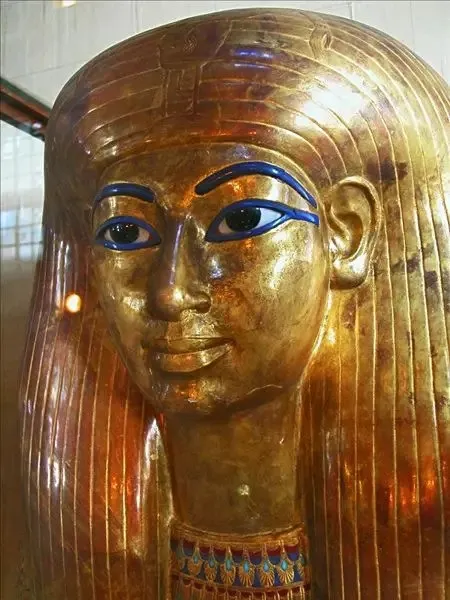
Coffin of Thuya — Matriarch of a Royal Dynasty
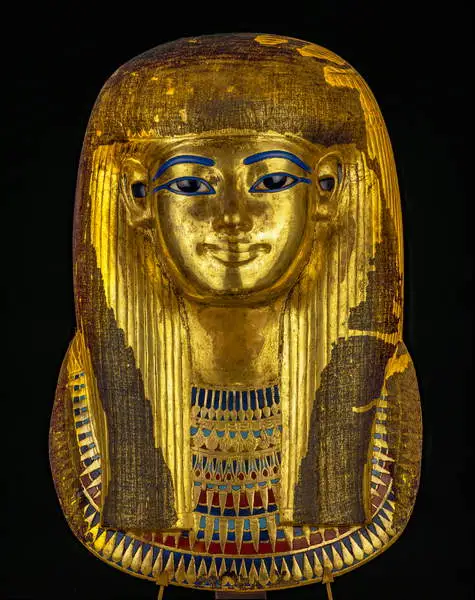
New Kingdom, 18th Dynasty, reign of Amenhotep III (c. 1391–1353 B.C.)
From Tomb of Yuya and Thuya (KV46), Valley of the Kings, Thebes
Discovered in 1905 within the intact tomb KV46 in the Valley of the Kings, the coffin of Thuya offers a rare and intimate glimpse into the power behind Egypt’s golden age.
Thuya was not a queen — yet her lineage placed her at the heart of empire. She was the mother of Queen Tiye, the formidable Great Royal Wife of Amenhotep III, and thus the grandmother of Akhenaten and great-grandmother of Tutankhamun. Through her bloodline, she stood at the root of one of the most transformative periods in Egyptian history.
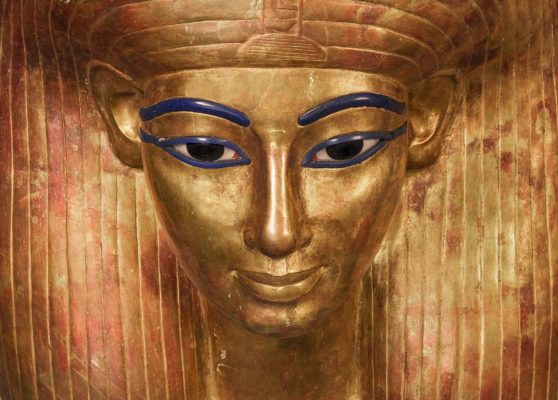
Her gilded wooden coffin reflects that elevated status. Crafted with extraordinary care, it is adorned with intricate inlays, protective deities, and hieroglyphic inscriptions invoking safe passage into the afterlife. The face, serene and idealized, is framed by a tripartite wig and broad collar, embodying both dignity and eternal youth.
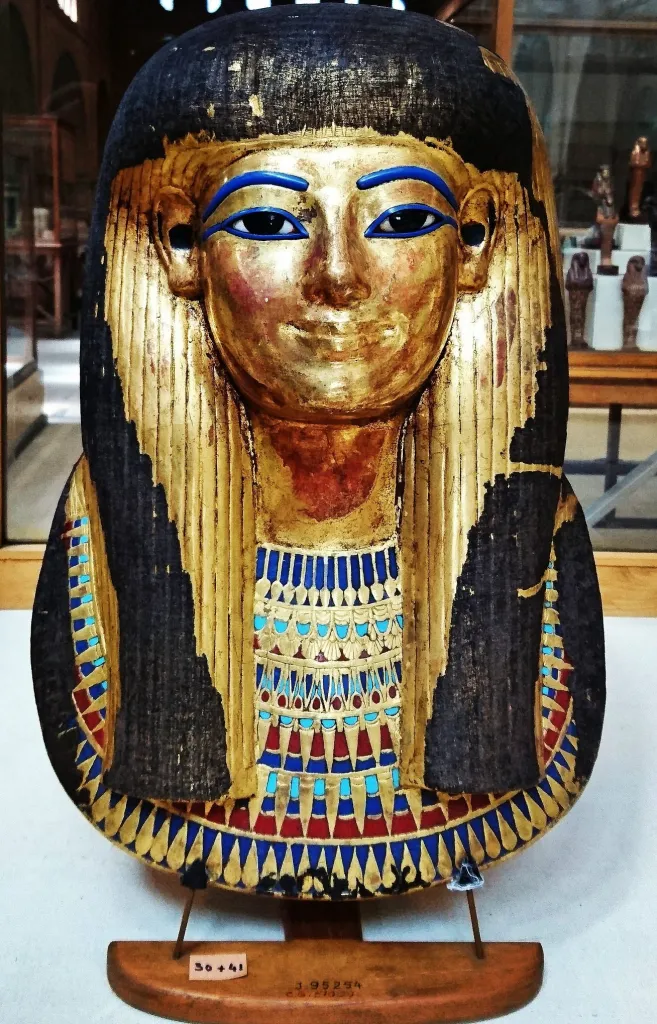
KV46 was one of the most remarkable discoveries of the early 20th century because it was found largely undisturbed — a rarity in the Valley of the Kings. Within it, the nested coffins, funerary equipment, and personal items of Yuya and Thuya survived almost intact, preserving a snapshot of elite burial practices at the height of the 18th Dynasty.
Though not born into royalty, Thuya’s burial among kings speaks volumes. It reflects the extraordinary ascent of her family and the political influence she and her husband wielded. Her coffin is not merely a container for the dead — it is a testament to dynastic power, maternal legacy, and the intricate web of relationships that shaped Egypt’s imperial zenith.
In gilded wood and sacred text, Thuya’s presence endures — a matriarch whose descendants would redefine kingship itself.