Middle East on the Brink: Iranian Strikes Shatter Air Defenses as U.S. Intensifies Strategic Bombing Campaign
WASHINGTON D.C. / TEHRAN – The conflict in the Middle East has entered a perilous new phase as Iran’s Islamic Revolutionary Guard Corps (IRGC) launched its 11th wave of retaliatory strikes, dubbed “True Promise 4,” penetrating deep into Israeli and American military strongholds. The escalation comes as U.S. President Donald Trump formally notified Congress of a wide-ranging military operation aimed at neutralizing the Iranian regime’s leadership and its nuclear and missile capabilities.
Retaliation and Resilience: Tehran Strikes Back
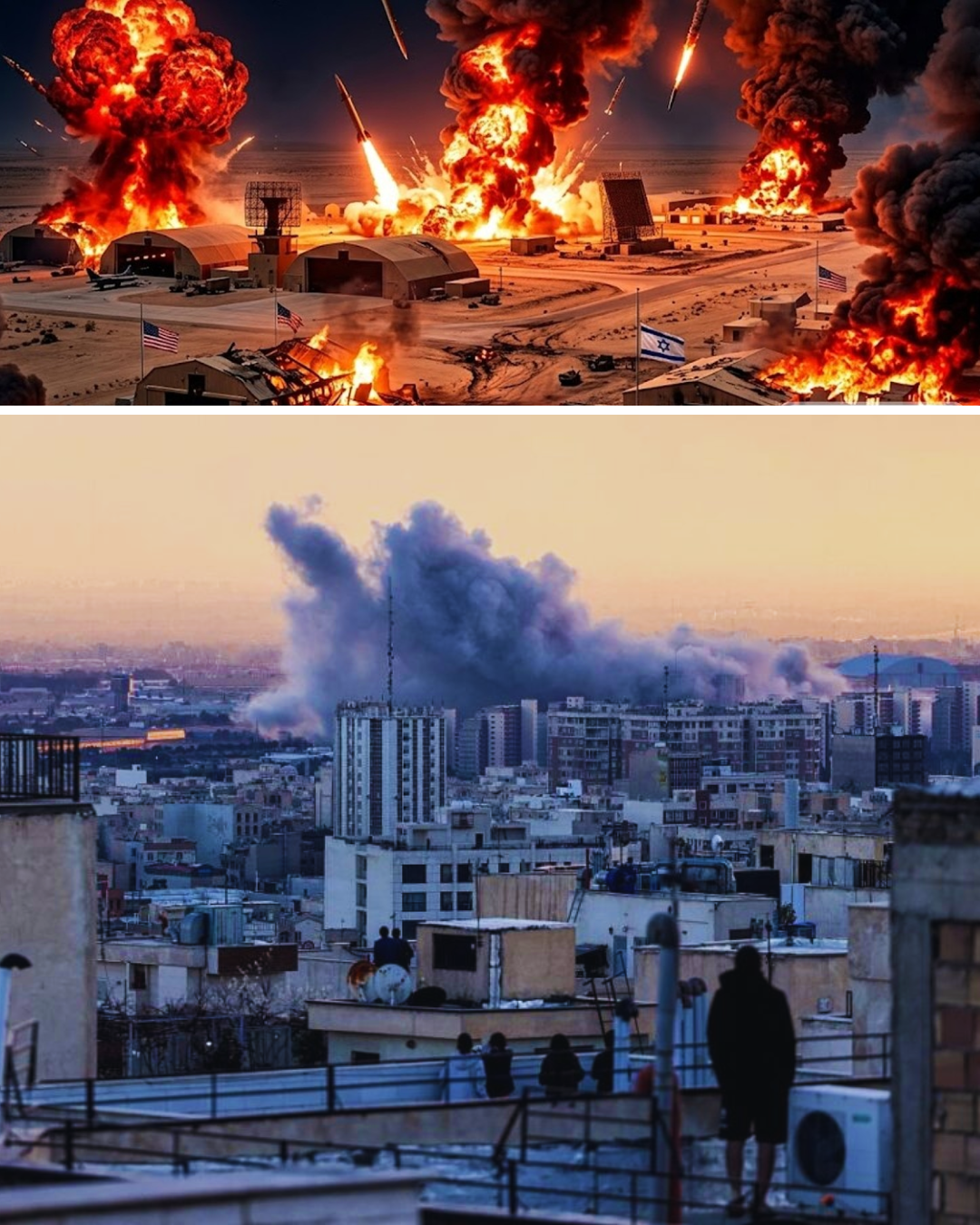
Tehran’s latest offensive, described as high-intensity and large-scale, reportedly targeted 60 strategic locations and 500 military units belonging to the U.S. and Israel. According to Iranian state media, the strikes utilized a record-breaking 700 drones and hundreds of ballistic missiles, focusing on intelligence hubs in the Persian Gulf and Israeli industrial communication complexes in Beersheba.
The human cost of the conflict continues to rise. Since the start of hostilities, U.S. Central Command (CENTCOM) estimates that Iran has fired over 500 ballistic missiles and 2,000 drones across the region. A lethal strike on a U.S. base in Kuwait on March 1 claimed the lives of six American service members. Military officials revealed to CBS News that the base lacked permanent air defenses and fortified bunkers, leaving personnel vulnerable to suicide drone attacks.
“Operation Epic Fury”: The U.S. Aerial Onslaught
In Washington, President Trump confirmed that “Operation Epic Fury” is proceeding ahead of schedule. For the second consecutive day, U.S. strategic assets—including B-1B Lancer and B-2 Spirit stealth bombers—carried out long-range missions targeting Iranian ballistic missile facilities.
Admiral Brad Cooper, Commander of CENTCOM, reported that nearly 2,000 targets have been struck within the first 100 hours of the campaign. “We have significantly weakened Iran’s air defenses and destroyed hundreds of ballistic missiles, launchers, and drones,” Cooper stated. “Simply put, we are focused on shooting down everything that can shoot at us.”
President Trump echoed this sentiment, asserting that Iran’s Air Force, Navy, and radar systems have been effectively “neutralized.” He noted that several high-ranking Iranian officials, including potential successors to the late Supreme Leader Ayatollah Ali Khamenei, have been eliminated, leaving a critical leadership vacuum in Tehran.
Geopolitical Friction and Allied Strains
The conflict has exposed sharp divisions among traditional allies. Spanish Prime Minister Pedro Sanchez has openly condemned the U.S.-Israeli strikes as “unreasonable and dangerous,” prompting President Trump to threaten a total trade embargo against Spain. Madrid has subsequently barred the U.S. from using the Rota naval and Moron air bases for missions against Iran, a restriction Trump has vowed to ignore if necessary.
In the Pacific, Canadian Prime Minister Marc Garneau expressed “regret” over the failure of the international order that led to this escalation. While Garneau reiterated Canada’s support for preventing a nuclear-armed Iran, he criticized the U.S. and Israel for acting without consulting the United Nations or key allies.
Economic and Humanitarian Aftershocks
The war’s ripples are being felt most acutely in energy markets and humanitarian corridors. Global oil prices have surged to $81.40 per barrel, the highest level since early 2025, as insurance premiums for maritime trade in the Gulf skyrocket. To mitigate the shock, President Trump has directed the U.S. Navy to prepare for oil tanker escorts through the Strait of Hormuz.
In Lebanon, the humanitarian situation is deteriorating rapidly. Israeli airstrikes targeting Hezbollah strongholds and outlying towns have resulted in significant civilian casualties and the mass evacuation of 16 villages. Consequently, the Lebanese government has moved to postpone the general election scheduled for May, extending the current parliamentary term by two years.
A New Chapter in U.S. Foreign Policy
As the U.S. maintains its “ready posture” to address emerging threats, President Trump has emphasized that the strikes are a matter of collective self-defense and national security. In a formal letter to Congress, Trump cited his constitutional authority to protect American interests and ensure freedom of navigation. Despite the intensity of the air campaign, the administration maintains that no ground troops have been deployed to Iranian soil.
With the region engulfed in flames and the international community divided, the path to a sustainable political solution remains elusive. The coming days will determine whether “Operation Epic Fury” leads to the promised peace or a deeper, more catastrophic regional conflagration.