476,000-Year-Old Wooden Structure in Zambia Reshapes Understanding of Early Humans
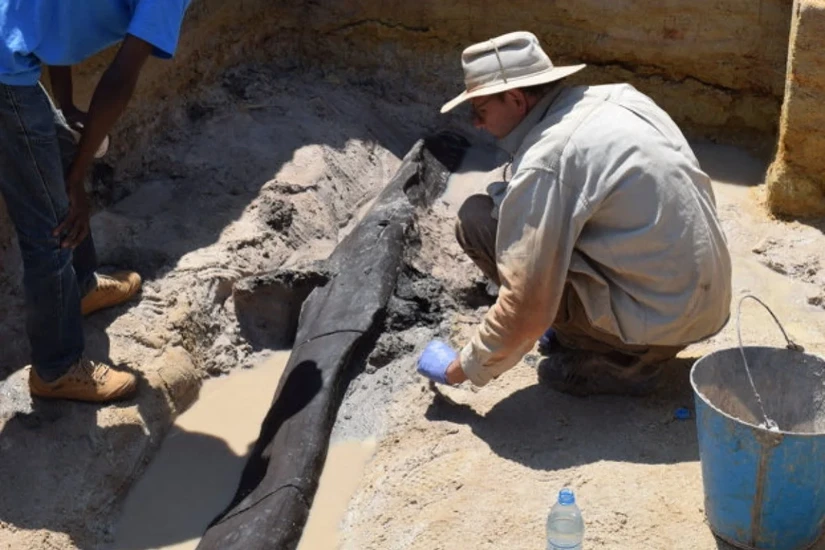
According to a publication in the scientific journal Nature on September 20th, archaeologists have unearthed what is believed to be the oldest wooden structure ever discovered, dating back nearly half a million years, demonstrating the advanced level of ancient humans.
According to AFP, the remarkably well-preserved wooden structure was found by scientists at Kalambo Falls in northern Zambia, near the border with Tanzania. Through cuts on the structure, scientists concluded that stone tools were likely used to join two large logs, thus creating the structure. Its purpose may have been a platform or a raised walkway above the water level.
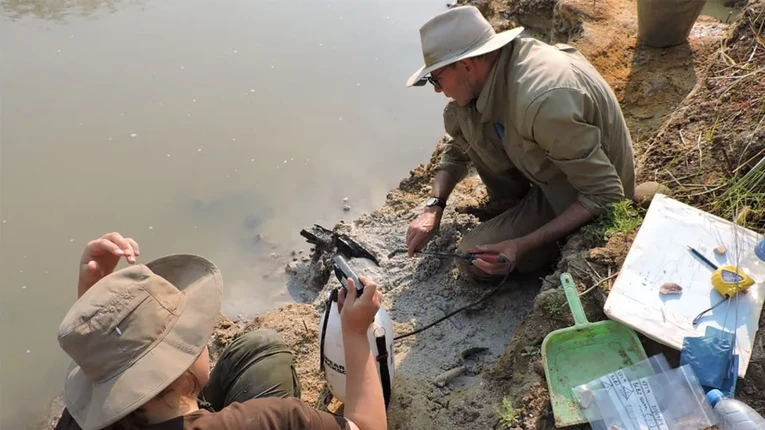
Larry Barham, an archaeologist at the University of Liverpool in England and the lead author of the study, said the discovery of the structure was entirely a “chance find” made in 2019 during excavations at a site on the banks of the Kalambo River, above the 235-meter-high waterfall.
Excavations of wooden artifacts are relatively rare because wood tends to rot over time and therefore leaves little historical trace. However, with this structure, scientists believe that the high water level at Kalambo Falls helped preserve it for centuries.
Instead of using radiocarbon dating, the scientists this time used a new method called luminescence dating. Specifically, the age of the wood is determined by measuring the natural radioactivity in the minerals in the fine sediment layer surrounding the wood to find the last time it was exposed to sunlight.
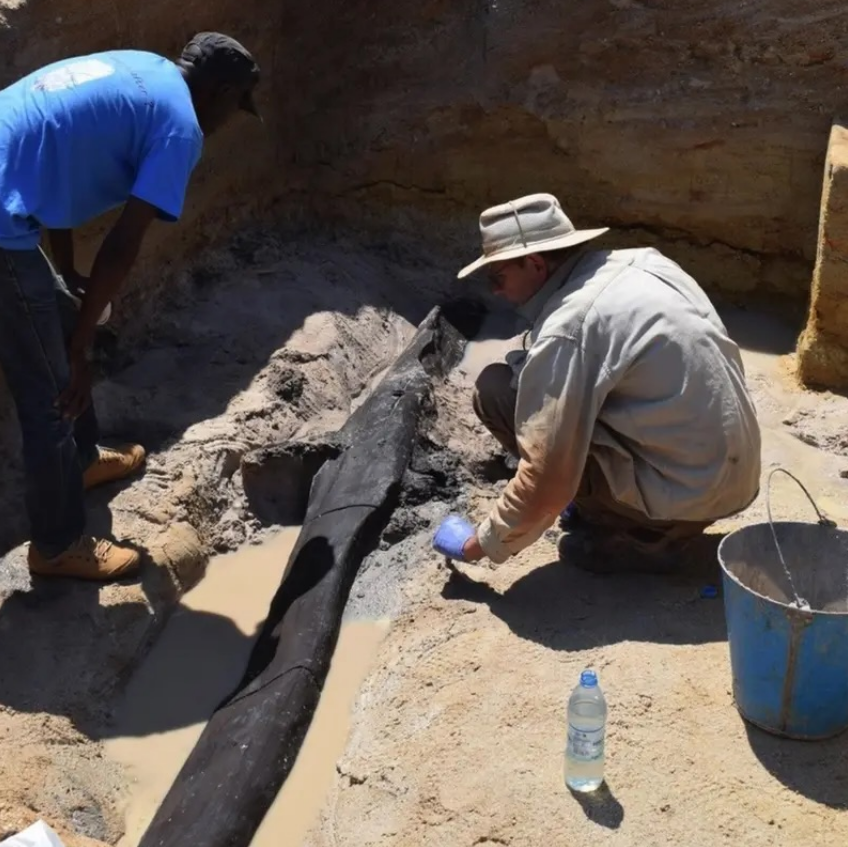
The findings confirm that this wooden structure is at least 476,000 years old, far older than researchers had expected, considering the oldest wooden structure previously found dated back to around 9,000 years. This also means it predates the evolution of modern humans, Homo sapiens, by about 300,000 years.
The discovery has led many scientists to change their views because around this time, the ancestors of modern humans knew how to use wood, but only for limited purposes such as making fire or hunting. According to AFP, quoting Barham, ancient people “modified their surroundings to make life easier, even if it was just by making a platform to sit on by the riverbank to do their daily work.”
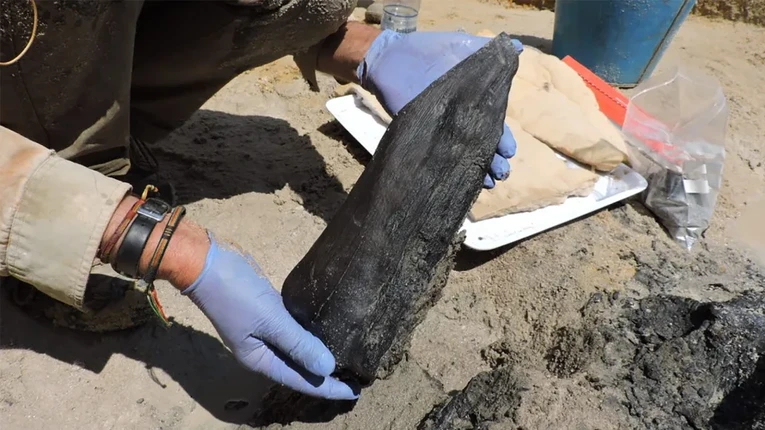
He stated, “They used their intelligence, imagination, and skills to create something they had never seen before, something that had never existed before,” demonstrating a level of abstract thinking and “possibly language.”
Furthermore, the study’s authors also stated that this finding challenges the view that human ancestors were nomadic. This is because the wooden structures appear to have been permanent dwellings near waterfalls, a perennial water source. However, there are cautionary notes that this hypothesis remains unproven, as the structures may have been installed seasonally rather than permanently.