Remarkably Preserved 150-Million-Year-Old Pliosaur Skull Unearthed on England’s Jurassic Coast Amazes Scientists
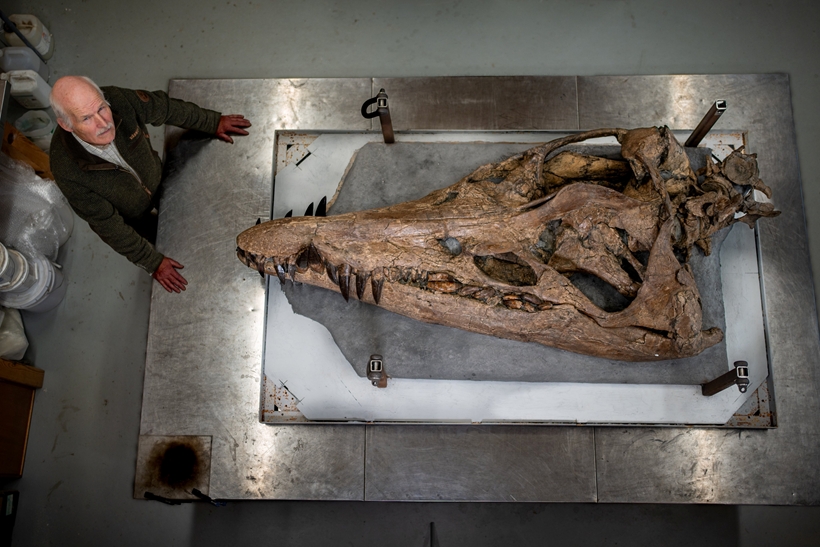
On December 10th, a 2-meter-long skull of a marine reptile that lived approximately 150 million years ago was discovered on the Jurassic Coast, a UNESCO World Heritage site in southern England.
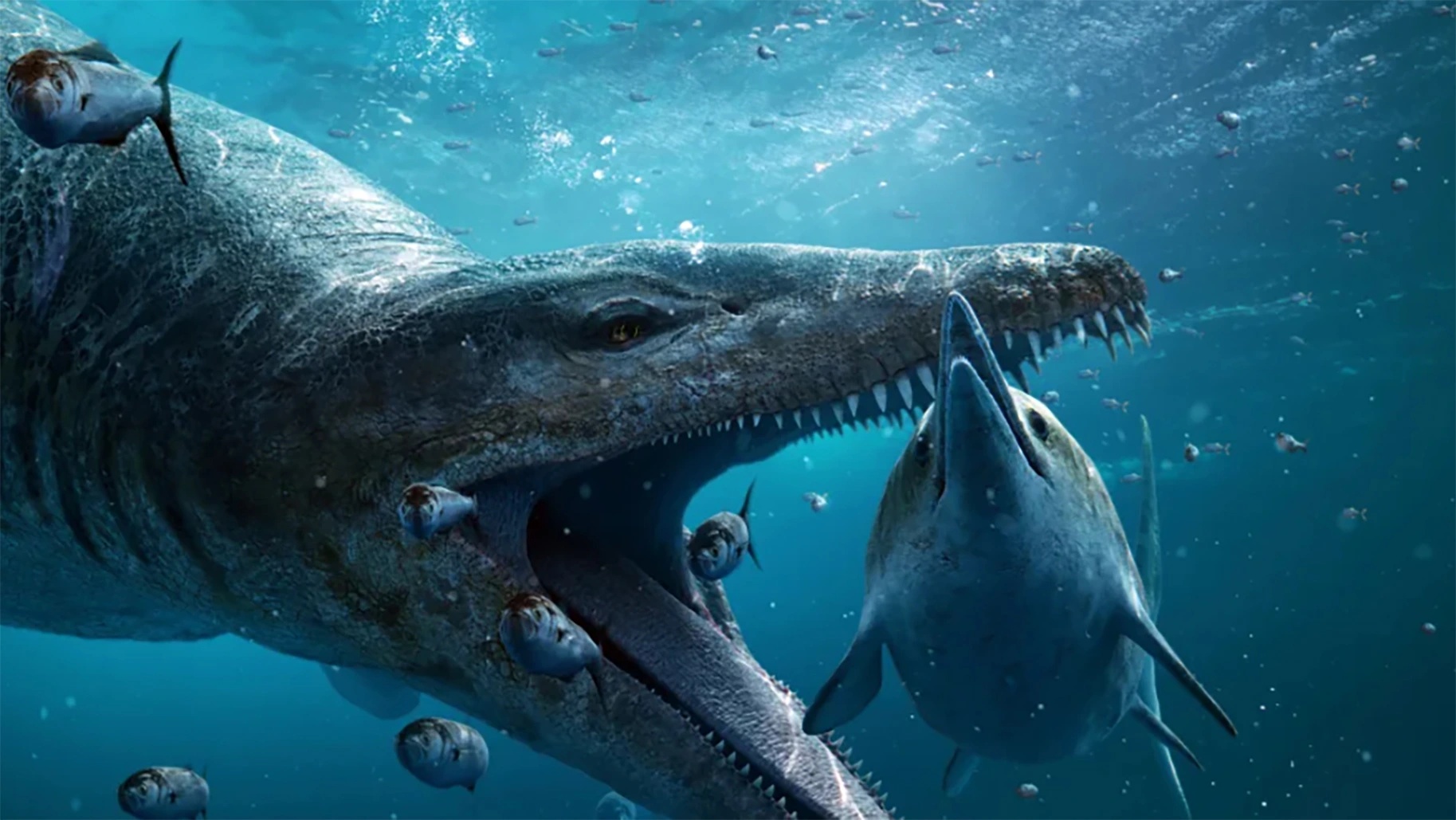
According to a BBC report, the fossil belongs to a pliosaur – a group of carnivorous marine reptiles characterized by strong jaws, large teeth, and a short neck. A former apex predator in the ocean, pliosaurs were between 10 and 12 meters long and had four flippers for propelling themselves through the sea. This animal may have preyed on other reptiles such as plesiosaurs and ichthyosaurs, and fossil evidence suggests it also ate other pliosaur species.
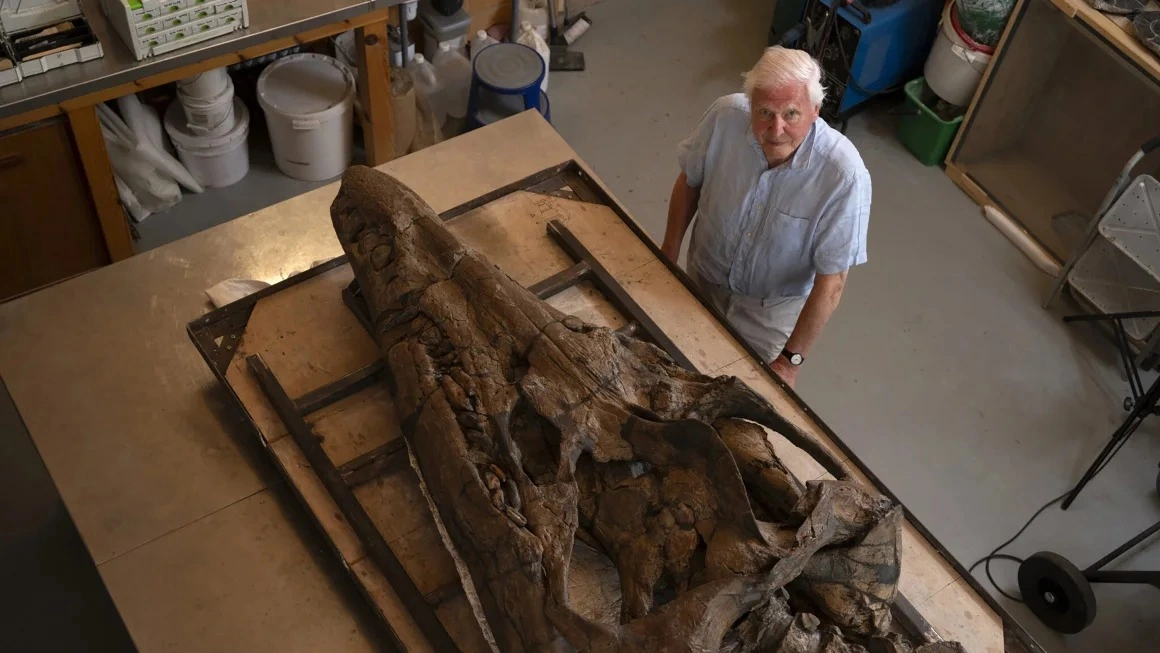
Commenting on the specimen, paleontologist Steve Etches stated that it is one of the best fossils he has ever studied. Dr. Etches shared, “The lower jaw and upper skull are connected. It’s rare to find specimens of this level of detail anywhere in the world.”
This is one of the most complete specimens of its kind ever discovered. Specifically, the skull contains 130 long, sharp teeth with fine ridges marking the back of each tooth.
The skull was discovered by fossil enthusiast Phil Jacobs while walking on the beach near Kimmeridge Bay on the Jurassic Coast. Unable to carry the fossil himself, he asked Dr. Etches for help, and the two constructed a makeshift stretcher to lift the fossil to safety.
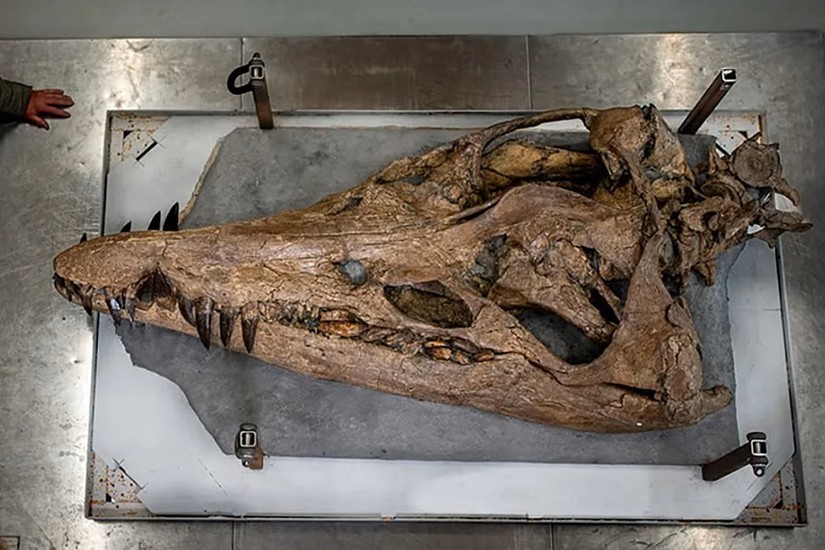
After examining the large holes in the back of the skull, paleontologist Emily Rayfield estimated the force required to crush prey in the creature’s mouth to be 33,000 Newtons. Compared to modern creatures, saltwater crocodiles – which possess the strongest jaws of any living animal – only use about 16,000 Newtons of jaw force.
Furthermore, features such as the small holes inside the pliosaur’s snout to detect changes in water pressure caused by prey also suggest that this creature had powerful and useful senses.
The fossil also has several vertebrae protruding from the back of the head, trailing a few bones, which scientists believe could be an indication that many fossils of this creature still exist in the Jurassic Coast region.
Speaking to the BBC, Dr. Etches said he believes the remains of this ancient creature are still in the Jurassic Coast area. He added that the search will need to proceed quickly because the fossils are in a rapidly eroding environment. He predicted that “the rest of the pliosaur will soon be revealed and may be lost, while this is a once-in-a-lifetime opportunity.”
For now, the pliosaur skull will be on display at the Dr. Etches Museum in Kimmeridge, southwest England, from 2024.