Global Flashpoints: Escalating Warfare in the Middle East and Strategic Shifts in Ukraine
TEHRAN / KYIV — The global security landscape has entered a period of unprecedented volatility as direct military confrontations between major powers and regional players reach a fever pitch. From the skies over Tehran to the ports of the Black Sea, a series of high-stakes operations has redefined modern warfare and tested the limits of international diplomacy.
Aerial Supremacy and the “Epic Fury” Campaign
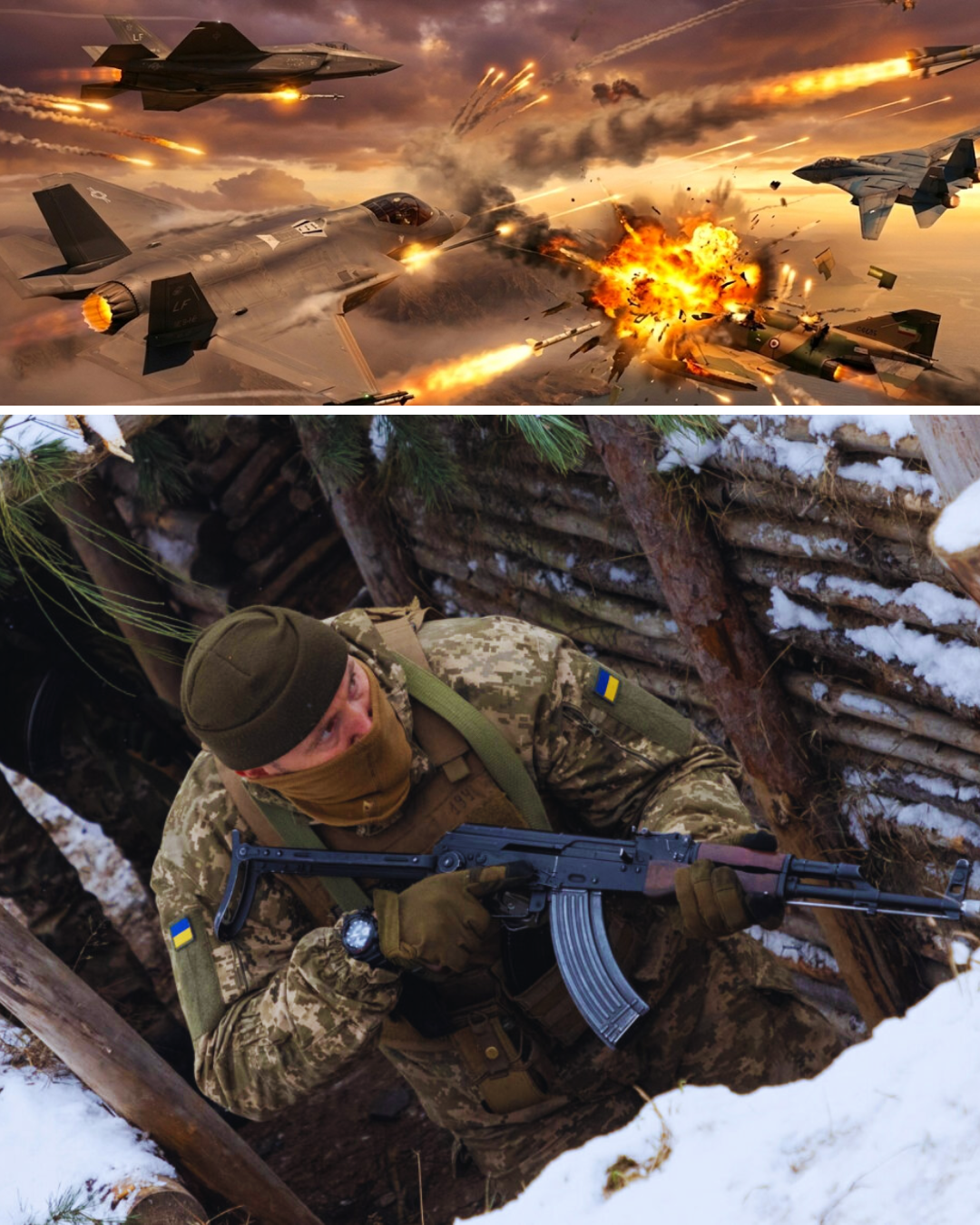
In a historic milestone for aviation warfare, the Israeli Air Force (IAF) confirmed that an F-35 “Adir” stealth fighter successfully intercepted and shot down an Iranian Y-130 manned aircraft over Tehran. This marks the first time in history that an F-35 has downed a manned enemy aircraft and represents Israel’s first air-to-air combat engagement with a manned plane in nearly four decades.
The incident is part of a broader, devastating military campaign titled “Epic Fury,” led by the United States and Israel. U.S. Central Command (CENTCOM) reported that the operation has surpassed 100 hours of continuous strikes, targeting over 2,000 objectives across Iran. Defense Secretary Pete Hegseth characterized the offensive as a “devastating and uncompromising” effort to dismantle Iran’s military infrastructure. Highlighting the campaign’s intensity, the Israeli Defense Forces (IDF) reportedly dropped over 5,000 bombs within five days, aiming to neutralize ballistic missile launchers and command centers.
The maritime front has been equally lethal. In a rare engagement, a U.S. attack submarine utilized an MK-48 torpedo to sink the Iranian frigate IRIS Dena off the coast of Sri Lanka. This operation marks the first time since World War II that a U.S. submarine has sunk an enemy surface vessel with a torpedo.
Political Vacuum in Tehran
The military strikes have had profound political consequences. Following the death of Supreme Leader Ayatollah Ali Khamenei—reportedly killed during the initial waves of the U.S.-Israeli air raids—the Iranian leadership is in a state of flux. While public mourning ceremonies have commenced in Tehran, the Assembly of Experts is fast-tracking the selection of a successor.
Mojtaba Khamenei, the son of the late leader, has emerged as a frontrunner after surviving the attacks. Despite the internal chaos, Iran has maintained a defiant stance, launching over 500 ballistic missiles and 2,000 drones at Israel and U.S. bases in neighboring countries. However, U.S. officials claim that Iran’s retaliatory capacity is “sharply declining” as its air defenses and naval assets are systematically neutralized.
The Nuclear and Humanitarian Shadow
The conflict has cast a dark shadow over the Bushehr nuclear power plant. Rosatom, Russia’s state nuclear corporation, reported that over 600 Russian citizens remain at the facility. Concerns are mounting as Rosatom officials admitted they have lost all contact with Iran’s nuclear leadership. The presence of 72 tons of active fuel and 210 tons of spent nuclear material at Bushehr makes any direct hit on the facility a potential regional environmental catastrophe—a risk that Russia has urged all combatants to avoid.
Ukraine’s Precision Strikes and the Eastern Front
While the Middle East burns, the war in Ukraine continues to escalate in technical sophistication. Ukrainian National Guard units successfully destroyed a Russian S-400 “Triumf” air defense system in the Belgorod region using precision drones. The elimination of this billion-dollar asset is a significant blow to Russia’s aerial shield.
Simultaneously, Ukrainian security services (SBU) conducted a daring raid on the port of Novorossiysk, damaging several Russian naval vessels, including the minesweeper Valentin Pikul and anti-submarine ships. On the ground, Russian forces have made incremental gains in the Zaporizhzhia region, capturing the village of Veselyanka as they attempt to encircle the strategic hub of Orikhiv.
A Fragile International Order
As the conflict spreads, the diplomatic fallout is being felt globally. In Washington, the U.S. Senate narrowly defeated a resolution aimed at curbing President Donald Trump’s war powers, effectively granting the administration a green light to continue the “Epic Fury” campaign. Meanwhile, in Beijing, Chinese officials expressed a willingness to engage in dialogue with the U.S. ahead of a high-level summit, though they emphasized “red lines” regarding sovereignty and regional stability.
The world now watches with bated breath. With Canada signaling it may join the fray to support its allies and tensions simmering in Lebanon and the Strait of Hormuz, the prospect of a de-escalation seems distant. The current trajectory suggests that the international order is undergoing its most violent restructuring in nearly a century.