3.635 The World on the Brink: Russia Warns of France’s Nuclear Umbrella and Trump’s Iran Attack Scenario
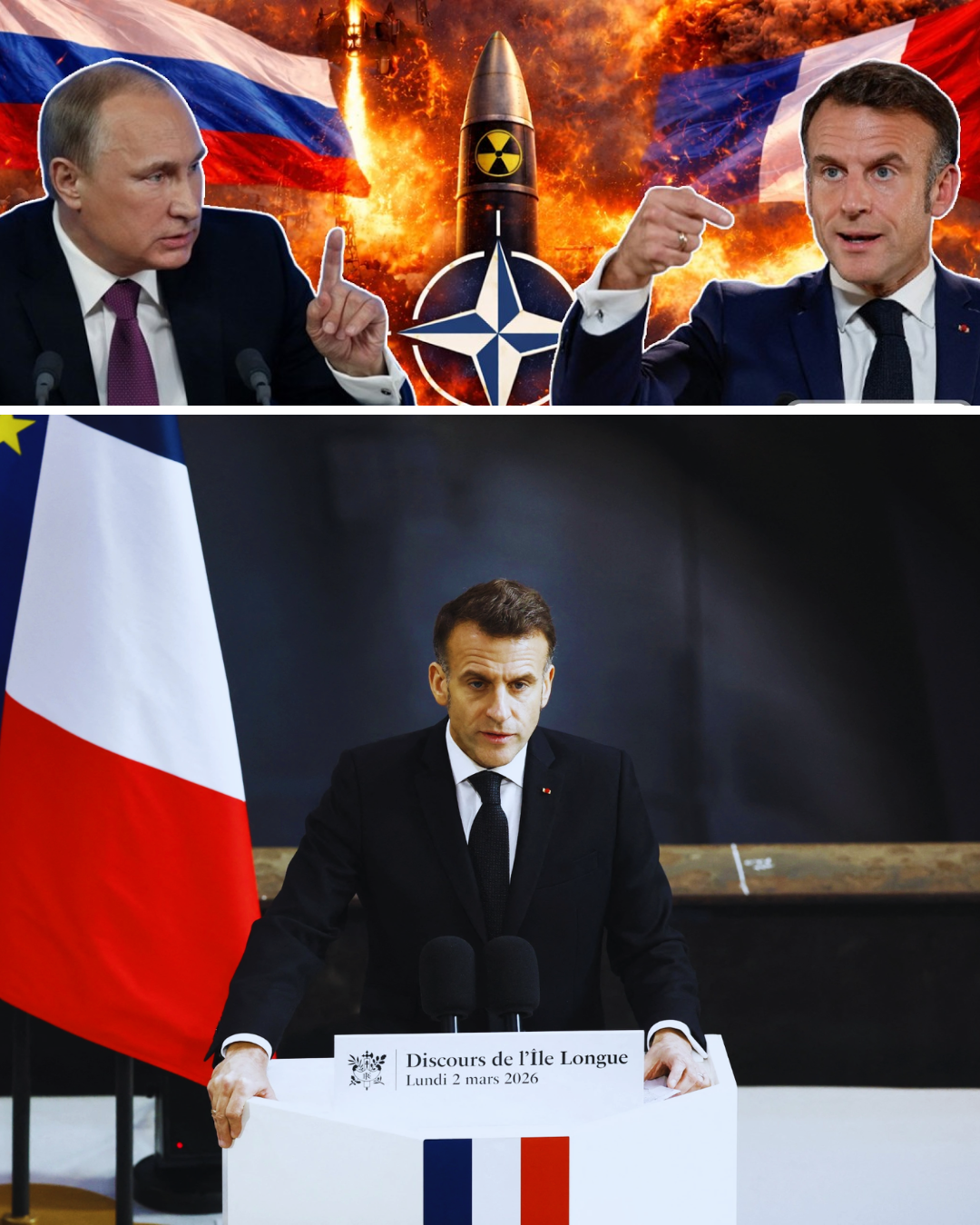
MOSCOW / WASHINGTON – Global geopolitical tensions have escalated to alarming levels in the past 24 hours. From the Kremlin’s stern nuclear warnings to NATO in Europe, to President Donald Trump’s consideration of military “regime change” options in Iran, the world order is facing unprecedented challenges.
Russia “Furious” Over France’s Nuclear Plan
On March 4, the Russian Foreign Ministry issued strong accusations against Paris. Spokesperson Maria Zakharova declared that France’s plan to expand its nuclear arsenal was an “extremely serious destabilizing move.” Earlier, President Emmanuel Macron announced his intention to extend the protection of France’s nuclear umbrella to European allies, who have long relied on the United States.
Moscow asserted that this represents a coordinated strengthening of NATO’s nuclear capabilities against Russia. The Kremlin emphasized that nuclear weapons from both France and the UK must be included in any future negotiations on the global nuclear balance. Zakharova warned that Russia would carefully consider this in its military planning and did not rule out “asymmetrical retaliatory measures.”
Trump’s Ultimatum and the “Regime Change” Scenario in Iran
In Washington, President Donald Trump directly confirmed he was considering the possibility of a “limited military strike” if Iran did not reach a new nuclear agreement. According to sources from Reuters and The Wall Street Journal, the US military plan was being prepared at a high level, including options for selective attacks on individuals and considering the possibility of regime change in Tehran.
The White House gave Iran 10 to 15 days to meet US demands. A first strike could occur in the next few days if Iran continues to refuse to cease uranium enrichment. To back this ultimatum, the US has deployed its largest military presence in the Middle East since 2003, including two carrier strike groups and 13 destroyers.
Iran’s Response and Joint Exercises with Russia
Amidst the pressure, Iran has chosen to project strength. Rear Admiral Hasan Marzolo announced that Russia and Iran have begun joint naval exercises in the Gulf of Oman and the northern Indian Ocean. The exercise, dubbed “Maritime Security Belt 2026,” also includes Chinese warships in the Strait of Hormuz.
The Iranian Islamic Revolutionary Guard Corps (IRGC) also conducted the “Smart Control of the Strait of Hormuz” exercise to test its combat readiness against Western military threats. These developments occurred just as nuclear negotiations in Washington were at a standstill.
A rift within Europe and pressure on South Korea
In Europe, Hungary officially announced it was blocking a €90 billion EU loan to Ukraine. Foreign Minister Peter Szijjarto affirmed that Budapest would not compromise until the flow of Russian oil through the Druzhba pipeline was restored. This move puts Ukraine at risk of running out of military funds by mid-2026.
Meanwhile, Russia also sent a stern warning to Seoul. Ms. Zakharova emphasized that if South Korea joined NATO’s plan to finance weapons for Ukraine, bilateral relations between Russia and South Korea would be severely damaged.
With nuclear exercises, military ultimatums, and intertwined energy sanctions, the world is witnessing a risky multipolar confrontation. All eyes are now on Tehran and Washington as Trump’s 15-day deadline is running out.