Israeli F-16 Seen Carrying Unusual JDAM Variant, Raising Questions About Its Warhead
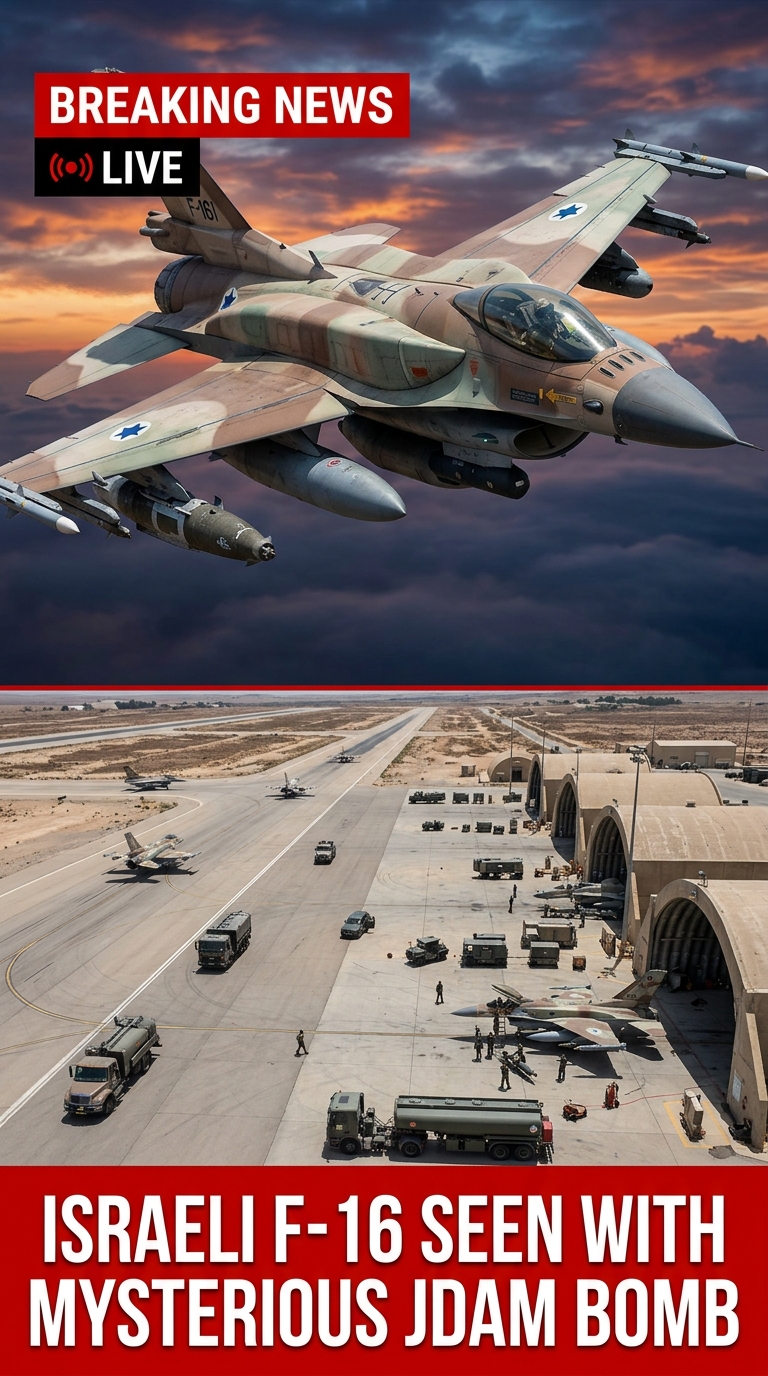
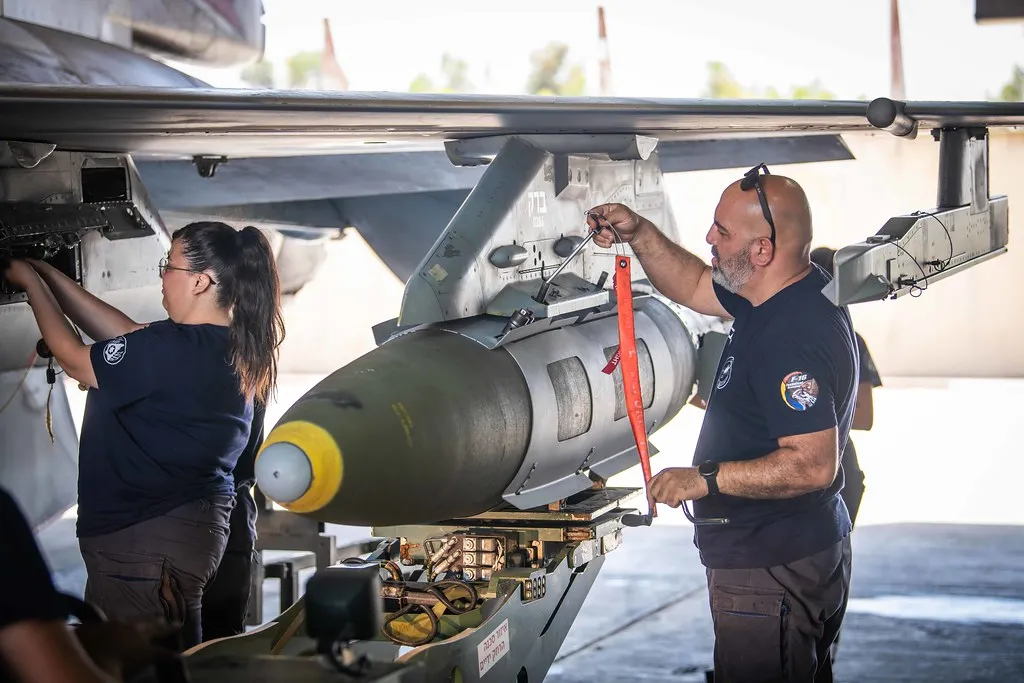
New imagery from the Israeli Air Force has drawn attention to a highly unusual precision-guided bomb mounted on an F-16C/D Barak fighter, prompting speculation that Israel may be using a modified version of the U.S.-made JDAM with a specialized payload. The photos, published earlier this week on the Israeli Air Force’s official X account, show two 2,000-pound GBU-31-class bombs with uncommon red markings in addition to the standard yellow band normally associated with high-explosive munitions.
What makes the weapon stand out is the red band around the nose and a red-painted nose plug. According to U.S. munitions marking conventions cited in the original report, red can indicate an incendiary payload, while yellow typically denotes the presence of high explosives. That combination has led analysts to suggest the bomb may not be a standard JDAM, but rather a variant carrying both blast and incendiary effects.
One possible candidate is the BLU-119/B Crash PAD, a relatively obscure 2,000-pound bomb developed in the early 2000s for attacking chemical or biological weapons stockpiles. The weapon was designed to use the JDAM guidance kit and combined a high-explosive charge with a large white phosphorus fill, allowing it to penetrate containers and then burn hazardous agents. The War Zone notes that this system has rarely been seen publicly and may never before have appeared in Israeli service.
Still, the exact identity of the munition remains unconfirmed. The article notes that Israel often adapts U.S.-supplied weapons for its own operational needs, so the markings could indicate a uniquely Israeli configuration rather than a known American design. It also recalls an earlier case in which the Israeli Air Force briefly showed a Hellfire missile with unusual red striping, fueling similar speculation about a non-standard warhead.

If the bomb is indeed an incendiary or agent-defeat weapon, it could be intended for highly specific target sets, such as chemical storage areas or facilities containing dangerous compounds. But for now, the weapon remains something of a mystery—one more clue to the increasingly complex arsenal being used in the current conflict.