U.S. F-22 and F-35 Fighters Scramble in the Arctic to Intercept Russian Long Range Submarine Hunter
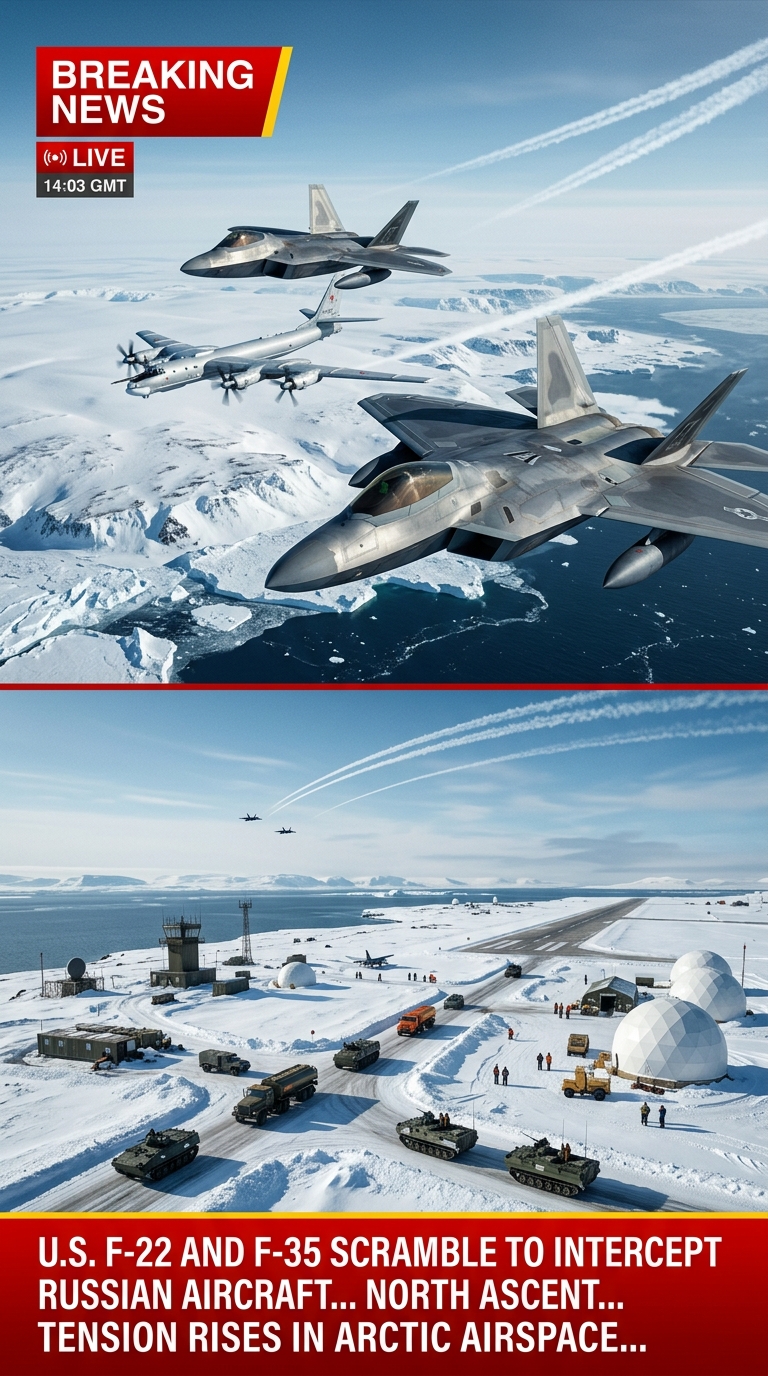
The U.S. Air Force on March 4 scrambled two F-35A and two F-22 fifth generation fighter aircraft to interceptor two Russian Tu-142 anti-submarine warfare aircraft in the Alaskan and Canadian Air Defence identification zones, with the Russian aircraft being closely shadowed, and remaining in international airspace. The fighters were supported by four KC-135 tankers, and one E-3 airborne warning and control system (AWACS), while Canada deployed two F-18 fighters and a CC-150 tanker. The Alaska Air Defense Identification Zone, serves as a buffer to warn of potential incursions by foreign aircraft, and extends hundreds of miles into the Bering Sea and the Arctic Ocean. The North American Aerospace Defense Command (NORAD) which was responsible for the interception stated that it “employs a layered defence network of satellites, ground-based and airborne radars and fighter aircraft to detect and track aircraft and inform appropriate actions.” “NORAD remains ready to employ a number of response options in defence of North America,” the command added.
The U.S. Air Force has prioritised Alaska to deploy a particularly high concentration of fifth generation fighters, including approximately 40 F-22s at Joint Base Elmendorf–Richardson, with the number having varied, and 54 F-35A fighters under the 354th Fighter Wing at Eielson Air Force Base. This reflects the Armed Forces’ prioritisation of maximising capabilities in both the Arctic and the Pacific theatres, with Alaska also being well positioned to reinforce bases across East Asia, most notably in Japan. Russia’s own capabilities across the Bering Strait have declined significantly since the disintegration of the Soviet Union, and while MiG-31 interceptors in the region were previously dominant in the 1980s, and far surpassed U.S. fighters in their beyond visual range capabilities, the large majority of these were placed in storage in the 1990s due to an inability to sustain them. Although remaining MiG-31s have been modernised to the much improved MiG-31BM standard, these are two few in number to provide a meaningful defensive capability across the vast region.
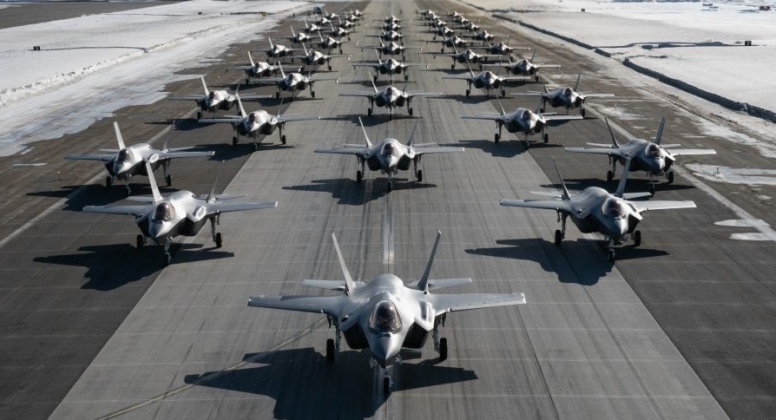
U.S. air defences in Alaska have come under growing strain from Russian bomber patrols, and from 2024 from Chinese bomber patrols as H-6 bombers have been temporarily based in Russia. The two countries are currently the only ones in the world serially producing bomber aircraft, and are modernising their aircraft’s strike capacities by integrating new generations of ballistic and cruise missiles. China is also expected to begin fielding its first intercontinental range stealth bomber in the early 2030s, with the aircraft having already seen in flight testing in October 2025. U.S. defences in Alaska have been hampered by the outstandingly low availability rates of both the F-22 and the F-35, as well as by the growing obsolescence of the E-3 AWACS fleet. The Department of War’s announcement of a decision in early June 2025 to cancel the planned procurement of replacement E-7 systems has faced significant domestic opposition in large part because it will leave Alaska increasingly vulnerable.