Netanyahu Says Israel Has ‘Many More Targets’ in Iran as Campaign Intensifies
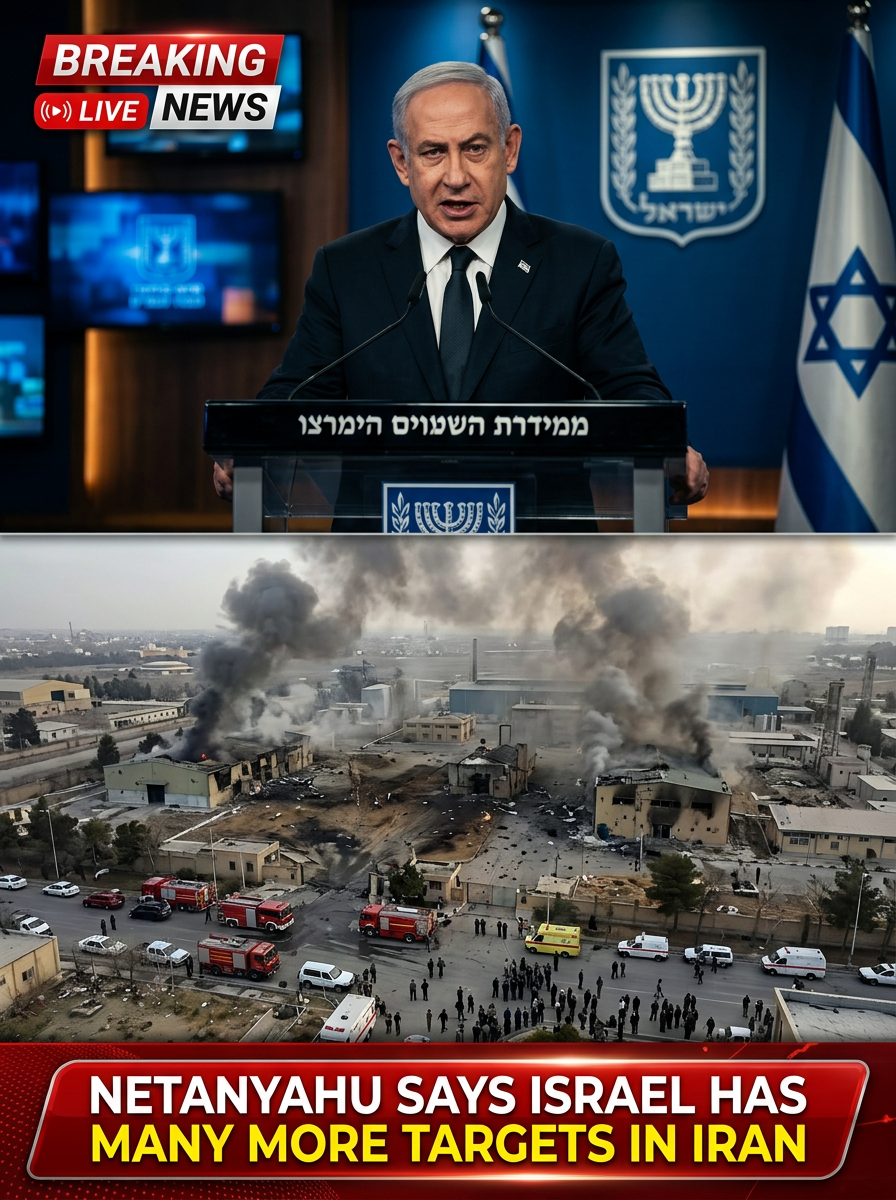
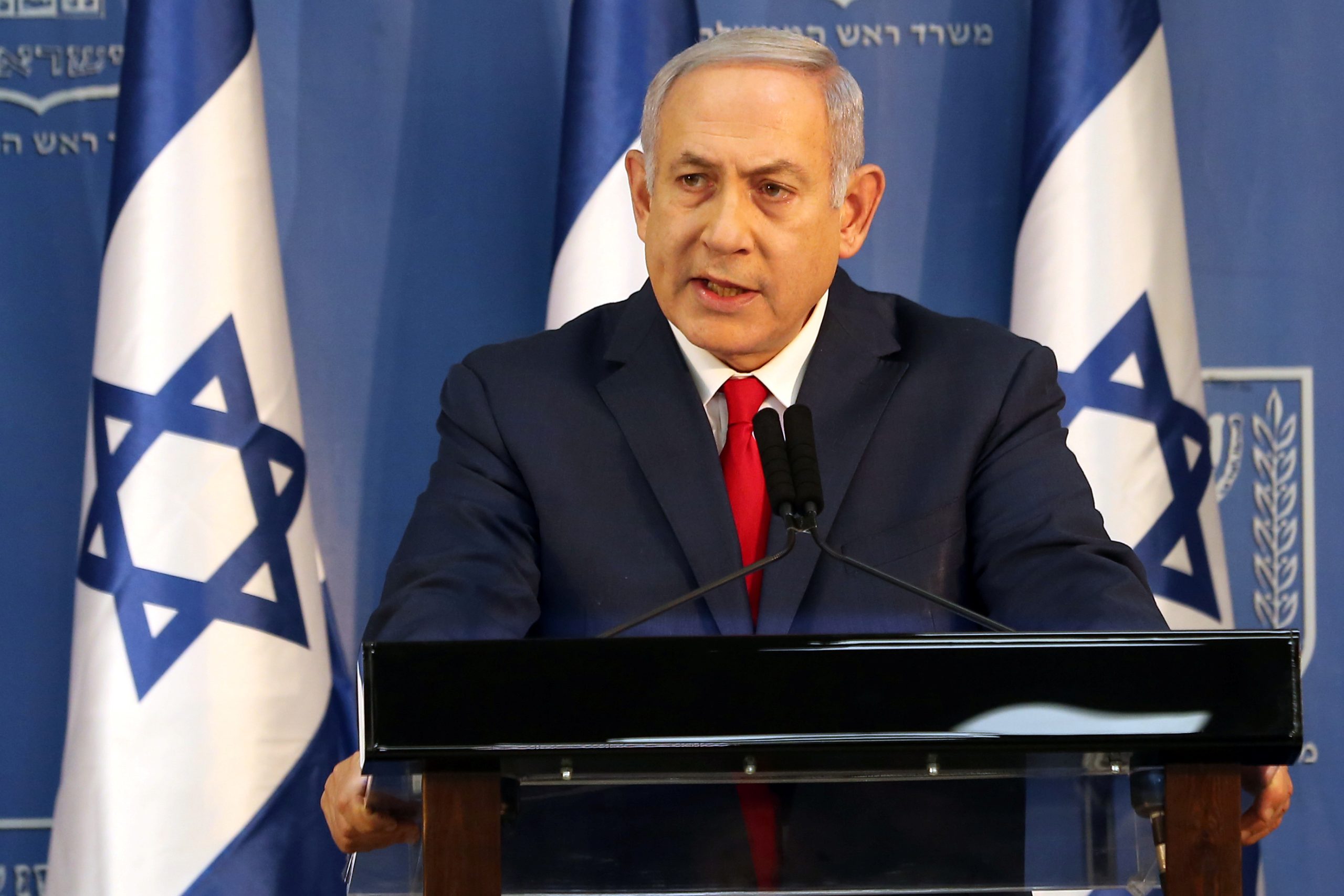
Israeli Prime Minister Benjamin Netanyahu said Israel’s campaign against Iran is far from over, declaring that the country still has “many more targets” and suggesting that further strikes are intended not only to weaken Iran’s military capabilities but also to destabilize the ruling system in Tehran. In recent public remarks, Netanyahu said Israel had an “organized plan” with “many surprises,” while insisting that operations would continue “with full force.”
His comments came as Israeli warplanes carried out fresh strikes on Tehran and other parts of Iran, extending a campaign that has already hit missile infrastructure, command centers, security compounds and fuel-related facilities. The Associated Press reported that new Israeli strikes ignited a fuel storage site in Tehran, while residents described heavy overnight bombardment and repeated explosions across the capital.
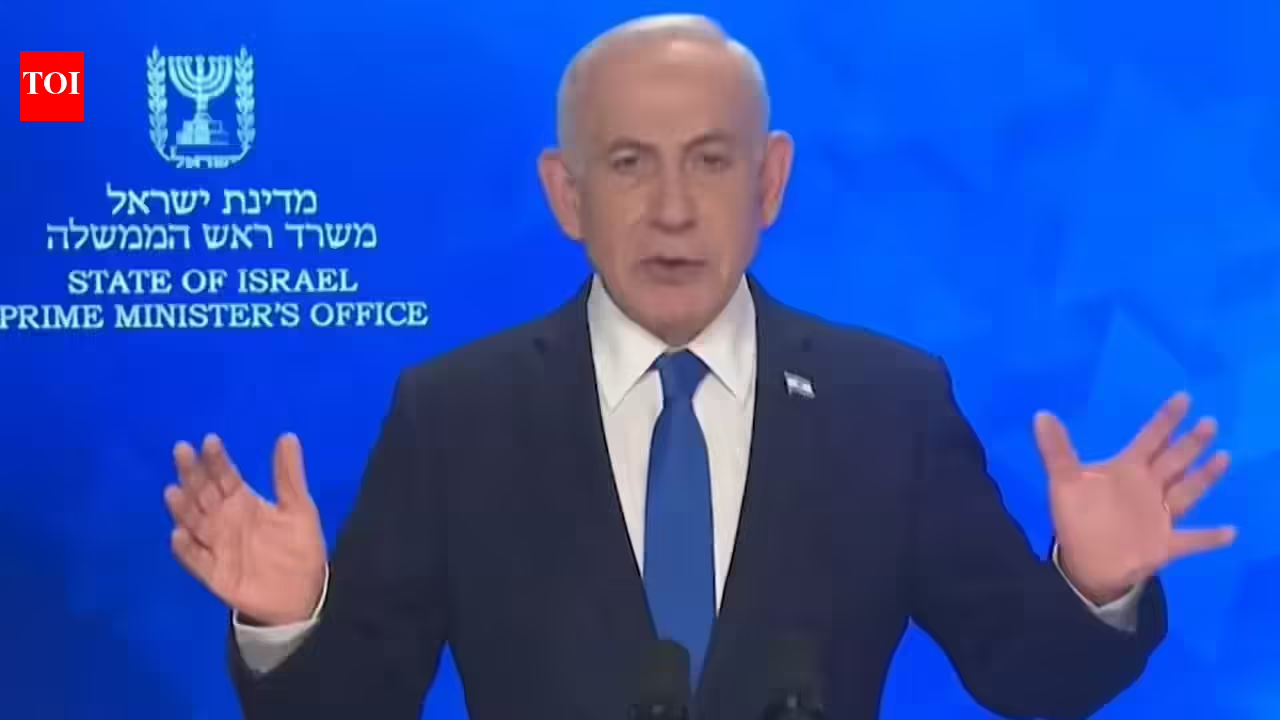
Netanyahu has increasingly framed the war in political as well as military terms. According to The Wall Street Journal, he again called on Iranians to rise up against their leadership, signaling that Israel sees pressure on the regime itself as part of the broader objective. That language goes beyond the narrower goal of degrading Iran’s nuclear and missile programs and points to an effort to encourage internal political change.
Israeli messaging since the start of the campaign has consistently stressed that the operation will continue as long as needed. In earlier statements carried by Israeli media, Netanyahu said the joint U.S.-Israeli offensive was launched to remove what he called the “existential threat” posed by Iran and to create conditions in which Iranians could shape a different future.
The latest rhetoric is likely to deepen fears that the conflict is entering a more expansive phase. As Israeli strikes continue and Iran maintains retaliatory missile and drone attacks across the region, Netanyahu’s warning of “many more targets” suggests that Israel is preparing the public for a prolonged campaign rather than a limited round of strikes. With both military pressure and regime-focused messaging increasing, the prospect of near-term de-escalation appears increasingly remote.