132 Missiles vs. a U.S. Carrier Strike Group: A Glimpse Into Modern Naval Warfare
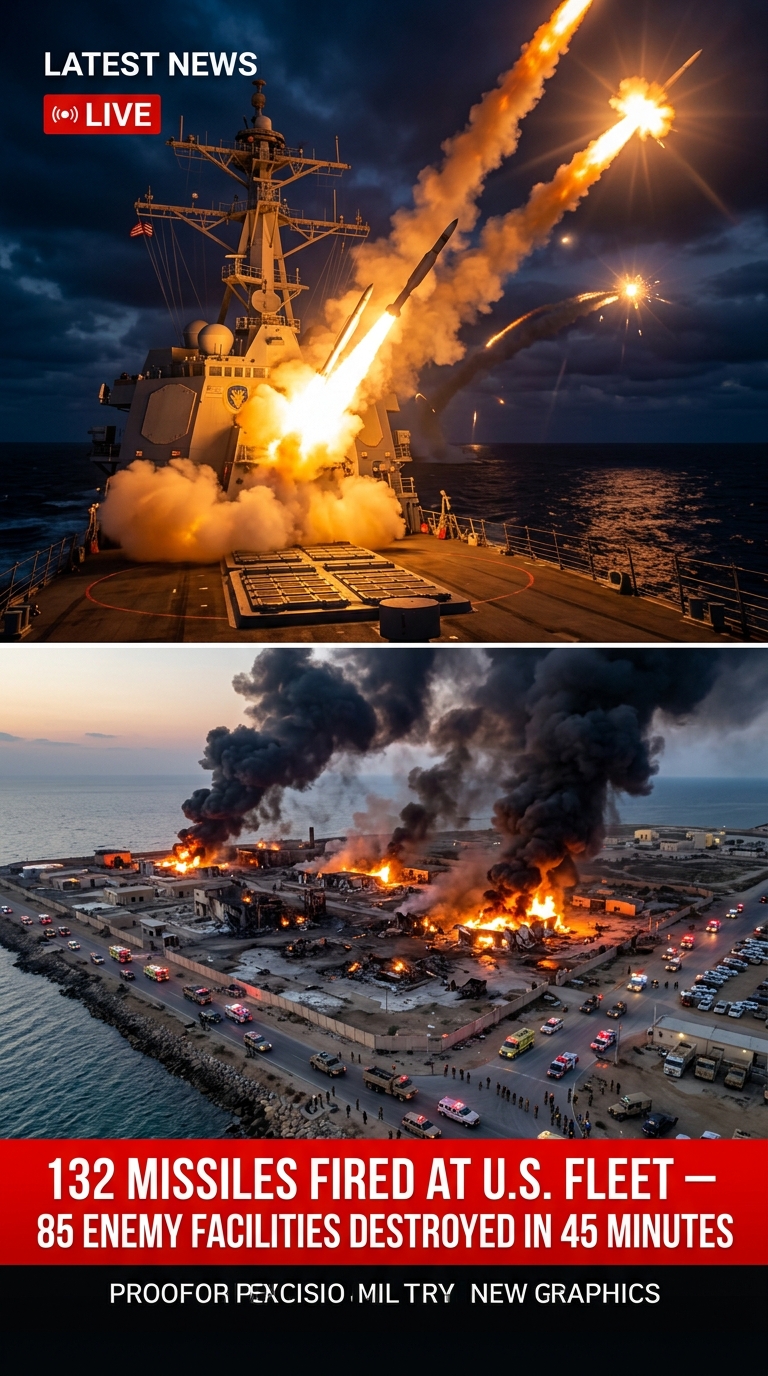
Amid escalating tensions between the United States and Iran, military analysts are increasingly studying extreme scenarios that illustrate how modern naval warfare might unfold. One such hypothetical situation imagines a massive missile barrage—over 100 missiles—targeting a U.S. carrier strike group operating near the Strait of Hormuz, one of the world’s most strategically vital waterways.
The scenario reflects real geopolitical risks. The Strait of Hormuz has become a focal point of the current crisis, with missile strikes, naval clashes, and attacks on shipping reported in the region as the conflict widens. Recent reports indicate that fighting has disrupted global energy trade and intensified military deployments across the Gulf.
In a saturation attack scenario, a large number of missiles would be launched simultaneously in an attempt to overwhelm a fleet’s defenses. Iran has long emphasized missile and drone capabilities as part of its strategy to counter powerful naval forces.
However, a U.S. carrier strike group is protected by one of the most advanced layered defense systems ever built. At the center is the Aegis Combat System, an integrated network that uses powerful radar and computers to track and engage incoming threats. The system’s phased-array radar can detect and track more than 100 targets at once, guiding defensive missiles to intercept them.
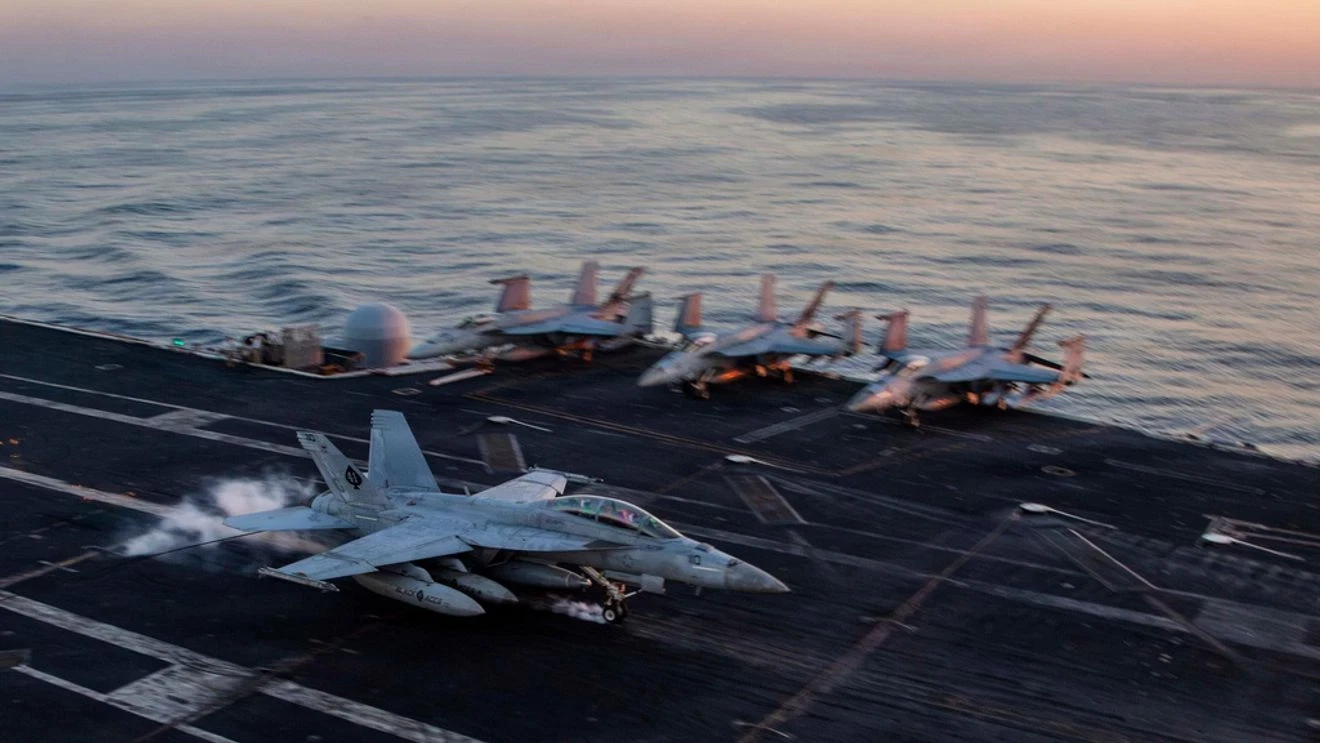
Warships such as Arleigh Burke-class destroyers escorting the carrier can launch Standard Missile interceptors—including SM-3 and SM-6—to destroy ballistic or cruise missiles in mid-flight or during their final approach.
If a large attack were detected, additional defensive layers would activate. Fighter jets could intercept threats at long range, while close-in weapon systems protect ships from missiles that penetrate outer defenses.
Military planners also emphasize rapid counterstrike capabilities. Submarines armed with cruise missiles and long-range aircraft could target enemy launch sites and command infrastructure within minutes.
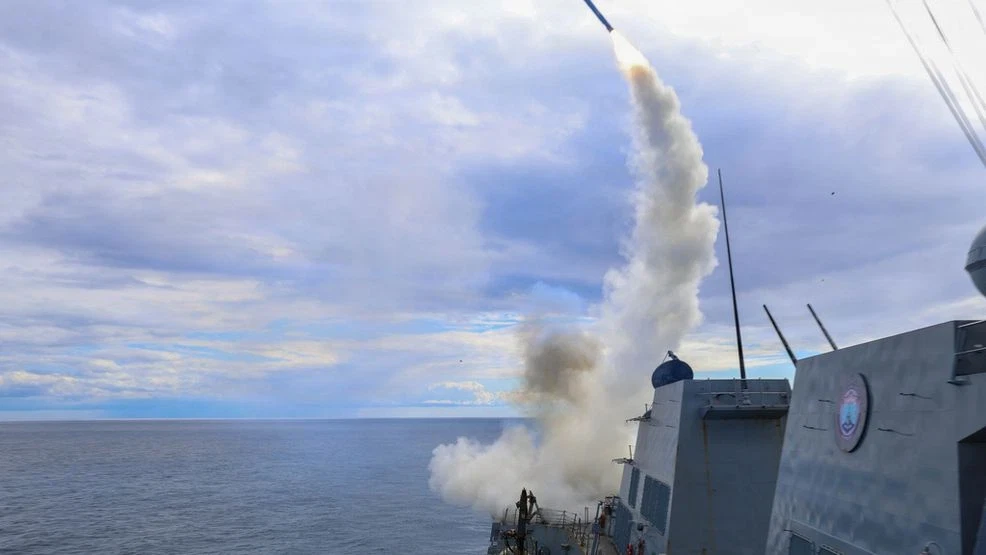
Although such massive missile exchanges remain hypothetical, the ongoing confrontation in the Middle East shows how quickly tensions could escalate. In today’s high-tech battlespace, radar networks, missile interceptors, and real-time data sharing have become just as decisive as firepower—turning every naval confrontation into a race of technology, speed, and strategy. 🚀⚓🔥