Tiny but Mighty: Baby Overcomes Severe Growth Condition and Defies the Odds
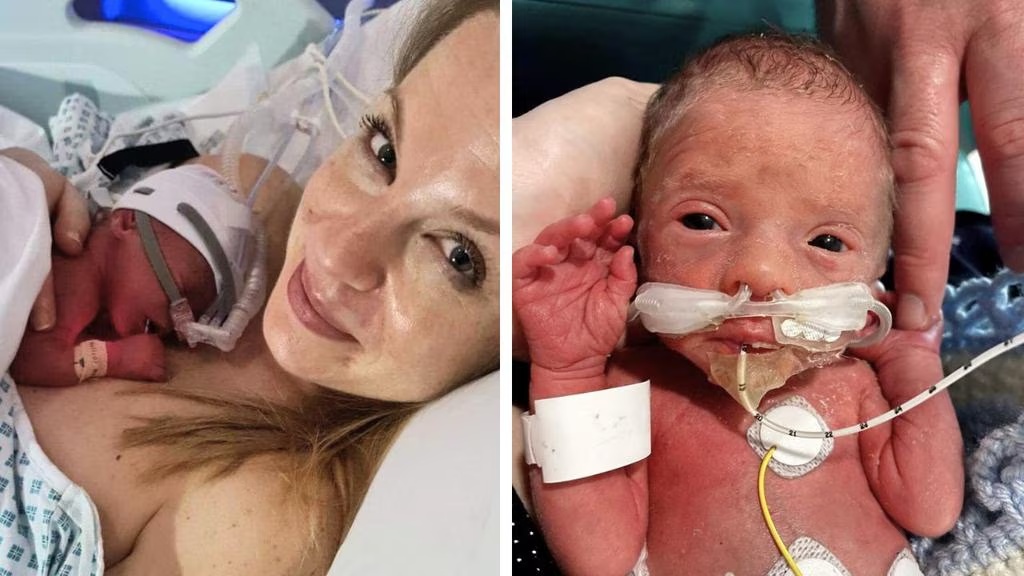
A mother’s pregnancy journey that began with uncertainty and fear ultimately turned into a powerful story of resilience after her baby boy overcame a rare and serious growth condition before birth.
At a routine 20-week scan, Hannah received a brief but concerning comment from a sonographer: her baby appeared to be measuring smaller than expected. What initially sounded like a minor observation soon led to urgent referrals and further medical evaluations.
Specialists later confirmed that her baby had Fetal Growth Restriction (FGR), a condition in which a baby grows more slowly than expected during pregnancy. Although not widely discussed, FGR affects a notable number of pregnancies and is diagnosed when a baby measures below the 10th percentile for growth.
In Hannah’s case, the situation was far more serious.
Doctors explained that her baby measured below the 1st percentile, placing him in the category of severe FGR. The diagnosis meant the pregnancy would require close monitoring from a team of maternal-fetal medicine specialists.
Medical professionals outlined several possible outcomes. Some babies with severe growth restriction face developmental challenges or complications related to slow growth before birth. Others, however, can recover well and grow normally over time.
For Hannah, hearing those possibilities during the middle of her pregnancy was overwhelming.
Every two weeks she attended specialist appointments where doctors carefully tracked her baby’s growth and monitored his vital signs. FGR can occur for many reasons, including issues related to the placenta, maternal health, or genetics. In many cases, however, the exact cause remains unclear.
Despite the uncertainty, Hannah began focusing on the small victories.
Each scan showed that although her baby’s growth was limited, it was still progressing. Every gram gained and every week the pregnancy continued felt like a major milestone.
Over the next 11 weeks, the tiny baby continued to show remarkable determination.
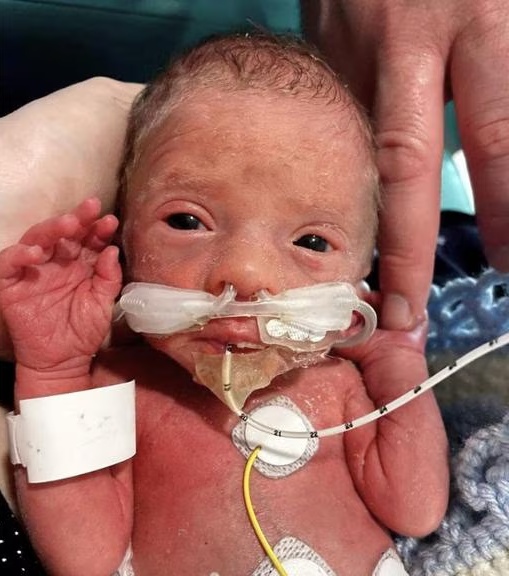
Eventually, Hannah delivered her son through an emergency caesarean section. When he arrived, he weighed just 1.225 kilograms, making him exceptionally small for a newborn.
Doctors had warned that babies born so tiny might not immediately cry after delivery. But the moment he entered the world, the newborn made his presence known with a high-pitched cry — a sound his mother says she will never forget.
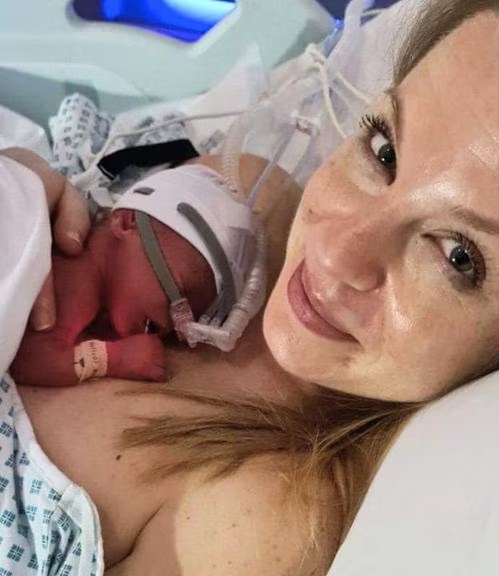
After birth, the baby spent five weeks in the Neonatal Intensive Care Unit (NICU). During that time, medical teams closely supported him as he gradually learned essential newborn skills such as breathing independently, maintaining his body temperature, and feeding.

NICU staff monitored his progress carefully, and week by week he grew stronger.
For Hannah, holding her newborn while he was still connected to monitoring equipment felt surreal. The experience was far from the typical image many parents imagine when welcoming a child.
Yet it also highlighted the remarkable care available in modern neonatal medicine.
As the months passed, the challenges continued but progress followed. Feeding required patience, and early growth remained slower than average. However, the baby steadily gained weight and gradually began catching up on growth charts.
Developmentally, he reached many milestones on schedule, particularly in communication and fine motor skills. Some physical milestones, such as standing and walking, took a bit longer due to his initially fragile strength.
By the age of two, however, he had successfully reached all major milestones and continued to grow along his own healthy curve.