A Hidden Cave Kept Their Bodies for 4 Years—and Their Killer Thought He’d Won
A Hidden Cave Kept Their Bodies for 4 Years—and Their Killer Thought He’d Won
The flashlight beam caught on something that should not have been there.
At first, the boys thought it was a pair of old wetsuits tangled in limestone, the kind of junk explorers brag about finding and then forget by the next weekend. The cavern was small, buried deep inside a black vein of underwater rock, and the light coming off the water looked thick enough to touch. Everything down there was distorted. A ridge could look like a hand. A shadow could look like a face. Nothing was supposed to surprise them anymore.
Then one of them kicked forward, lifted his lamp, and saw the curve of a skull behind a split seam of black neoprene.
For one suspended second, nobody moved.
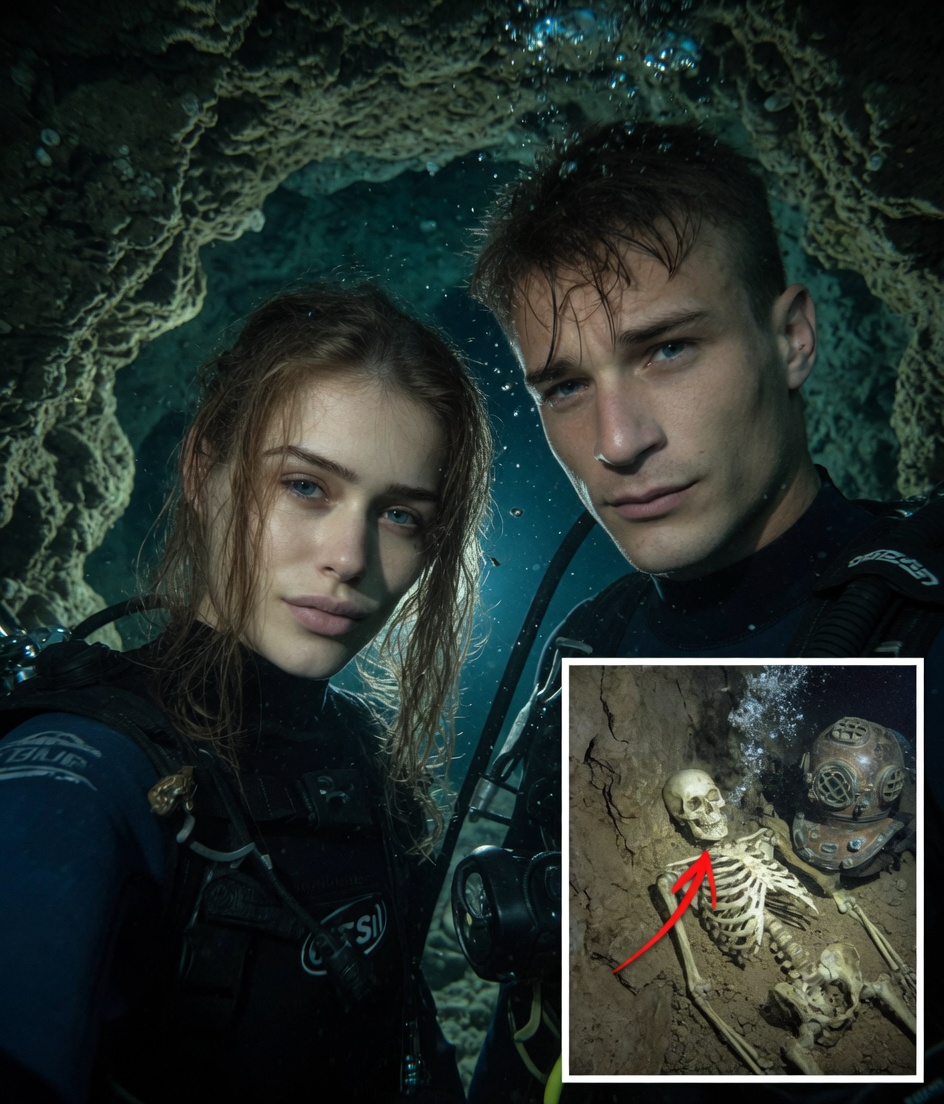
The three teenagers had pushed farther into the cave system than anyone had told them to go. They had followed a narrow passage off the main route, squeezed through a crack barely wide enough for a tank, and dropped into a hidden pocket about 50 ft below the surface. They had come for photos, for bragging rights, for the thrill of saying they had seen something no one else had seen. What they found instead were two human bodies, laid side by side inside a limestone depression so neatly it looked less like a tragedy and more like a burial.
Even underwater, even after years, the scene felt wrong.
The suits still held the ghost-shape of the people inside them. White fragments showed through torn sections. One helmet had shifted just enough to make the empty darkness where a face should have been look like it was staring back. The bodies were parallel, close together, almost peaceful if you looked too fast. But there was something terrifying about the order of it. Drownings were supposed to be chaotic. Panic left a mess. Nature dragged, spun, broke, scattered.
This did not look like nature.
This looked like someone had placed them there and trusted the cave to keep its mouth shut.
The boys did not speak until they were out of the water. They ripped off their masks with shaking hands, coughed, slipped on the wet rock, and nearly crashed into one another trying to reach the bank. By the time one of them got a call through to emergency dispatch, his voice had gone so thin the operator had to ask him to repeat himself twice. Human remains. Cave system. Two of them. Black wetsuits. Deep section. No, not near the public route. Farther back. Much farther.
Within an hour, the shoreline was sealed.
Rescue trucks lined the dirt road. Sheriff’s deputies shoved back the gathering crowd. Floodlights turned the water silver. The same spring that had spent years giving tourists postcard beauty now sat in front of everyone like a locked door with blood behind it. Veteran recovery divers arrived and started suiting up in silence, their expressions changing as soon as they heard how narrow the route was. This was not a quick retrieval. This was a one-person-at-a-time crawl through choking limestone, black water, and clouds of silt that could erase a diver’s world in a breath.
When the first recovery diver came back up, nobody had to ask whether it was bad.
It was written all over him.
The next day, both bodies were brought to the surface.
The county medical examiner’s office was not prepared for the storm that followed. Reporters flooded the parking lot before the identification process had even begun. Old missing-person photos started circulating online again. Families who had spent years trying to bury hope and grief at the same time stared at the news and felt both ripped open. Because 4 years earlier, a young engaged couple had vanished after a dive into the spring system and had never been found.
Everyone had called it a tragic accident.
Now the dead had come back in a place where no one expected them, and suddenly the accident story began to crack.
The names, when they were confirmed, hit the town like a punch.
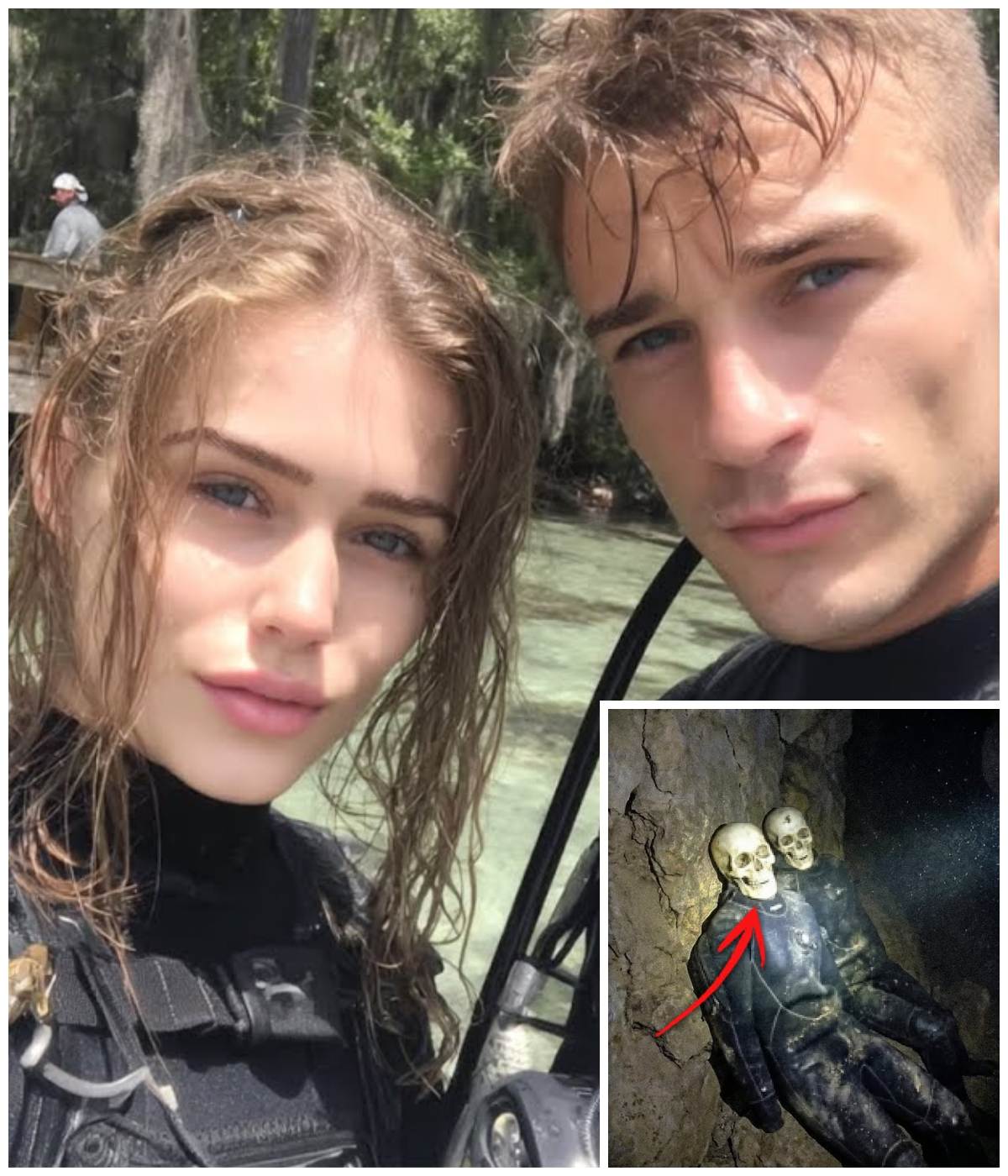
Lena Mercer. 22. Biology student. Methodical, bright, obsessed with aquatic ecosystems, the kind of young woman who color-coded packing lists and read maps for fun. Cole Hart. 26. Ambitious, sharp, the operations lead in his late father’s construction company, the kind of man who moved through life like every delay was a personal insult. They had gone diving on a brutal summer afternoon and never returned. Their SUV had been found in the lot. Their phones, wallets, and spare clothes had been left behind. Their bags and shoes had been discovered on a wooden platform near the waterline. Search teams had combed the spring and the nearby river for 7 days.
All they found back then was a damaged mask and a single fin.
That was enough for the official theory.
Panic. Equipment failure. Strong current. Disorientation in the cave system. Two divers caught in a place where even trained rescuers risked their lives. Terrible. Sad. Final. The case had been pushed aside with the kind of language officials use when they want grief to stop asking questions.
Now, 4 years later, Lena and Cole were back.
And the first people who saw the recovery photos could not stop staring at the way the bodies had been positioned.
They were not wedged randomly into a crevice. They were not twisted by a current. They were not tangled in collapsed debris. They were lying next to each other, aligned in a shallow stone pocket beyond a narrow entry point. The chamber where they were found was off the known route, difficult even for expert cave divers to reach. Experienced personnel studying the site photographs said the same thing under their breath before anyone dared put it in writing.
You do not end up there by accident.
That single thought changed everything.
The sheriff’s office reopened the file.