A Brother’s Silent Battle: The Vatican Holds Its Breath as John Joseph Prevost Fights for His Life
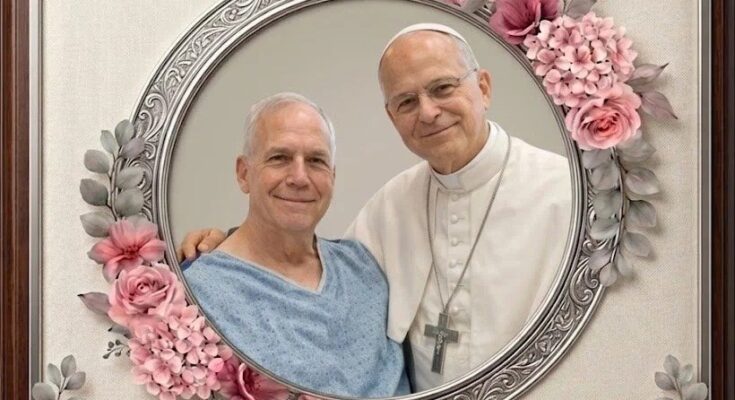
The news did not arrive with ceremony or announcement from a grand balcony. It came quietly—almost too quietly for a man so closely tied to one of the most powerful spiritual figures in the world. Yet within hours, whispers turned into a wave of global concern: John Joseph Prevost, the brother of Pope Leo XIV, is facing a serious and deeply personal health battle. And as the Vatican’s ancient walls stand unmoved, a different kind of tremor is being felt—one of fear, faith, and fragile hope.
For many, John Joseph Prevost has remained a figure just outside the spotlight, a man defined not by titles, but by relationships—most notably, his bond with his younger brother, now the spiritual leader of over a billion Catholics worldwide. Those who know the family describe John as a steady presence, a grounding force long before the white smoke rose above St. Peter’s Basilica.
“He was never interested in attention,” said Father Matteo Ricci, a longtime acquaintance of the Prevost family. “While the world looked toward Rome, John remained rooted in humility. He is a man of quiet strength.”
But now, that strength is being tested in ways few could have imagined.
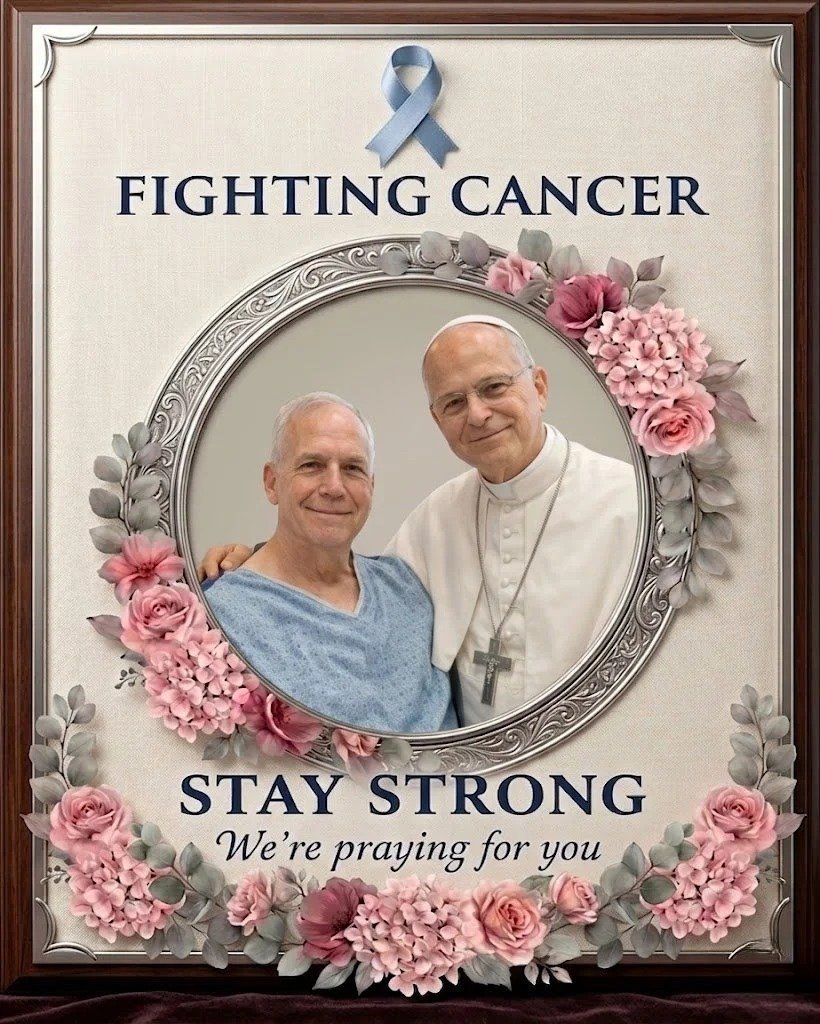
According to sources close to the family, the illness emerged suddenly—its severity not immediately understood. What began as routine discomfort reportedly escalated into a condition that required urgent medical attention. Within days, John was under intensive care, surrounded by a small circle of family members and trusted physicians.
“The situation is serious,” a Vatican insider revealed under condition of anonymity. “There is cautious hope, but also a deep awareness that this is a critical moment.”
The Vatican has not released an official medical bulletin, a decision that has only deepened the sense of uncertainty. Instead, a subtle shift in tone has been observed. Pope Leo XIV, known for his composed public demeanor, has reportedly scaled back several non-essential engagements. Observers noted a rare moment during a recent address where the Pontiff paused—just briefly—but long enough for those watching closely to sense something unspoken.
“It was unlike him,” said Vatican correspondent Elena Bianchi. “There was a weight behind his silence. It wasn’t political. It was personal.”
Behind the scenes, the Pope is said to be spending extended hours in private prayer. Those closest to him describe a man torn between his global responsibilities and the deeply human pain of watching a loved one suffer.
“You must understand,” Father Ricci added, “before he was Pope Leo XIV, he was simply a brother. That bond does not disappear when you wear the white cassock.”
As news of John Joseph Prevost’s condition spread, the reaction was immediate—and deeply emotional. From small parish churches in rural villages to grand cathedrals in Europe, candles have been lit in his name. Social media platforms, often a space of division, have instead become flooded with messages of unity.
“Praying for strength and healing,” one message read. “No family should face this alone—not even one as strong as theirs.”
In Chicago, where the Prevost family is believed to have deep roots, a spontaneous vigil formed outside a local church. Strangers stood shoulder to shoulder, some holding rosaries, others simply standing in silence.
“I don’t know him personally,” said Maria Alvarez, who attended the vigil. “But I know what it means to fear losing someone you love. That feeling is universal.”
Yet amid the prayers and public support, there remains a haunting question: how severe is the condition, truly?
Medical experts, while not directly involved, have weighed in cautiously. Dr. Anthony DeLuca, a specialist in critical care, noted that the lack of detailed information often suggests a complex or rapidly evolving situation.
“When families choose privacy at this level,” he explained, “it usually means they are navigating uncertainty themselves. It’s not just about treatment—it’s about time.”
That uncertainty has only intensified the emotional gravity of the moment. For Pope Leo XIV, whose leadership has been defined by calls for compassion, resilience, and faith in adversity, this crisis is no longer abstract. It is immediate. It is personal.
And perhaps most strikingly, it is human.
There are no papal decrees that can heal a brother. No ancient rituals that can erase the fear that comes with waiting. In this moment, the man who leads millions stands where countless others have stood before him—at the edge of hope, confronting the limits of control.
Still, those close to the family insist that John Joseph Prevost is fighting.
“He has always been resilient,” said Father Ricci quietly. “If there is strength to be found, he will find it.”
As the world watches and prays, the story of John Joseph Prevost becomes more than a private struggle. It becomes a reflection of something universal—the fragility of life, the power of family, and the unbreakable thread of faith that binds them together.
In the shadow of St. Peter’s Basilica, beneath the weight of history and expectation, one truth now rises above all others:
Even in the highest places of power, the deepest battles are fought not in public—but in the quiet, uncertain space between fear and hope.