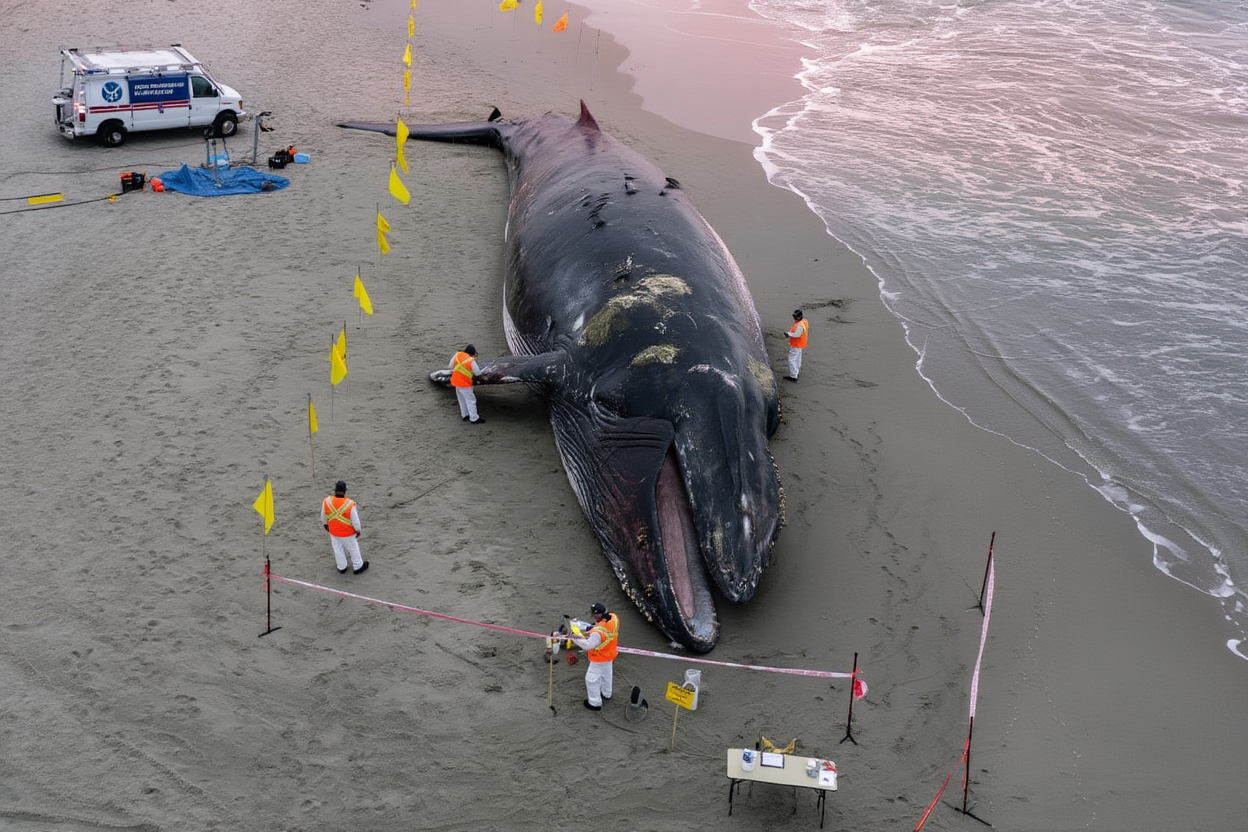
TRAGIC LOSS IN WASHINGTON — 61-FOOT FIN WHALE DIES AFTER STRANDING
TRAGIC LOSS IN WASHINGTON — 61-FOOT FIN WHALE DIES AFTER STRANDING
Samish Island, Washington — A heartbreaking event unfolded this week on the shores of Puget Sound, where a massive 61-foot (18.5 m) fin whale was discovered stranded in shallow coastal waters. The incident has sent shockwaves through local communities, marine scientists, and ocean lovers worldwide.
Witnesses first spotted the enormous whale struggling in the bay on Monday evening. As the tide receded rapidly, the giant animal became trapped in the mud, unable to return to deeper waters.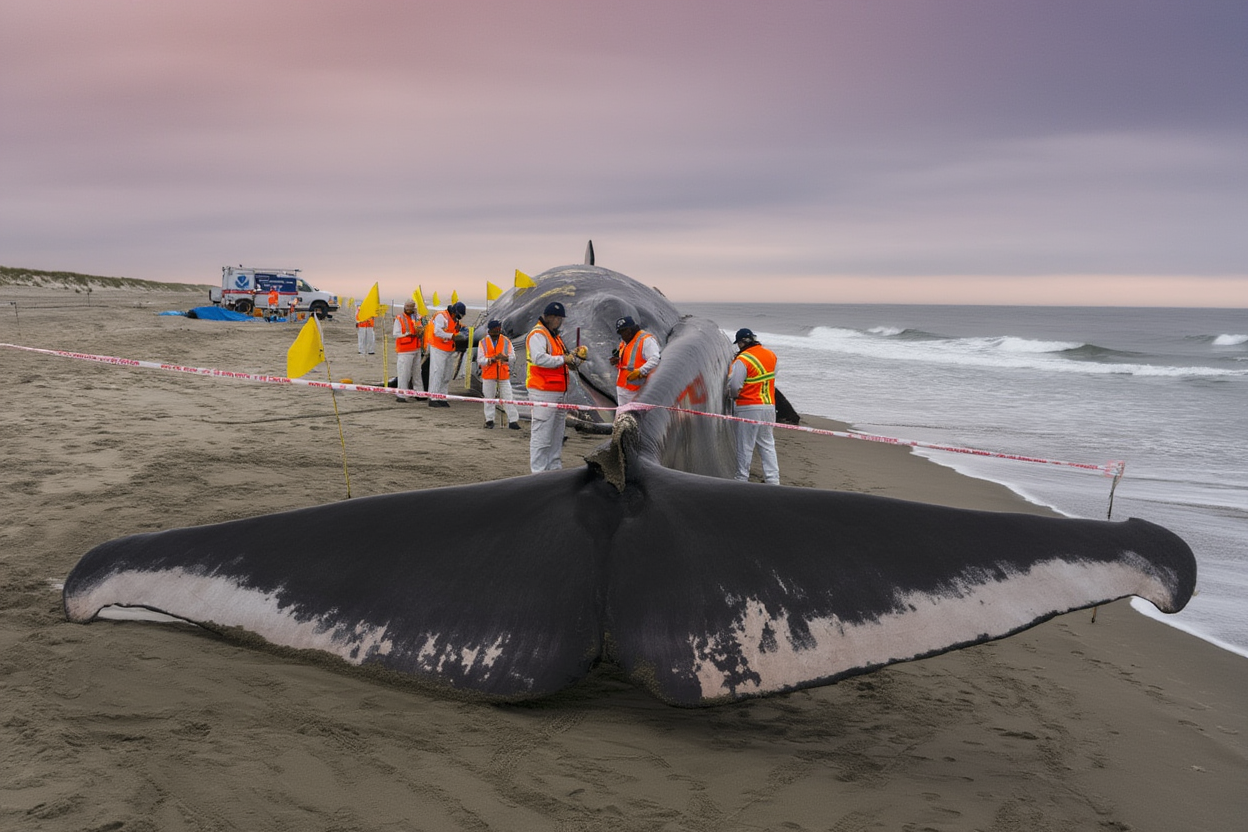
Rescue teams from the Central Puget Sound Marine Mammal Stranding Network rushed to the scene, working tirelessly to help, but the situation was tragically beyond their control. The whale’s immense size and weight made a safe rescue impossible.
By Tuesday morning, the exhausted whale had passed away. Experts explain that large whales stranded out of deep water cannot survive for long due to the stress and pressure their own body weight places on vital organs. Fin whales are the second largest animals on Earth, and sightings in Puget Sound are extremely rare.
Early assessments indicate that the whale was severely malnourished, raising urgent concerns about changing ocean conditions, warming waters, and declining food sources. Scientists warn that whale strandings like this may serve as a “red flag” for the health of marine ecosystems.
A necropsy is now underway to better understand the cause of death. Researchers hope the results will provide crucial insights into whale physiology, environmental impacts, and strategies for conservation.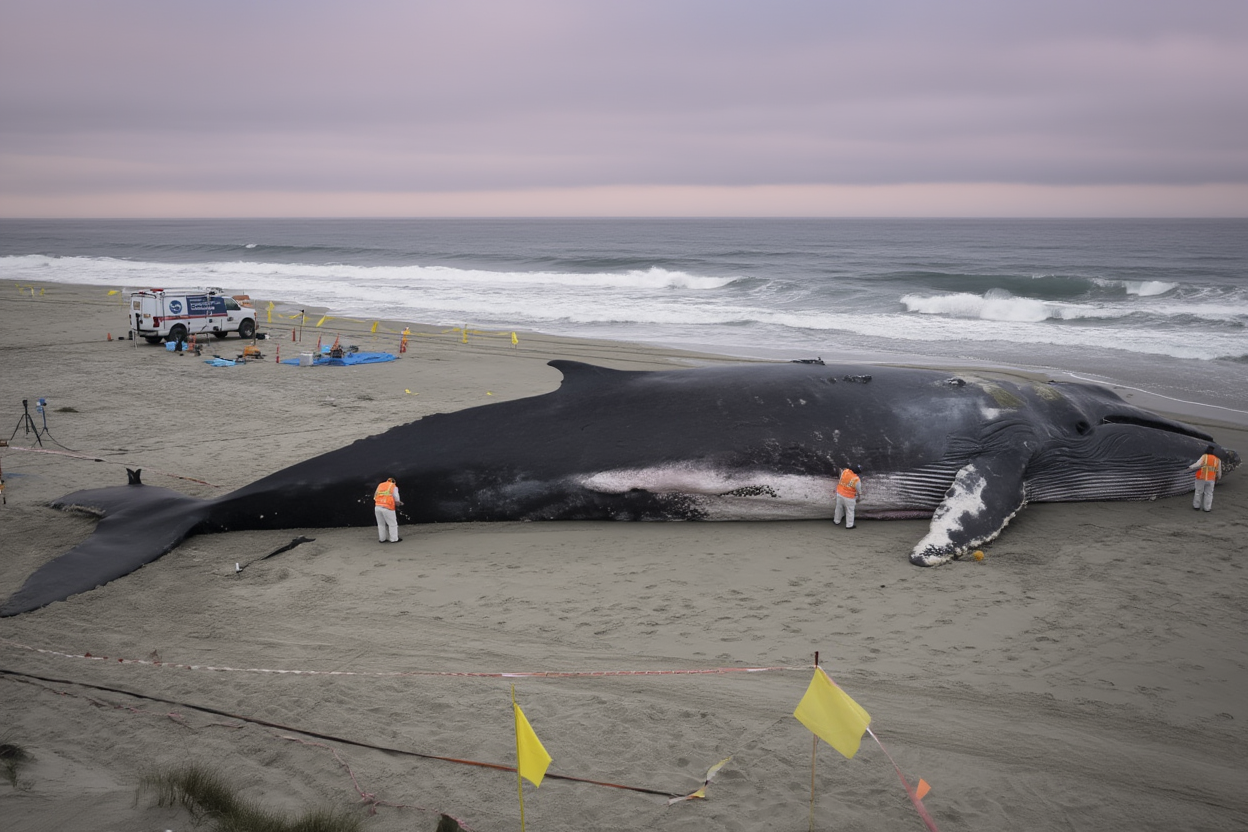
Local communities, tribal authorities, and officials are working together to manage the site respectfully, ensuring the natural decomposition process proceeds safely without harming the surrounding environment.
This tragedy is a powerful reminder of how fragile even the largest ocean giants truly are. Despite their enormous size and place at the top of the food chain, whales depend entirely on a healthy ocean to survive. Climate change, pollution, and overfishing continue to put many marine species at risk.
Conservationists are calling on the public and authorities to step up efforts to protect ocean habitats, monitor food availability, and maintain whale rescue programs — ensuring that these magnificent creatures are not lost forever.
Once again, Puget Sound bears witness to the vulnerability of ocean life — and we, standing on the shore, are left to watch, learn, and reflect.