THE VATICAN STUNNED INTO SILENCE: POPE LEO XIV RETURNS AFTER CANCER BATTLE — BUT IT’S HIS FINAL MOMENT ON STAGE THAT LEAVES THE WORLD WHISPERING
The first thing people noticed wasn’t the announcement.
It was the silence.
Inside the grand hall filled with faithful, dignitaries, and members of the clergy, there was a stillness so deep it felt almost unreal. No movement. No murmurs. Only expectation — heavy, trembling expectation — as if everyone sensed they were about to witness something far beyond a simple public appearance.
Then he stepped forward.
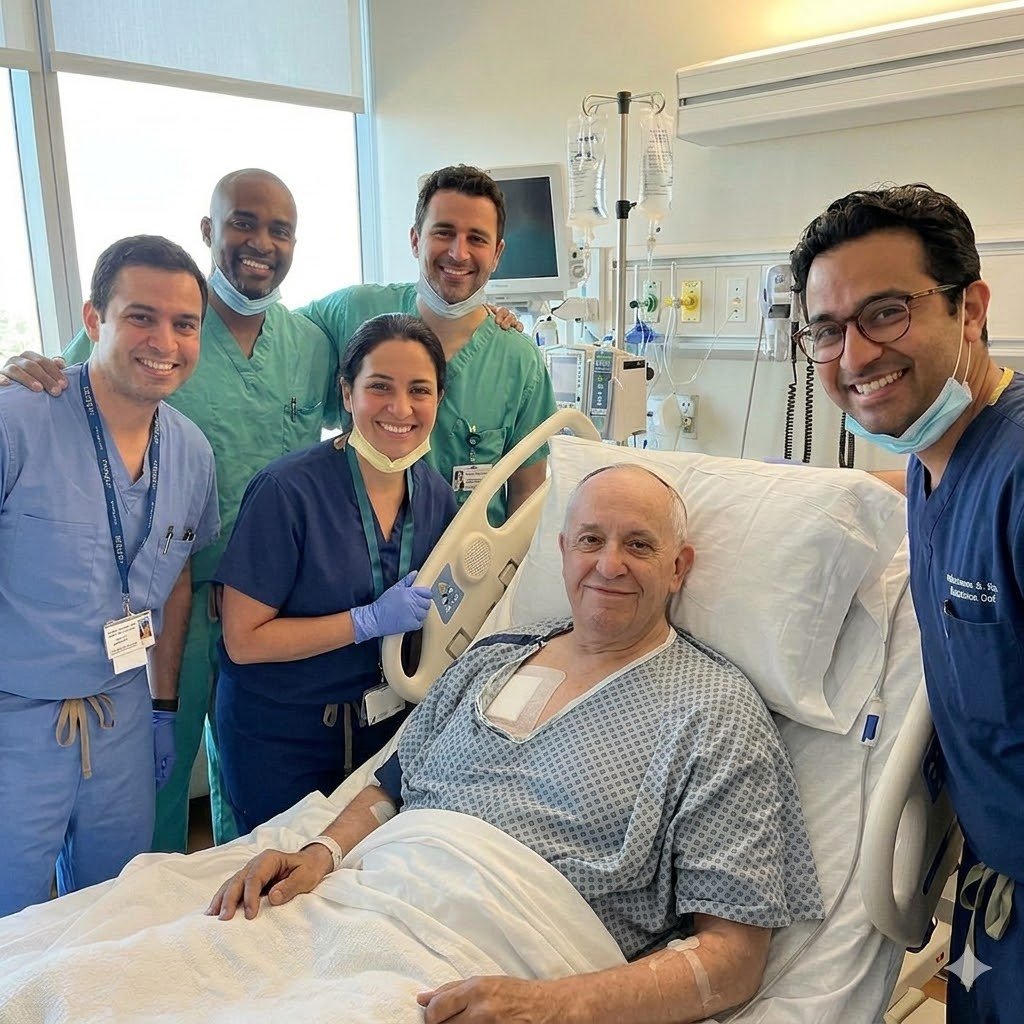
Leo XIV appeared before the crowd with a calmness that immediately shifted the atmosphere. There was no dramatic entrance, no ceremonial flourish that usually accompanies such moments. Instead, there was simply presence — steady, grounded, and visibly transformed.
A renewed strength was unmistakable in his posture. And though the details of his private journey had been kept away from the public eye, the signs were now impossible to ignore. A quiet acknowledgment rippled through the room before a single word was spoken.
Then came the revelation.
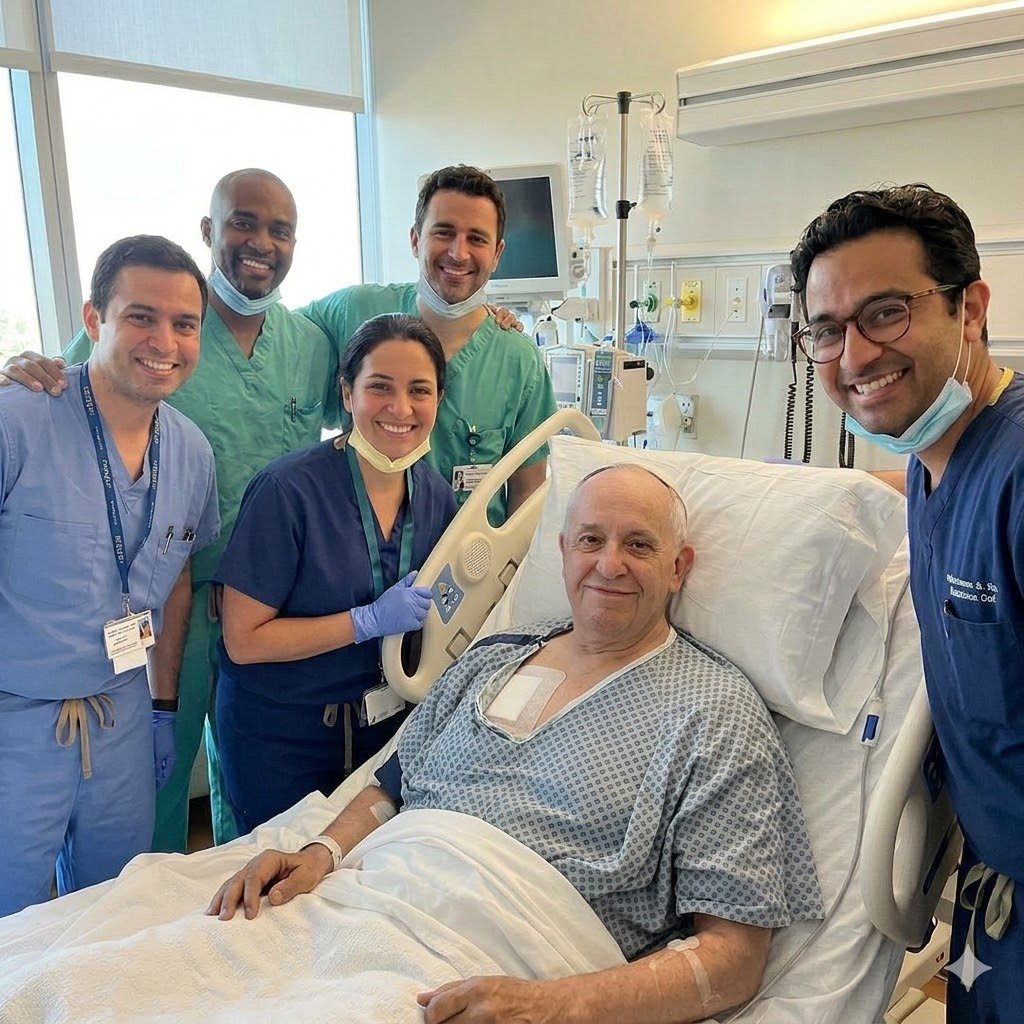
The Pontiff confirmed that he had overcome cancer after a long, private treatment journey conducted away from the spotlight of the world.
For a moment, the reaction did not come.
It was as if the words had to pass through layers of disbelief before reaching understanding. Then, slowly, emotion broke through. A wave of applause rose — not loud at first, but deeply felt. A collective release of tension that had unknowingly built up over time.
Some bowed their heads. Others closed their eyes. Many simply sat in stunned silence, absorbing what they had just heard.
This was not a political speech. It was not a formal declaration of triumph. It was something far more fragile and human — a moment of survival spoken aloud.
But what followed would define the night far more than the announcement itself.
Because the Pope did not linger on victory.
Instead, he shifted into reflection.
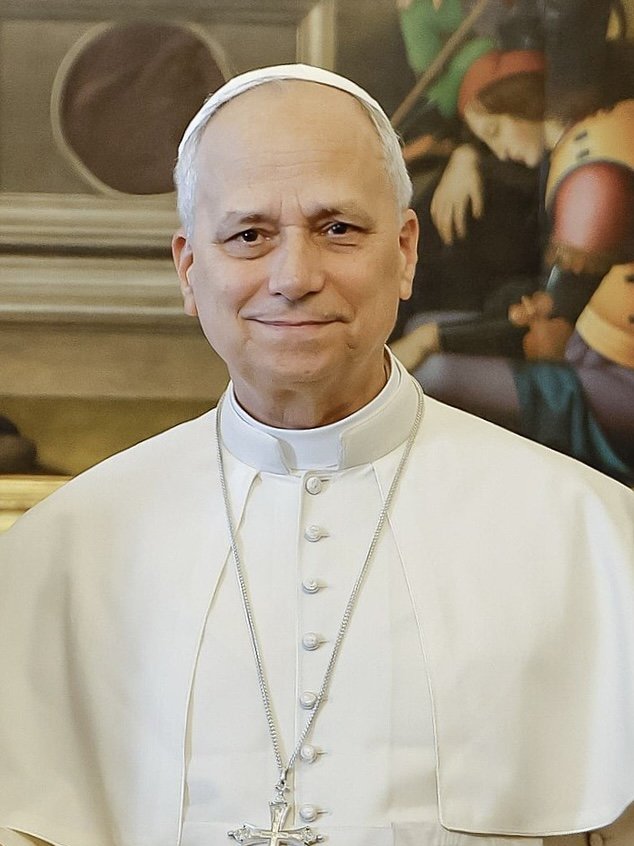
His voice remained steady, but the tone changed — becoming quieter, more deliberate. He spoke about vulnerability, about the moments when certainty disappears, and about the strange clarity that can emerge when everything familiar is stripped away.
Those present would later describe the atmosphere as “unsettlingly intimate,” as though the distance between speaker and audience had vanished completely.
And yet, even as the message deepened, something else began to build beneath it.
A sense that the speech was moving toward a final turning point.
The pacing slowed.
Pauses grew longer.
The Pope’s gaze moved across the crowd with a stillness that felt heavier than words.
People in the audience later recalled a shared feeling — that something unspoken was approaching the surface.
And then it happened.
The closing moment.
There were no dramatic gestures. No visible change in tone. Just a final sequence of words delivered with calm certainty.
But the impact was immediate.
Because according to those present, the ending did not feel like an ending at all.
It felt like something left deliberately incomplete.
There is no single verified version of what was said in those final seconds. And that uncertainty has now become the center of global speculation.
Different attendees recall different interpretations. Some describe it as a message of spiritual resilience — a reminder of endurance beyond suffering. Others insist it carried a broader reflection, something about responsibility and the weight of leadership in fragile times.
A few even believe it was intentionally open-ended, designed not to conclude the moment, but to extend it beyond the walls of the hall.
What is consistent across every account is not the exact wording — but the reaction.
A pause followed the final line.
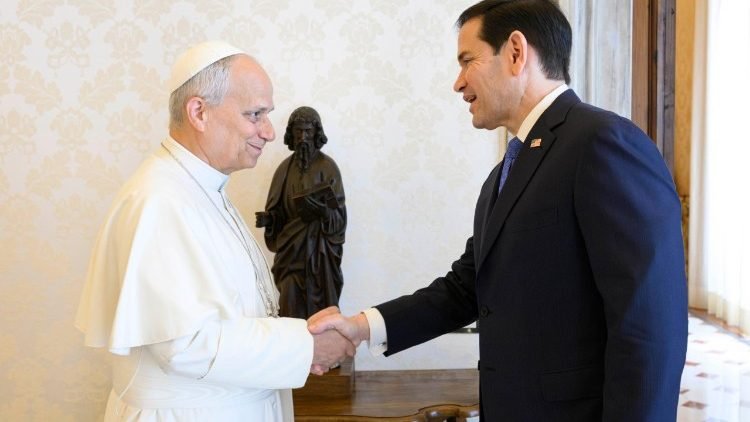
A silence that did not feel empty, but charged.
No immediate applause.
No instant response.
Just stillness.
A rare kind of stillness that seems to press against time itself.
And in that silence, something shifted.
People began to look at one another, unsure whether the moment had truly ended. Some lowered their eyes. Others remained frozen in place, as if moving too quickly would break something delicate.
Then came the murmurs.
Small at first. Then spreading. Conversations forming in fragments. Attempts to reconstruct what had just been heard. Not with certainty, but with emotion.
Outside the hall, the reaction intensified rapidly.
Phones were lifted. Messages sent. Short clips replayed again and again, as people tried to catch meaning from tone, cadence, gesture — anything that might clarify what words alone could not.
But clarity did not come.
Some saw it as a call for unity. Others as a warning about the future. Some described it as deeply personal — a moment not meant for public decoding, but for shared feeling.
And yet, amid all theories, one reality remained unchanged:
The Pope had returned from a private battle.
He had spoken of survival.
And in his final moment on stage, he had left something behind that no one could fully define.
As he quietly departed, there was no spectacle. No extended farewell. Only a calm exit that stood in contrast to the emotional turbulence left in his wake.
But long after he disappeared from view, the hall remained occupied — not by silence this time, but by questions.
What was meant by those final words?
Why did they feel heavier than everything that came before?
And why, despite the absence of clarity, does everyone feel certain that something important was said?
In the days that follow, analysis will continue. Experts will attempt to reconstruct meaning. The faithful will reflect on interpretation. And the world will keep replaying the moment, searching for something that may not be fully recoverable in words.
But for those who were there, the memory has already settled into something deeper than understanding.
A man stepped forward after a hidden struggle.
He spoke of life after illness.
And then, in a final moment that defied simple explanation, he left behind a message that continues to echo in the silence he created.
A silence that, even now, refuses to disappear.