Only 37 Remain: The Silent Struggle of Europe’s Last Resident Orcas
Only 37 Remain: The Silent Struggle of Europe’s Last Resident Orcas
There are more giant pandas in the wild.
More snow leopards roaming remote mountains.
Even more critically endangered rhinos surviving under constant protection.
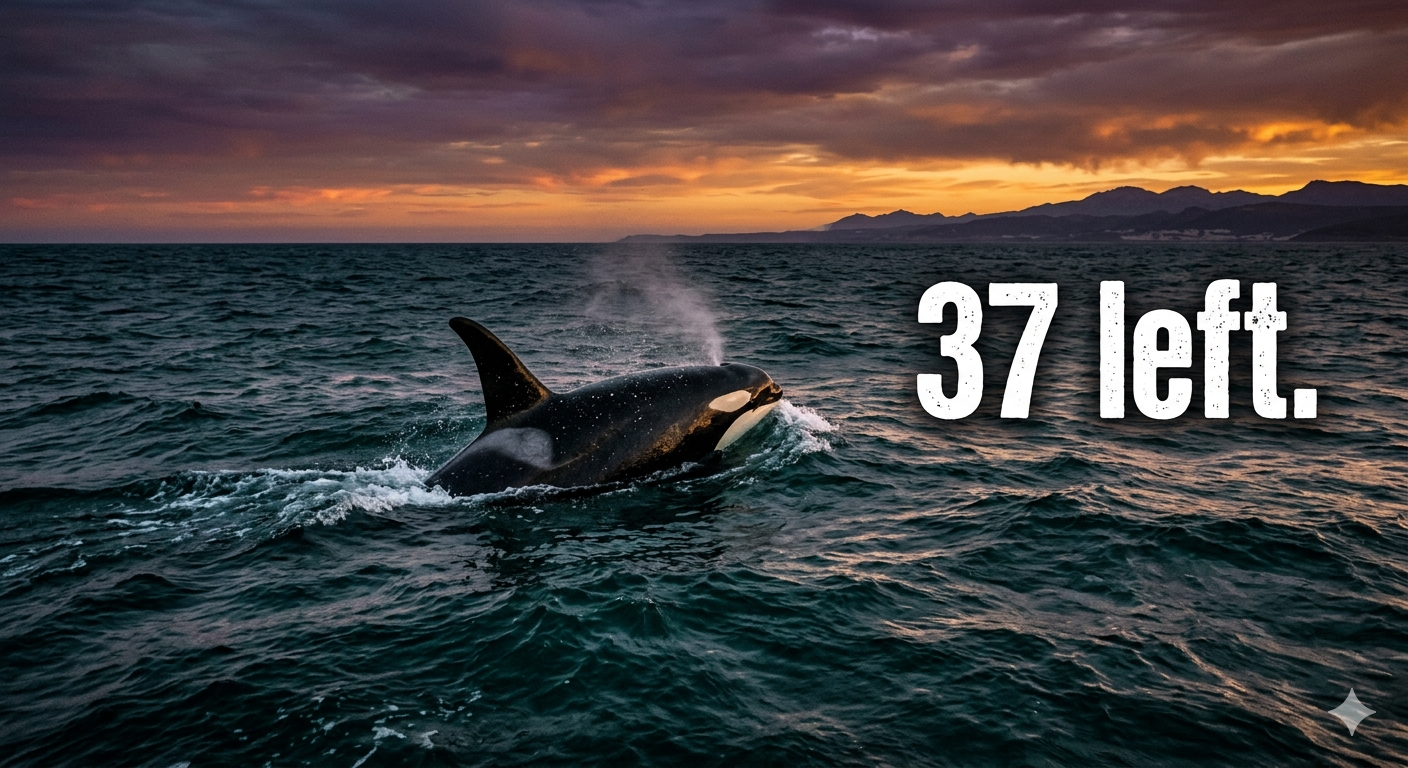
But along the rugged Atlantic coastline stretching from France to northern Morocco, an entire population of killer whales hangs on by a thread.
Just 37 individuals remain.
Not 37,000.
Not 370.
Only 37.
These are the Iberian orcas, the only resident population of killer whales living in European waters. For generations, they have followed an ancient hunting tradition, pursuing Atlantic bluefin tuna through the Strait of Gibraltar and surrounding seas — a remarkable cultural behavior passed from mothers to calves over decades.
Now, scientists warn that their future has become increasingly uncertain.
A Decade of Research Reveals a Troubling Reality
A newly published study examined more than 18,000 photographs collected over ten years, allowing researchers to identify individual whales and track their lives in unprecedented detail.
What they found was alarming.
While the population has technically increased, the growth rate is only about 0.5 percent per year — so low that scientists describe the population as essentially stagnant.
In practical terms, the number of whales today is nearly the same as it was years ago.
And for a population already numbering only 37 individuals, standing still may be just as dangerous as declining.
Researchers also discovered that female orcas can go as long as eight years between births, one of the longest intervals recorded among killer whale populations.
Every calf matters.
Every lost female matters.
Every death can have consequences that echo through the entire community.
Why Aren’t They Recovering?
At first glance, there appeared to be reason for optimism.
Atlantic bluefin tuna, the Iberian orcas’ primary prey, have shown signs of recovery after years of overfishing controls and conservation measures.
More tuna should mean healthier whales.
But that recovery has not translated into population growth.
Scientists believe several human-related threats continue to hold the whales back.
Vessel Strikes
The waters used by Iberian orcas are among the busiest shipping routes in the world.
Commercial vessels, ferries, fishing boats, and recreational craft share the same waters where the whales feed and travel.
A collision with a large vessel can be catastrophic, particularly for calves and young animals.
Fishing Gear Entanglement
Lost nets, fishing lines, and other marine gear continue to pose serious risks.
Entangled whales may suffer severe injuries, infections, reduced ability to hunt, or even death.
For a population this small, even a single loss can be significant.
Toxic Pollutants
Perhaps the most insidious threat comes from pollution.
Industrial chemicals and other contaminants accumulate in the marine food chain and become concentrated in top predators like orcas.
These toxins can affect reproduction, weaken immune systems, and reduce calf survival rates.
Unlike visible threats such as ship strikes, pollution often works silently over many years.
A Population Living on the Edge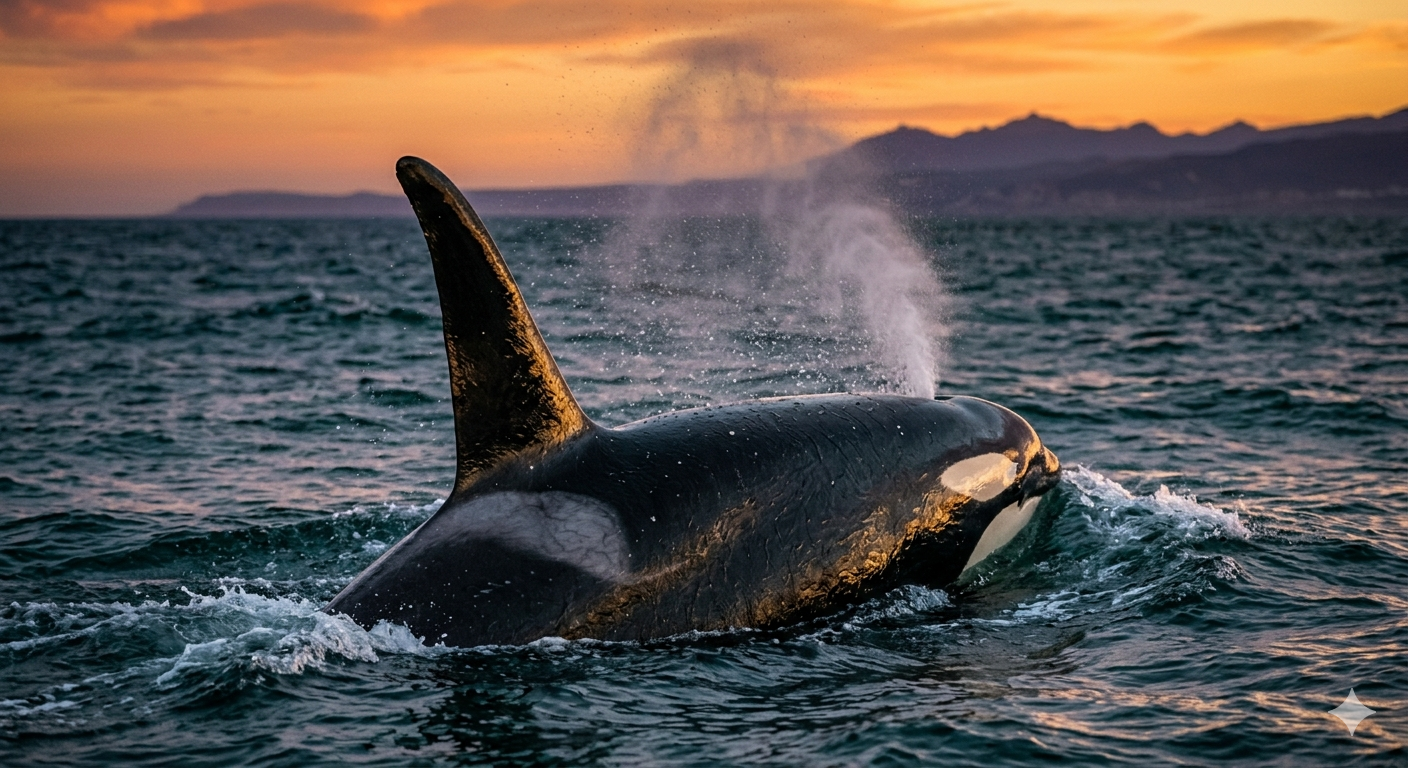
Conservation experts emphasize that the danger is not simply the low number of whales.
It is the combination of a tiny population, slow reproduction, and multiple ongoing threats.
When populations become this small, they become increasingly vulnerable to unexpected events.
A disease outbreak.
A series of poor feeding seasons.
The loss of a few breeding females.
Any one of these could push the population into a downward spiral that becomes difficult—or impossible—to reverse.
More Than Just Whales
The Iberian orcas are not simply another group of marine mammals.
They represent a unique culture within the animal kingdom.
Researchers have documented specialized hunting behaviors passed from generation to generation, a form of knowledge that exists nowhere else on Earth.
If these whales disappear, it would not only mean the loss of 37 animals.
It would mean the disappearance of an entire cultural lineage that has survived for centuries in European waters.
The Clock Is Ticking
For now, the Iberian orcas continue their annual pursuit of bluefin tuna through the Atlantic, carrying on traditions older than modern nations.
But scientists warn that time is running short.
With only 37 individuals left, every birth offers hope.
Every survival matters.
And every decision humans make about the oceans they inhabit could determine whether future generations will still witness Europe’s last resident killer whales.
Because when a population falls to just 37 individuals, extinction is no longer a distant possibility.
It becomes a very real risk.
Share this story to help raise awareness for one of the world’s smallest and most vulnerable killer whale populations.