DREAM HENNA TREAT TURNS INTO NIGHTMARE AS 7 YEAR OLD GIRL SUFFERS SEVERE SKIN REACTION LEAVING HER ARM BADLY BLISTERED
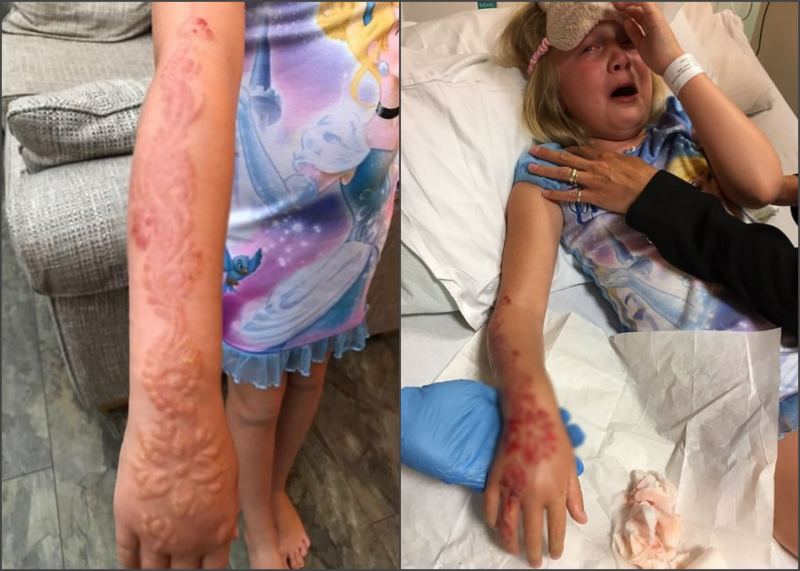
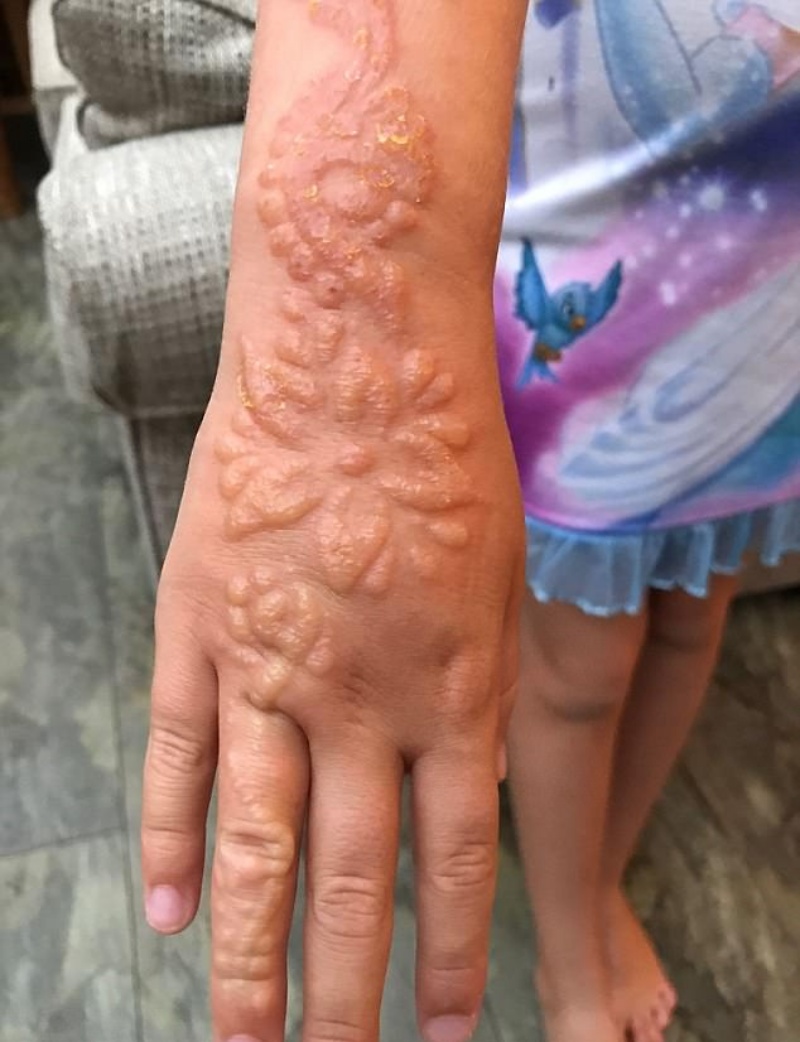
The little girl may have to live with these scars for the rest of her life – the marks left after a severe skin reaction following a henna application.
Madison Gulliver and her family were on vacation in Egypt. During the second week of their trip, an unfortunate incident occurred, and her mother, Sylvia (43), was not present because she was hospitalized for a gallbladder infection.
Seeing how well-behaved her two daughters were throughout the vacation, their father, Martin, decided to reward them with henna designs. Madison excitedly went to a henna booth at a 4-star hotel, where the artists applied beautiful designs to her hands. Looking at the finished artwork, Madison was very happy and delighted. However, her older brother, Sebastian, 9 years old, immediately complained of itching after the henna application and quickly washed the designs off his hands.
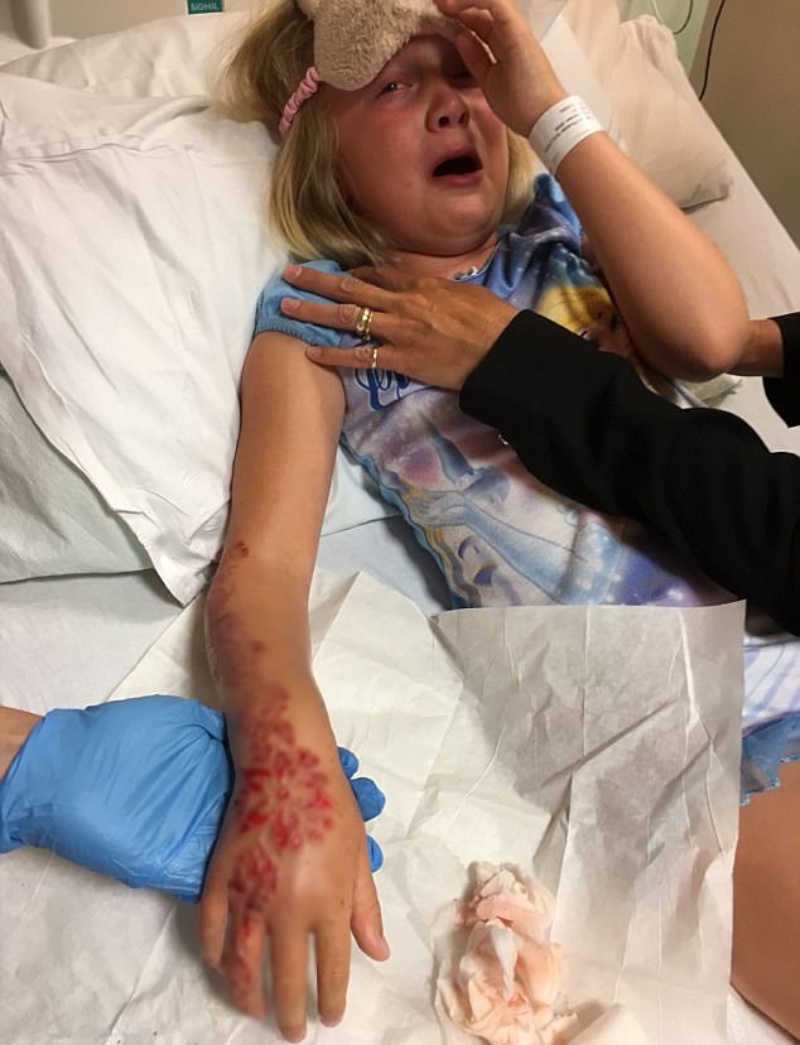
On July 25th, after returning home, the skin around Madison’s henna application looked unusual. Madison felt itchy and stinging, and worse, the area had developed blisters filled with fluid. “The next morning, the entire henna design on her hand was itchy. We immediately cleaned her hand and found a red mark in the area. It was forming more and more blisters, and we went online to research and found that there were many concerns,” said Martin.
After taking her to the hospital, the family was prescribed a steroid cream to apply to the affected skin, but when the blisters spread to Madison’s fingers, they immediately took her to the emergency room. After five visits to St Mary’s Hospital, Madison was given many different creams and ointments, but nothing improved. Finally, Madison had to go to Salisbury County Hospital to see a burn specialist.
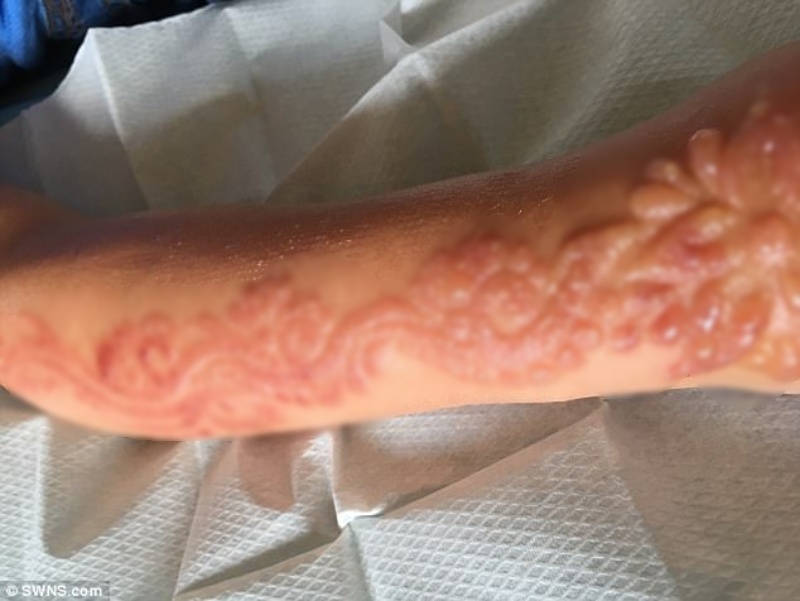
Martin stated, “We started to panic. They had never seen anything like it before, and every time we went in, they tried different things, but it just kept getting worse.”
The doctors then tested the fluid from the blisters on Madison’s hand and were surprised to find a high pH level. This indicated she had suffered a chemical-related skin injury. “They decided to treat the skin by removing the blisters to access the damaged area underneath. They thought they could soften the blisters and then remove them, but they couldn’t because they were too thick. So, they had to carefully cut them away,” Martin added.
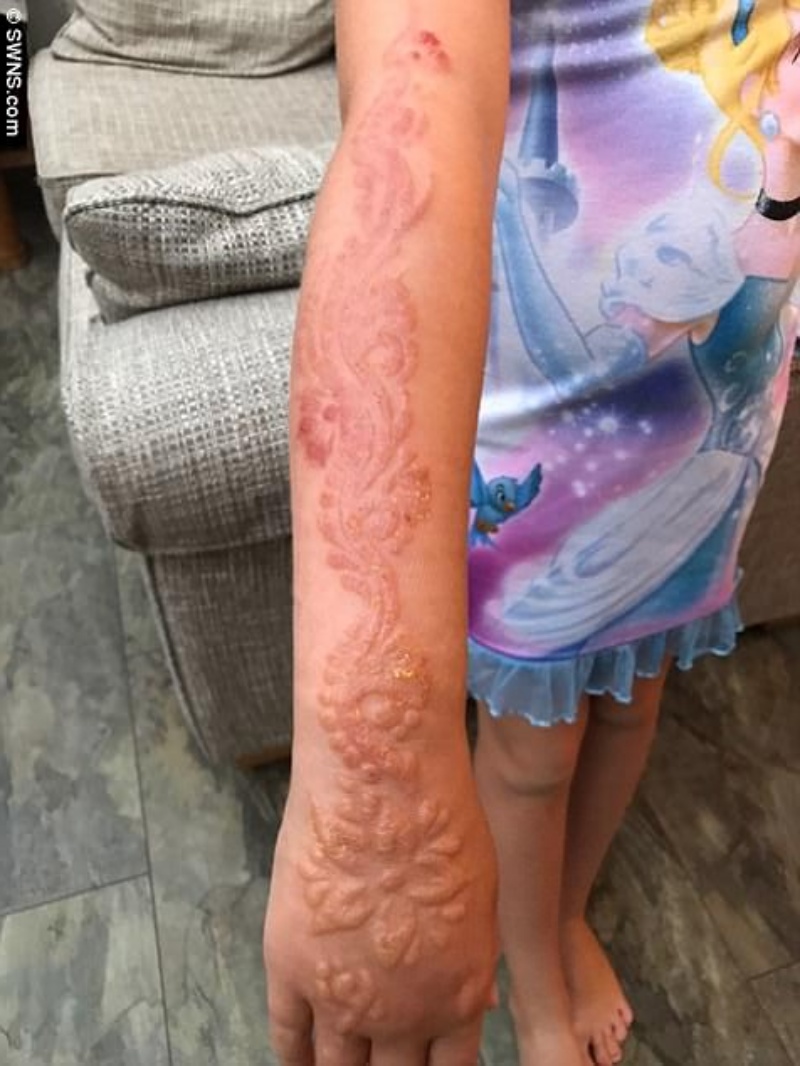
Madison has now been referred to a scar treatment unit and will have to wear bandages for at least six months to help reduce long-term marks on her hand. He said, “My daughter might have to live with these marks for the rest of her life. The henna design was done at the hotel’s salon, and they claimed it wasn’t their responsibility, but rather my daughter’s skin sensitivity. We were completely unaware of the risks, so I think there should have been a warning on the flyer. I also feel partly responsible for not knowing more, but the salon also shares responsibility for using substances that may not be suitable for children.”
Regarding the hotel, after the incident, the manager stated that they no longer offer henna painting services. In an email sent to the Martin family, manager Heike Moursy wrote: “On behalf of the beauty salon owner, we apologize once again for what happened to your daughter. We don’t want any more serious reactions like this to happen to anyone else in the future. Therefore, our CEO, Mr. Max Shoukry, will be working with the salon owner to ask them to stop applying henna. We know this won’t undo what happened to Madison, but we hope she will recover soon.”
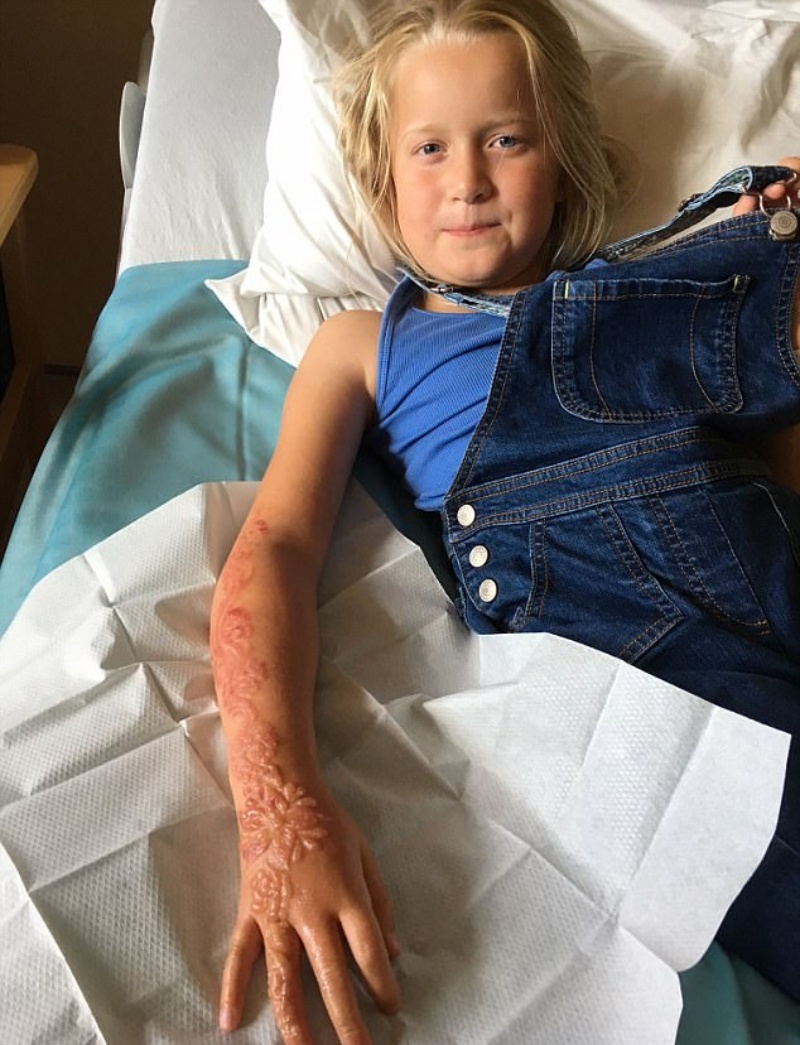
Dr. Chris Flower, CEO of the Cosmetics, Bath & Fragrance Association, advises everyone to be cautious about henna ink. He stated: “PPD is used safely and legally in hair dyes, with safety guidelines and maximum levels controlled by law. But henna ink often contains high concentrations of PPD to create a dark color quickly. When applied to the skin as a temporary tattoo, PPD can lead to strong skin reactions and irritation. Real henna is never black, but rather orange-brown. Any dark henna should be approached with caution.”
Lisa Bickerstaffe from the British Skin Association said: “You have to check the color if a product is described as henna. Henna is orange-brown, so if you get black henna, it’s not true henna. If in doubt, stay away.”
Earlier this week, seven-year-old Theo Luckett experienced a serious reaction after receiving henna from a stall while on holiday in Bulgaria.
In addition to the pain and potential long-term marks from a reaction to black henna ink, you may also become sensitive to PPD. This means that if you are exposed to PPD again in the future, even many years later, you could still experience a strong reaction.