The first week didn’t fix anything.
- LongVo
- June 29, 2026
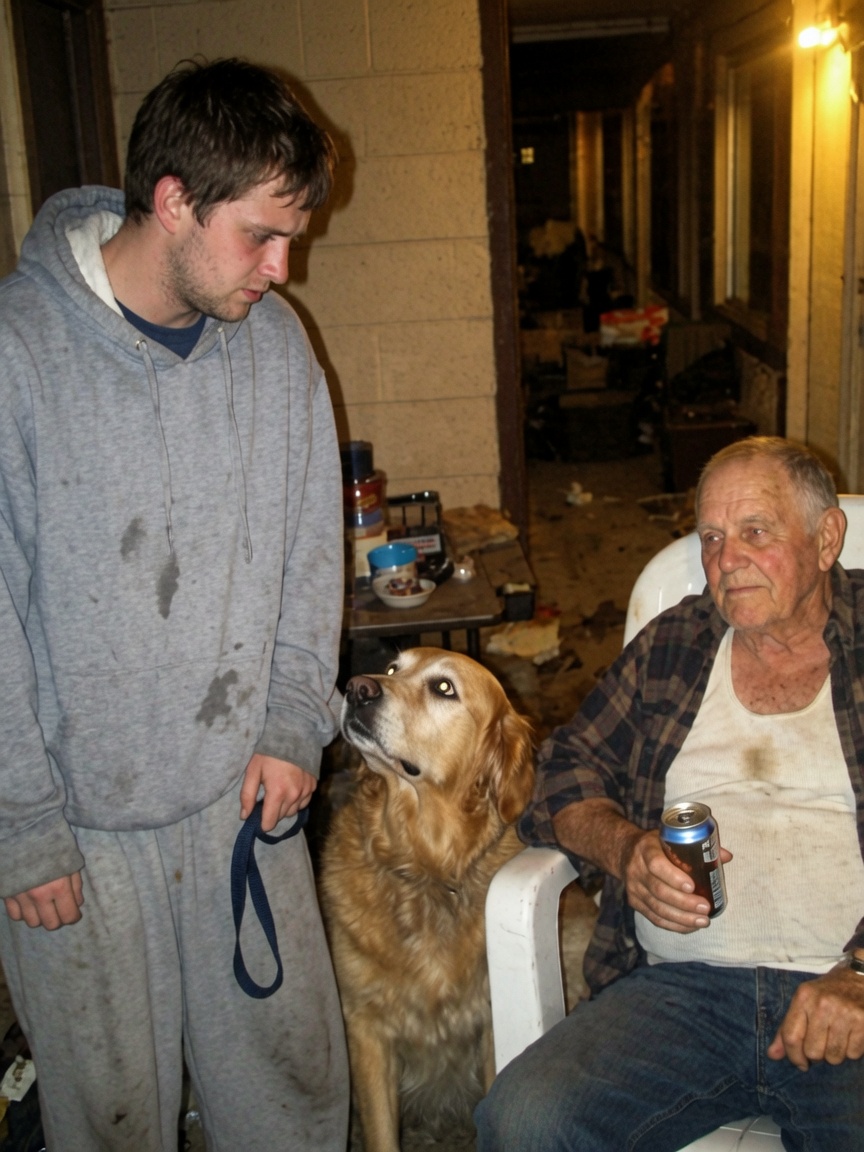
The first week didn’t fix anything.
It didn’t erase the debt notices piling up in my email. It didn’t make the apartment feel bigger. It didn’t make my thoughts quieter.
But it made mornings exist again.
That was the strange part.
Mornings had stopped feeling like a promise a long time ago. They had become something I survived. But now, at 6:45, the alarm would go off, and before my mind could talk me out of it, Barnaby would already be standing by the door.
Waiting like it was the most important appointment in the world.
And Mr. Miller would already be outside.
Same folding chair. Same can of cheap beer swapped out for black coffee. Same silence—but different somehow.
Not empty.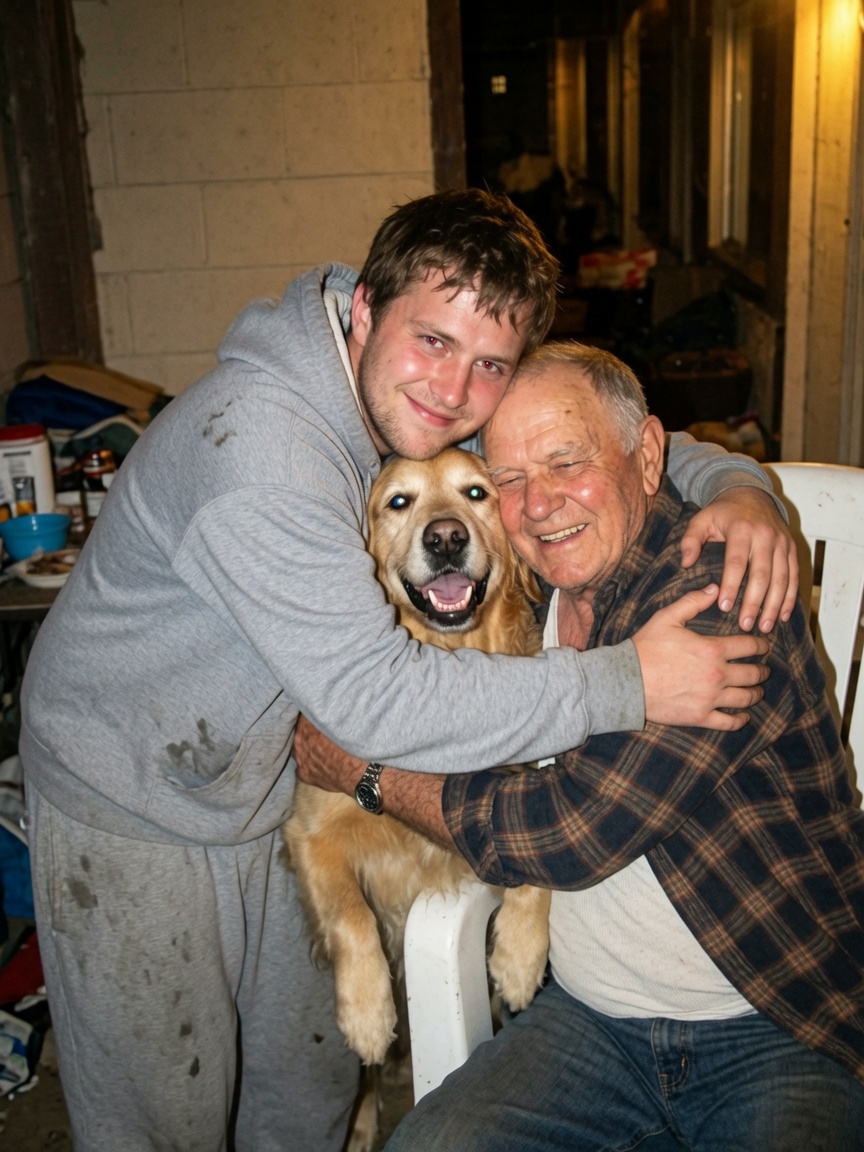
Occupied.
“Dog looks less like he’s babysitting you today,” he muttered on day four without looking up.
“I’ll take that as progress,” I said.
He grunted. “Don’t get cocky.”
That was the rhythm.
No speeches.
No therapy language.
Just two men and a dog sharing the only piece of the day that didn’t demand anything from us.
On the tenth morning, something changed.
Barnaby stopped halfway across the yard.
He didn’t pull toward Miller’s porch like he usually did.
He just stood there.
Looking at me.
Waiting.
Not for permission.
For direction.
And for the first time in a long time, I realized something uncomfortable:
I had stopped moving like someone who was disappearing.
I had started moving like someone who was being expected.
Miller noticed too.
He always noticed.
“You sleep last night?” he asked.
“Yeah,” I lied automatically.
He took a sip of coffee. “That’s another bull answer.”
I almost laughed.
Almost.
But then he nodded toward my hands.
They weren’t shaking.
I hadn’t even realized that.
—
Three weeks later, I learned something about Mr. Miller that he never announced.
Barnaby got sick.
Nothing dramatic at first—just sluggish, refusing food, lying closer to the porch steps than usual.
I panicked in a way that surprised me.
Not because I couldn’t handle it.
But because I suddenly understood how quickly something stable could vanish again.
Miller didn’t ask questions when he saw me rushing down the stairs at 5:30 AM carrying a towel and a worried dog.
He just stood up.
“Truck,” he said.
We drove in silence to the vet clinic twenty minutes away.
Barnaby slept in the back seat between us like he trusted both of us equally, which somehow made my throat tighten worse than anything else.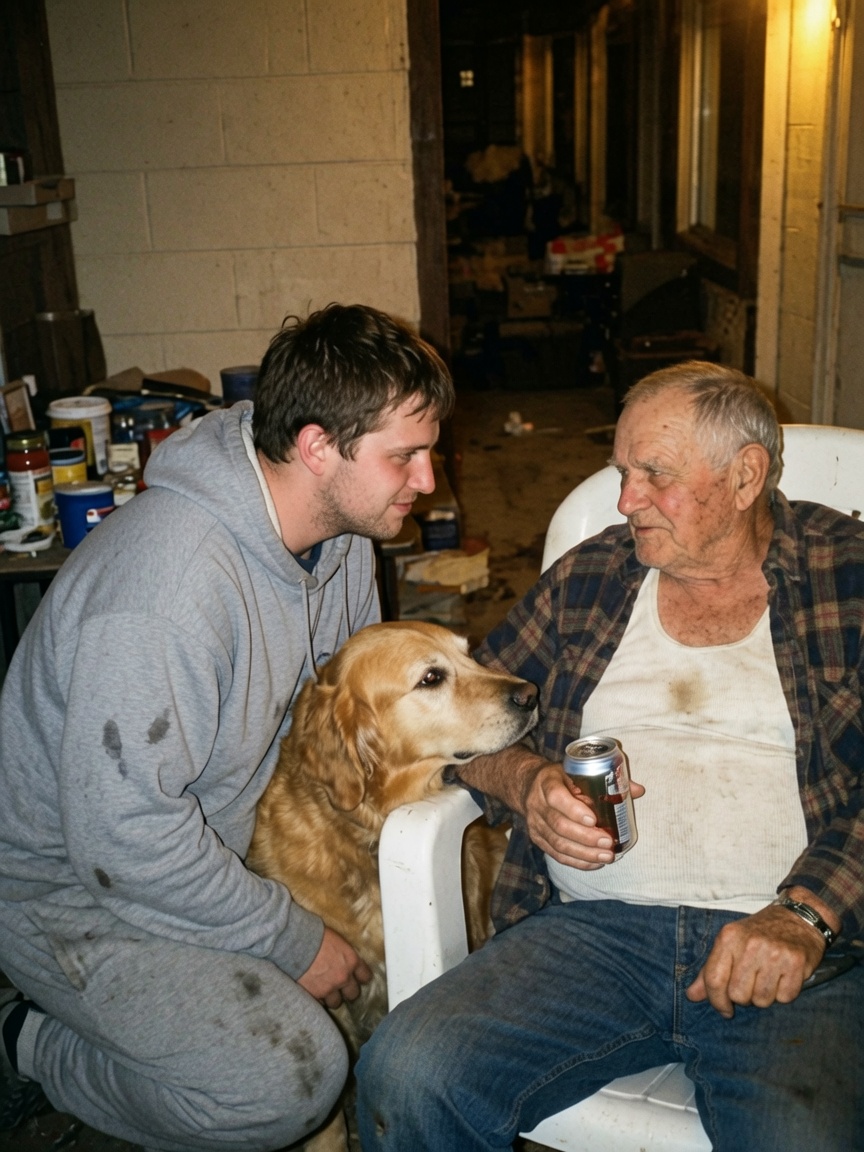
At the clinic, they said it was treatable.
Infection. Old age. Medication. Rest.
Nothing final.
Just expensive and manageable.
I sat in the waiting room thinking about numbers again.
Rent. Bills. The familiar spiral.
Miller came back with two cups of vending machine coffee and handed one to me.
“You’re doing that thing again,” he said.
“What thing?”
“Future dying in your head before it happens.”
I didn’t answer.
Because he was right.
—
That evening, when we got back, I tried to give him money for gas.
He didn’t even look at it.
Instead, he pointed at my phone.
“You still carrying that thing like it’s a gun pointed at you?”
I frowned. “It’s my work.”
“It’s your leash,” he corrected.
Then he leaned back in his chair, watching Barnaby drink water slowly from a bowl I’d placed on the porch.
“I wasn’t always this old, you know.”
I waited.
That was the first time he said anything like it.
“I used to fix engines for a living. Worked twenty-seven years in a shop that smelled like oil and bad decisions.” He paused. “Then I lost my wife, and I thought sitting still would make the grief smaller.”
He laughed once, but there was no humor in it.
“It doesn’t.”
We sat there a long time after that.
Long enough for the sky to change color twice.
—
Months passed without announcing themselves.
That’s how healing actually works. Not as a moment. Not as a breakthrough.
But as repetition that slowly stops hurting.
I got better at small things.
Paying bills without spiraling.
Eating even when I wasn’t hungry.
Answering emails without feeling like I was being judged by them.
Barnaby got stronger.
Miller got louder.
Not in anger.
In presence.
He started telling me stories I wasn’t sure he’d ever told anyone. About his wife. About the way she used to leave notes in the lunchbox he pretended he didn’t need.
About how the silence of an empty house is never really silence at all.
“It has weight,” he said once. “People don’t talk about that. Silence has weight.”
One morning, I showed up late.
Not hours late.
Just seventeen minutes.
I expected him to be angry.
He wasn’t.
He just looked at me over his coffee.
“You’re learning,” he said.
“Learning what?”
He nodded toward Barnaby, who was patiently sitting between us like a referee.
“That you’re still here even when you’re not perfect.”
That hit harder than I expected.
—
The first time I laughed without forcing it was over something stupid.
Barnaby stole Miller’s biscuit off the chair.
Miller stared at him for a full five seconds and said:
“I lived through two wars and a government shutdown, and I got outsmarted by a dog in orthopedic decline.”
I laughed so hard I had to sit down on the steps.
And Miller—after a pause—laughed too.
It wasn’t loud.
But it was real.
—
A year later, I still set my alarm for 6:45 AM.
Not because I need to anymore.
But because the routine turned into something else.
Something steady.
Something shared.
Sometimes new people join us on the porch now. Neighbors I never learned the names of before. Someone brings extra coffee. Someone else brings donuts.
No one calls it a group.
No one named it anything.
It just… became.
And every so often, when I catch myself thinking back to that Tuesday at 7:00 PM—the spotless apartment, the packed bag, the silence that felt like an ending—I realize something I couldn’t see then.
It wasn’t an ending at all.
It was a door I didn’t know how to open yet.
Barnaby is older now.
Miller is slower now.
And me—
I’m still here.
Still showing up at 7:00 AM.
Still learning that being alive isn’t something you prove once.
It’s something you do again tomorrow.