When America’s Cars Stopped Running: The Forgotten Families Who Turned Broken Automobiles Into Lifelines During the Great Depression
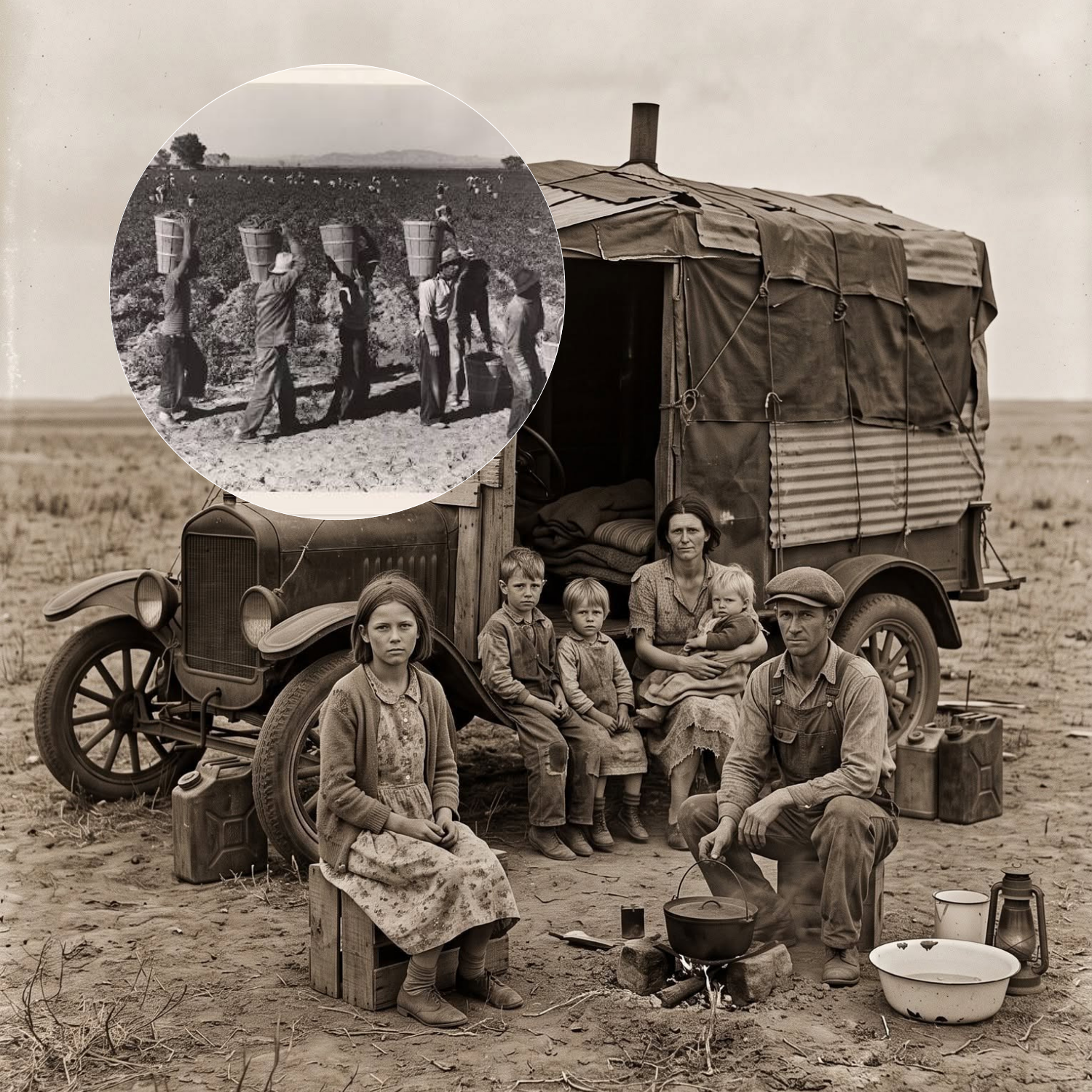
There was a time in America when owning a car no longer meant freedom. It meant survival.
As the Great Depression tightened its grip on the nation, thousands of families found themselves staring at automobiles they could no longer afford to drive. Gasoline had become an impossible expense, jobs had disappeared, and what had once symbolized progress suddenly became another reminder of financial ruin. Instead of abandoning those vehicles, many Americans transformed them into something entirely different.
They took out the engines, stripped away heavy parts, hitched horses or mules to the frames, and kept moving.
These unusual creations became known as Hoover Wagons, a lasting symbol of one of the darkest chapters in American history.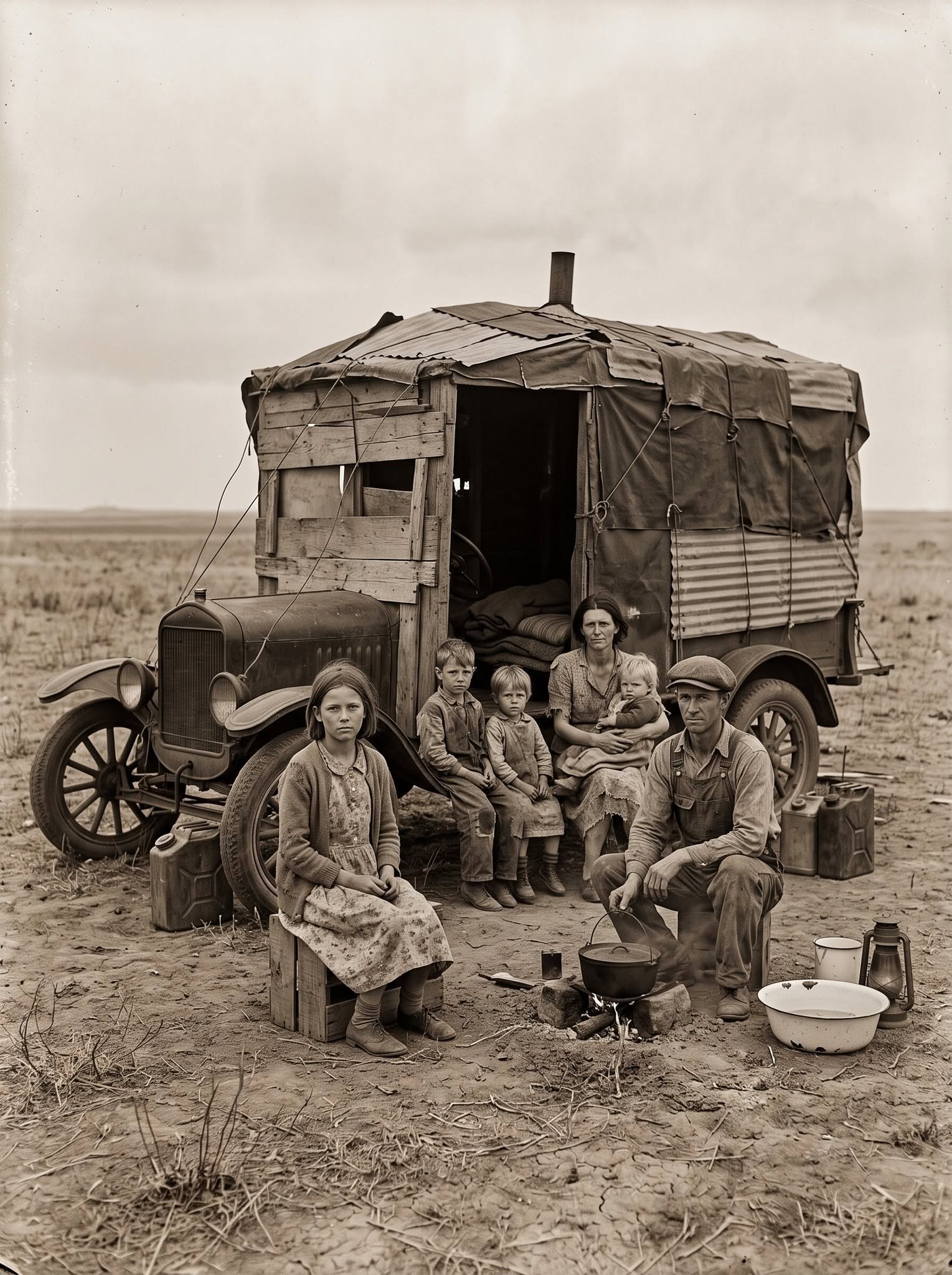
The Great Depression reshaped nearly every aspect of daily life after the stock market crash of 1929. Businesses closed, banks failed, farms struggled, and unemployment soared. Families that had once believed they were building comfortable lives suddenly faced impossible choices about food, housing, and transportation.
For many, the automobile represented one of the largest purchases they had ever made. During the booming years of the 1920s, millions of Americans embraced the growing popularity of cars. Sales reached remarkable levels, and owning an automobile became part of the American dream.
But when the economy collapsed, that dream became difficult to maintain.
Without steady income, even routine expenses became overwhelming. Fuel, repairs, replacement parts, and maintenance were simply out of reach. Rather than letting their vehicles sit unused, resourceful owners found another purpose for them.
The solution was surprisingly practical.
By removing the engine and other heavy components, they made the vehicles much lighter. Horses, mules, or even oxen could then pull the empty automobile body along dirt roads and country highways. The result looked like a strange combination of old and new—a modern automobile powered by traditional animal strength.
The nickname “Hoover Wagon” carried a political edge.
Many struggling Americans blamed President Herbert Hoover for failing to prevent or adequately respond to the economic disaster. As hardship spread across the country, his name became attached to countless symbols of poverty. Newspapers used as blankets were called “Hoover blankets.” Empty pockets turned inside out became “Hoover flags.” Cardboard stuffed into worn-out shoes earned the name “Hoover leather.”
The horse-drawn automobile joined that growing list as the Hoover Wagon.
In Canada, similar vehicles became known as “Bennett Buggies,” named after Prime Minister Richard Bennett, who also faced public criticism during the Depression.
These makeshift wagons were especially common in farming communities and rural regions, where families still owned work animals but no longer had money for gasoline. Instead of purchasing an entirely new wagon, they adapted what they already had.
Necessity fueled remarkable creativity.
People carefully removed anything that added unnecessary weight. Windshields, doors, engines, and mechanical components often disappeared, leaving behind a lighter shell that could be pulled across roads and fields. Although unconventional, the converted vehicles allowed families to transport crops, supplies, equipment, and loved ones without spending precious money on fuel.
The sight became familiar across many parts of North America.
Travelers could encounter horse-drawn automobiles sharing roads with conventional wagons, illustrating just how dramatically everyday life had changed. What once represented technological progress had effectively traveled backward in time.
Yet these vehicles were more than odd curiosities.
They reflected the determination of families unwilling to give up despite overwhelming financial hardship. Every converted car represented hours of labor, careful improvisation, and a refusal to let circumstances dictate complete defeat.
The Hoover Wagon also highlighted the dramatic shift in public mood during the Depression.
Only a few years earlier, automobiles had been celebrated as symbols of prosperity, independence, and limitless opportunity. Manufacturers had enjoyed booming sales, and families proudly invested in vehicles that promised faster travel and greater convenience.
Then everything changed.
The economic collapse forced Americans to rethink nearly every possession they owned. Luxury disappeared. Practicality took its place.
Transportation itself became a daily challenge. A horse required hay and oats rather than expensive gasoline, making animal power the more affordable choice for many struggling households. In an era when every dollar mattered, that difference could determine whether a family continued working or became completely isolated.
The Hoover Wagon therefore became more than transportation.
It represented adaptation in its purest form.
Even as communities faced unemployment, foreclosures, and uncertainty, people continued finding ways to move forward using whatever resources remained available. Instead of discarding their automobiles, they reinvented them.
Eventually, the nation’s fortunes slowly began to improve.
After Franklin D. Roosevelt entered the White House, New Deal programs helped create employment opportunities, including large public works projects that rebuilt roads and infrastructure. As economic conditions gradually recovered and gasoline once again became affordable for more families, the horse-drawn automobiles slowly disappeared from America’s highways.
Their usefulness faded, but their story endured.
Today, surviving photographs and preserved examples serve as reminders of a generation that confronted extraordinary hardship with remarkable ingenuity. They capture a moment when Americans refused to abandon valuable possessions simply because circumstances had changed.
Instead, they transformed those possessions into tools for survival.
The Hoover Wagon stands as one of the most striking images of the Great Depression—not because it showcased innovation in engineering, but because it revealed something even more powerful about the people who built them.
Faced with economic collapse, they adapted rather than surrendered.
Long after the Depression ended, these converted automobiles remained symbols of resilience, illustrating how ordinary families met extraordinary challenges with creativity, determination, and an unwavering commitment to keep moving forward, even when the road ahead looked impossibly difficult.