A Century-Old Portrait Became a Family’s Last Goodbye After the Truth About Two Victorian Siblings Finally Emerged
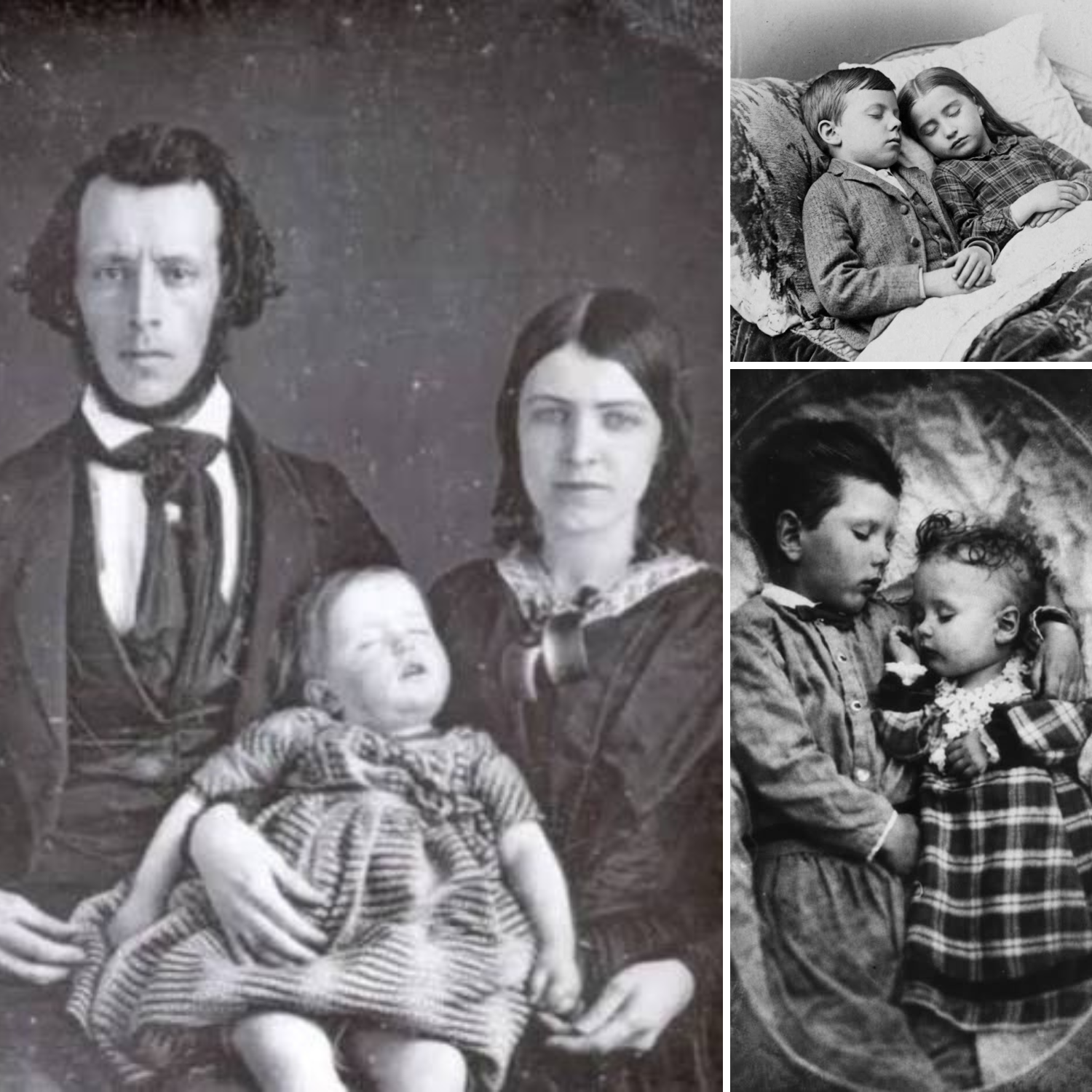
At first glance, the faded Victorian photograph seems almost impossibly gentle. A young brother sits close to his little sister, their hands joined as though they never intended to let go. Their formal clothing, solemn expressions, and careful pose create the image of a loving family preserving an ordinary moment.
But the deeper story behind that portrait reveals something far more heartbreaking.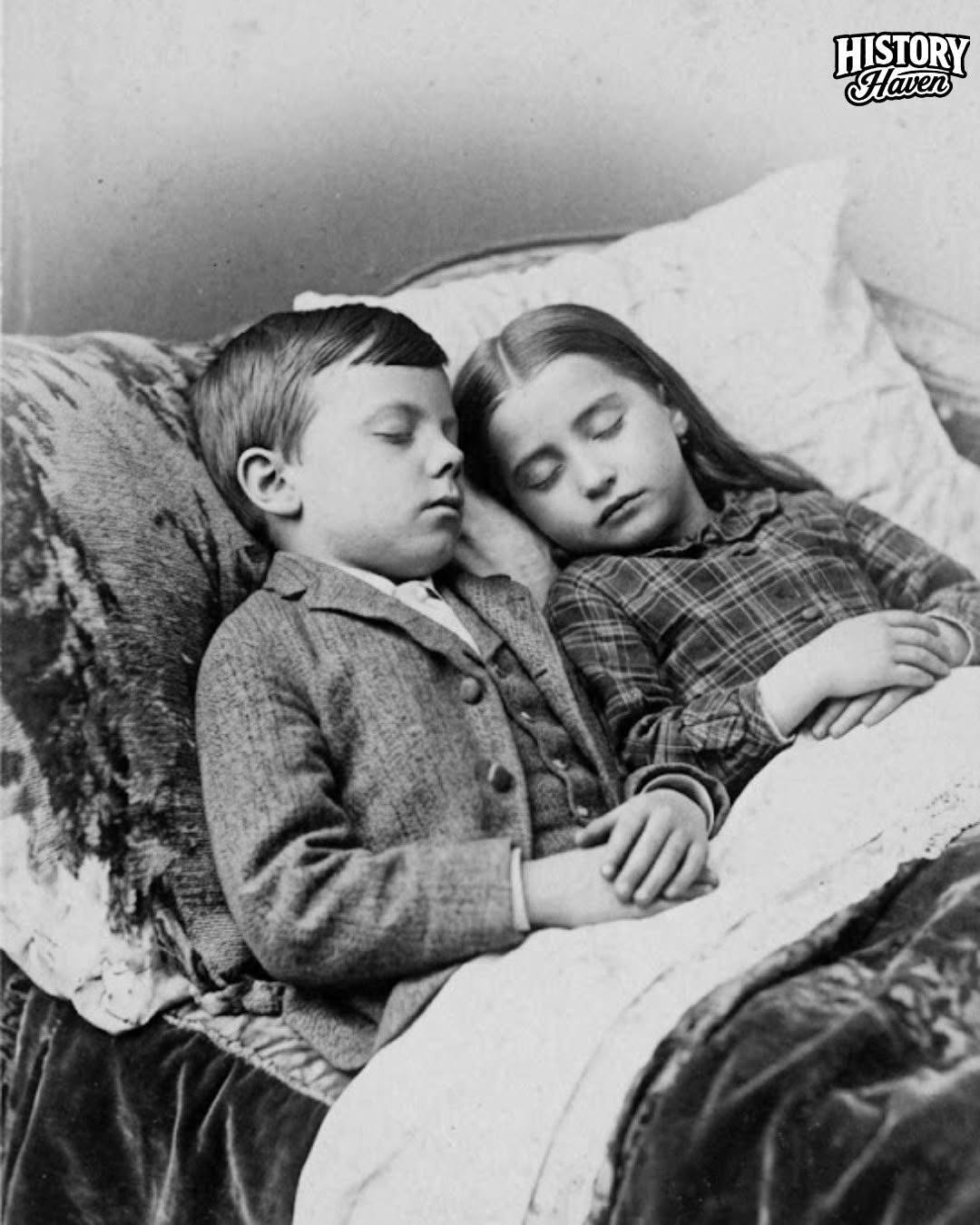
What generations admired as a touching sibling photograph was, in reality, a final farewell captured during one of the most painful moments a family could endure. The image has become a powerful reminder of how families in the Victorian era confronted grief and how a single photograph could preserve both love and loss for generations to come.
The children, whose names have been preserved with the portrait, were brother and sister. The older boy remained alive, while his younger sister had already passed away. Rather than photographing a happy occasion, the family had arranged one final portrait before saying goodbye forever.
To modern viewers, the scene can feel difficult to understand. Yet in the nineteenth century, it reflected a custom that was surprisingly common. Photography was still relatively new, and many families never had the opportunity to commission portraits while their children were alive. Childhood illness claimed countless young lives, often with little warning, leaving parents with few tangible memories.
For many grieving families, a postmortem photograph became the only lasting image they would ever possess.
The portrait was prepared with extraordinary care. The young girl was dressed beautifully, her appearance arranged with dignity and affection. Every detail suggested that those around her wanted the final memory to reflect peace rather than tragedy.
Beside her sat her brother.
His role in the photograph gives the image its emotional weight.
Instead of standing apart, he remained close enough to hold her hand. That simple gesture transformed the photograph from a record of death into a portrait of an unbreakable sibling bond. Across more than a century, viewers continue to notice the same thing first—not the Victorian clothing or the studio backdrop, but the quiet tenderness between the two children.
Their clasped hands seem to speak without words.
In an age before smartphones, home videos, or thousands of family snapshots, every photograph carried enormous importance. Sitting for a portrait required planning, patience, and expense. Long exposure times meant subjects had to remain almost perfectly still, contributing to the serious expressions often seen in Victorian photography.
Those technical limitations also shaped memorial portraits.
Families worked carefully with photographers to create images that emphasized dignity instead of despair. Rather than presenting death in a shocking way, these portraits sought to preserve the loved one as peacefully as possible.
To today’s audience, the practice can appear unsettling.
To Victorian families, however, it represented compassion.
The portrait offered one final opportunity to remember a child whose life had ended too soon.
The inclusion of the surviving brother makes this image especially moving. He was not merely another subject in the frame. His presence reflected a relationship that continued beyond death, if only for the brief moment preserved by the camera.
His hand resting against his sister’s conveyed comfort, loyalty, and a heartbreaking innocence. Whether he fully understood the permanence of the moment remains unknown, but the photograph forever captured the closeness they shared.
That emotional connection has become the photograph’s defining feature.
Unlike many historical images that fade into anonymity, this portrait continues to resonate because it focuses on something universal: the love between siblings.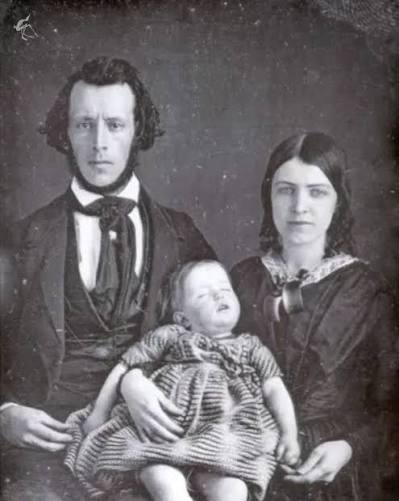
Historical context helps explain why photographs like this existed.
Throughout the Victorian era, death was a much more visible part of everyday life than it is today. Infectious diseases claimed children with devastating frequency, while medical treatments remained limited. Families often experienced repeated losses, making mourning an unavoidable part of life.
Photography provided something previous generations had never possessed—the ability to preserve a person’s likeness with remarkable accuracy.
As a result, memorial portraits became an important part of grieving.
Rather than attempting to erase the reality of death, families acknowledged it while celebrating the life that had existed. The photographs served as keepsakes, allowing parents, brothers, sisters, and future generations to remember someone whose time had been painfully brief.
Over the decades, advances in medicine dramatically reduced childhood mortality, while cameras became more affordable and accessible. Families began filling albums with birthdays, vacations, school portraits, and everyday moments instead of relying on a single image to preserve an entire lifetime.
Practices surrounding mourning changed as well.
Today, postmortem photography is far less common, making Victorian memorial portraits seem unusual to modern eyes. Yet understanding the historical context reveals that these images were never intended to frighten anyone.
They were acts of remembrance.
They represented families doing everything they could to keep a beloved child from disappearing entirely into memory.
That perspective changes the way many people view this particular photograph.
Instead of focusing on the sadness of the young girl’s passing, attention naturally returns to the brother holding her hand. His quiet presence transforms the portrait into something larger than a historical curiosity. It becomes a timeless expression of family devotion.
The image also reminds us that every old photograph contains lives that extended far beyond the frame.
Behind the formal clothing were children with personalities, dreams, and relationships. They laughed, played, relied on one another, and shared moments no camera ever recorded. Only this single portrait survived to tell part of their story.
Its emotional power has endured because it captures something that transcends history.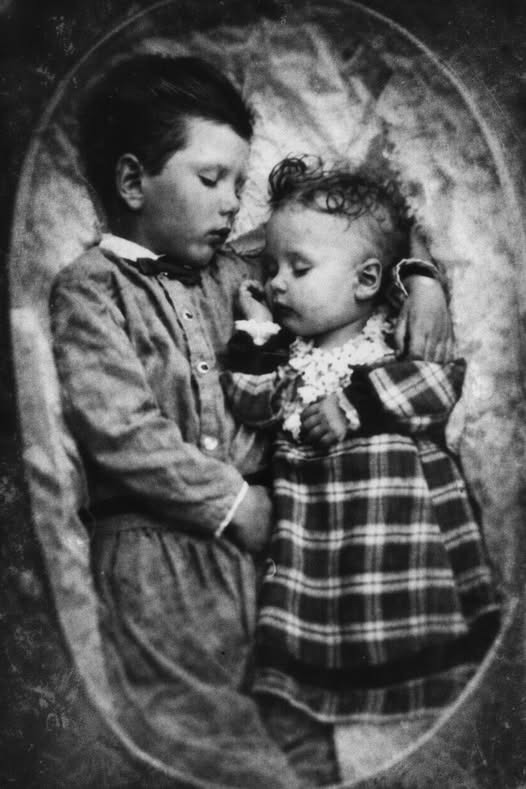
Love.
Loss.
The instinct to hold on for just one moment longer.
More than a century after it was taken, the photograph continues to invite viewers to pause and look beyond the surface. What initially appears to be a quiet Victorian portrait gradually becomes something much deeper—a family’s final attempt to preserve the bond between two children before time separated them forever.
In the end, the picture is remembered not because it documents death, but because it preserves love. Long after the people in the photograph were gone, their connection remained frozen within a single frame, reminding every generation that while life can be painfully brief, the memories created by those we cherish often endure far longer than we ever imagine.