From Orphaned Teen to Europe’s Defining Leader: How Angela Merkel Turned Personal Loss Into a Legacy That Shaped a Continent
At just 16 years old, Angela Merkel’s world was shaken by a devastating loss. The teenager who had grown up in the quiet town of Templin in what was then East Germany suddenly faced a future without the stability she had always known. Few could have imagined that the shy, academically gifted girl would one day become one of the most influential political leaders Europe had ever seen.
Her journey from personal tragedy to international leadership would span decades, transforming not only her own life but also the course of Germany and the European Union.
Long before she became known across the globe, Merkel lived an ordinary life behind the Iron Curtain. Born Angela Kasner in Hamburg in 1954, she moved with her family to East Germany when she was still an infant after her father accepted a position as a Lutheran pastor.
Life in communist East Germany demanded caution. Citizens learned to measure their words carefully, and opportunities were often limited by politics rather than talent. Yet Merkel stood out as an exceptional student. She excelled in mathematics and science, subjects that rewarded logic instead of ideology.
When tragedy struck during her teenage years, it forced her to grow up quickly. Losing a parent at such a young age left an emotional mark that never completely disappeared. Friends and colleagues would later describe her remarkable ability to remain calm during moments of crisis, a quality many believed had been shaped by the hardships she endured early in life.
Instead of allowing grief to define her future, Merkel immersed herself in education.
She studied physics at Leipzig University before continuing her scientific research, eventually earning a doctorate in quantum chemistry. At the time, politics seemed far from her ambitions. Her work focused on laboratories, equations, and scientific research rather than speeches and elections.
History, however, had other plans.
The collapse of communist rule in Eastern Europe changed everything.
When the Berlin Wall fell in 1989, Germany entered one of the most dramatic periods in its modern history. Merkel seized the unexpected opportunity to become involved in politics, joining the growing democratic movement that emerged in East Germany.
Her rise was astonishingly fast.
After German reunification, she joined the Christian Democratic Union (CDU), where then-Chancellor Helmut Kohl recognized her intelligence and discipline. Although he famously referred to her as “the girl,” Merkel steadily proved she was far more than a symbolic newcomer.
She accepted increasingly important government positions, learning the complicated machinery of national politics while earning a reputation for careful preparation and measured decision-making.
Rather than relying on fiery speeches or dramatic public appearances, Merkel built trust through consistency.
She listened more than she talked.
She analyzed before acting.
And she rarely allowed emotion to cloud her judgment.
Those qualities would eventually carry her to Germany’s highest office.
In 2005, Merkel became Germany’s first female chancellor and the first leader from the former East Germany to hold the position.
It marked the beginning of a remarkable 16-year tenure that would coincide with some of Europe’s greatest modern challenges.
Almost immediately, crises began arriving one after another.
The global financial crisis threatened economies across Europe.
The eurozone debt emergency placed enormous pressure on the European Union’s future.
Migration divided governments and populations alike.
Brexit challenged the very idea of European unity.
Then came the COVID-19 pandemic, requiring steady leadership during one of the most uncertain periods in recent history.
Through each crisis, Merkel developed a reputation as the continent’s stabilizing force.
Her leadership style rarely generated dramatic headlines, but many European leaders came to rely on her calm approach whenever tensions escalated. While critics sometimes argued she moved too cautiously, supporters believed her patience prevented larger disasters.
She became known for seeking compromise rather than confrontation.
Instead of chasing popularity through bold promises, she often chose practical solutions that balanced competing interests.
That approach earned her admiration far beyond Germany’s borders.
Perhaps no decision defined her leadership more than her response to the refugee crisis.
As hundreds of thousands of people fled war and instability, Merkel’s willingness to open Germany’s doors became one of the most consequential choices of her political career.
The decision inspired many while provoking fierce criticism from others.
It permanently reshaped political debates across Europe and became one of the defining moments of her legacy.
Throughout those turbulent years, Merkel remained notably private.
Unlike many world leaders, she rarely revealed much about her personal emotions or family life. Her scientific mindset often showed through in her methodical approach to solving problems.
Even opponents frequently acknowledged her extraordinary work ethic and careful preparation.
Behind the reserved public image stood someone whose resilience had been forged decades earlier.
The teenager who had experienced profound personal loss had learned to endure uncertainty long before entering public office.
That quiet strength became one of her defining characteristics.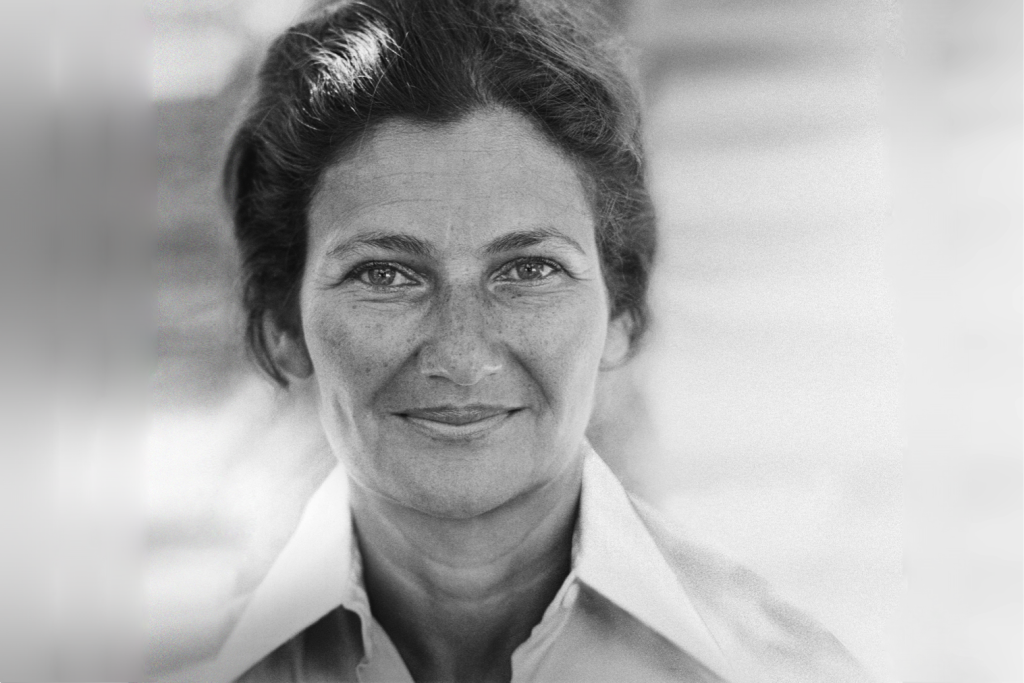
After serving four consecutive terms as chancellor, Merkel stepped away from politics in 2021, bringing an end to one of the longest and most influential leadership eras in modern European history.
Her departure marked the close of a chapter that had shaped Germany and the European Union through years of political upheaval, economic instability, and global crises.
Opinions about her policies continue to differ.
Some praise her for preserving European unity during extraordinarily difficult times.
Others question decisions that continue to influence the continent today.
Yet few dispute the scale of her impact.
The reserved girl who once focused on chemistry experiments became one of the world’s most recognizable political figures.
Her life story is not simply one of political success but of perseverance.
A teenager confronted by heartbreaking loss chose education over despair.
A scientist unexpectedly entered politics during a historic turning point.
And a woman who once lived behind the Berlin Wall ultimately became one of Europe’s defining leaders.
Her journey stands as a reminder that history is often shaped not only by charismatic personalities or dramatic speeches, but also by quiet determination, resilience in the face of hardship, and the willingness to carry immense responsibility through the most challenging moments.