Hollywood Stopped Seeing Ke Huy Quan—Decades Later, He Returned and Won an Oscar
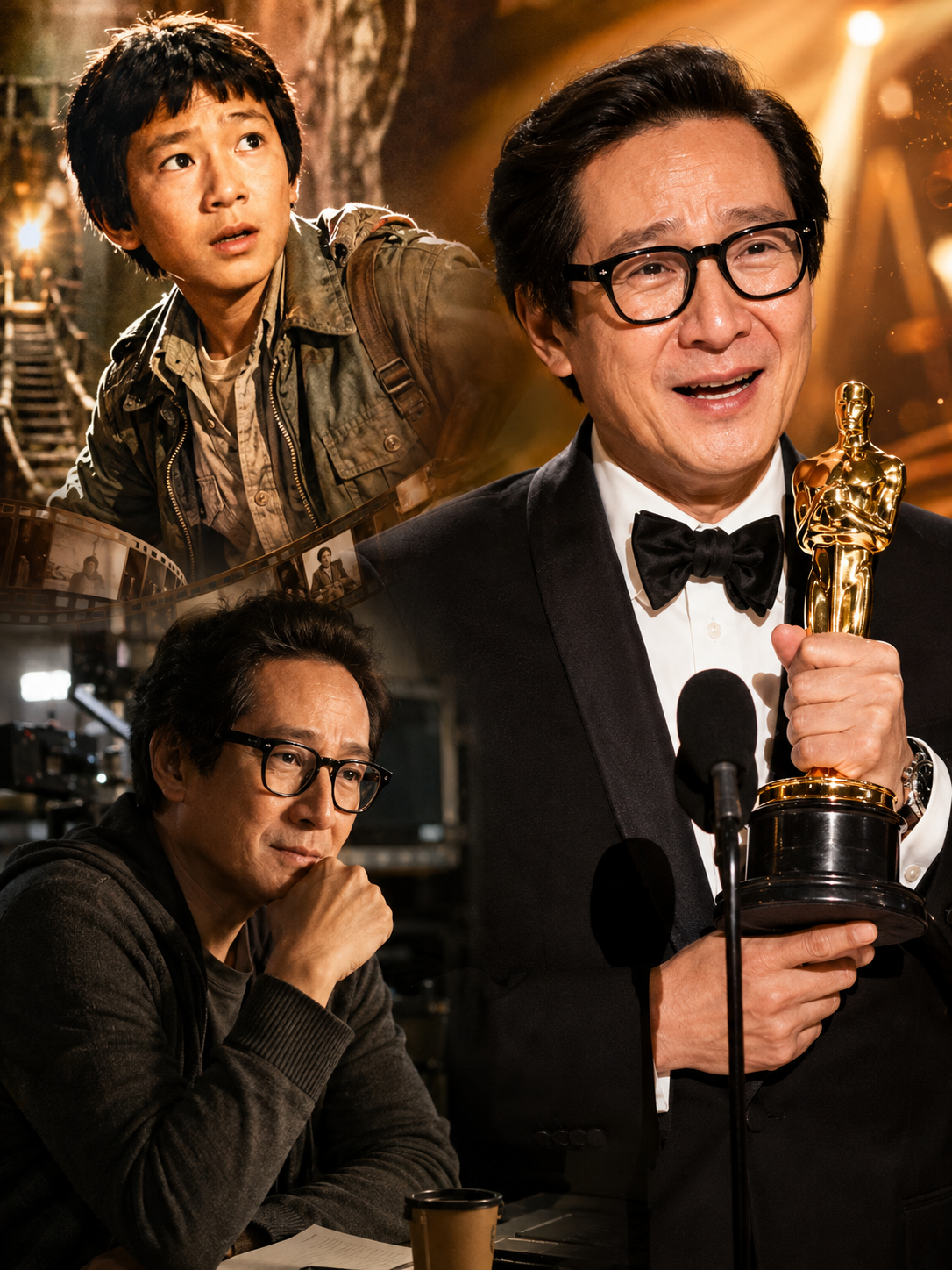
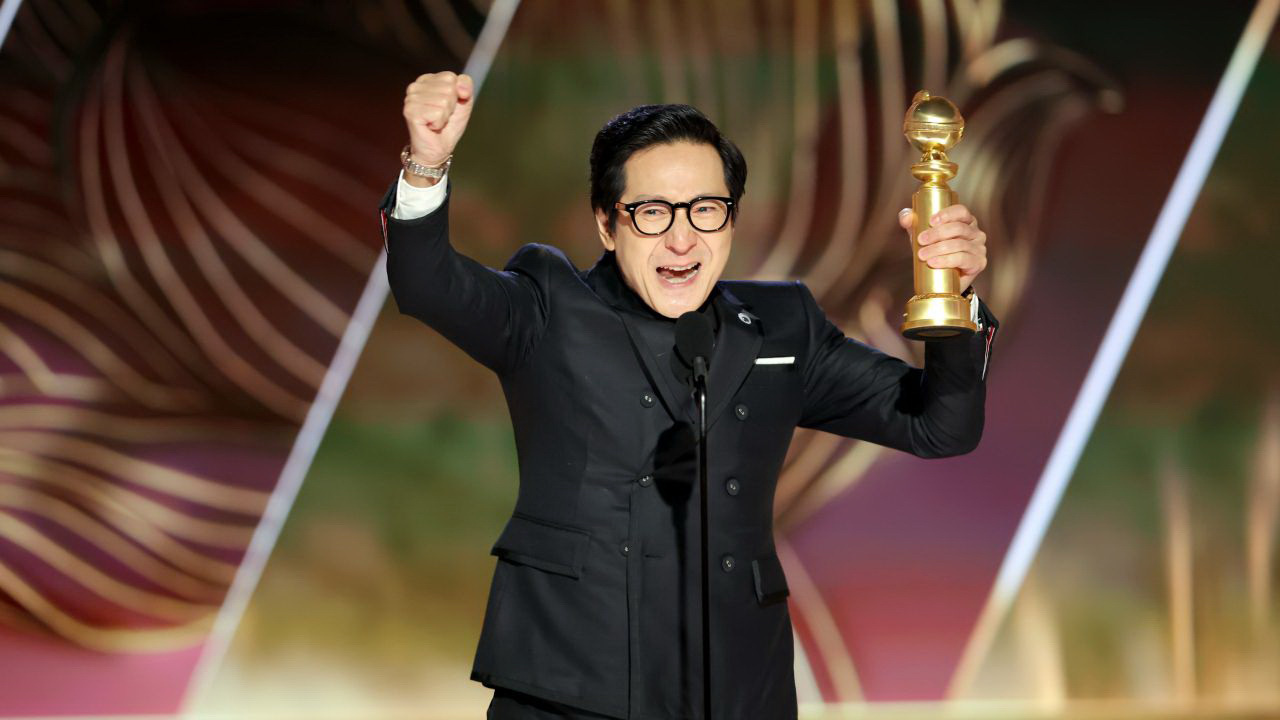
Ke Huy Quan had already lived through two radically different versions of Hollywood before he walked onto the Academy Awards stage in March 2023.
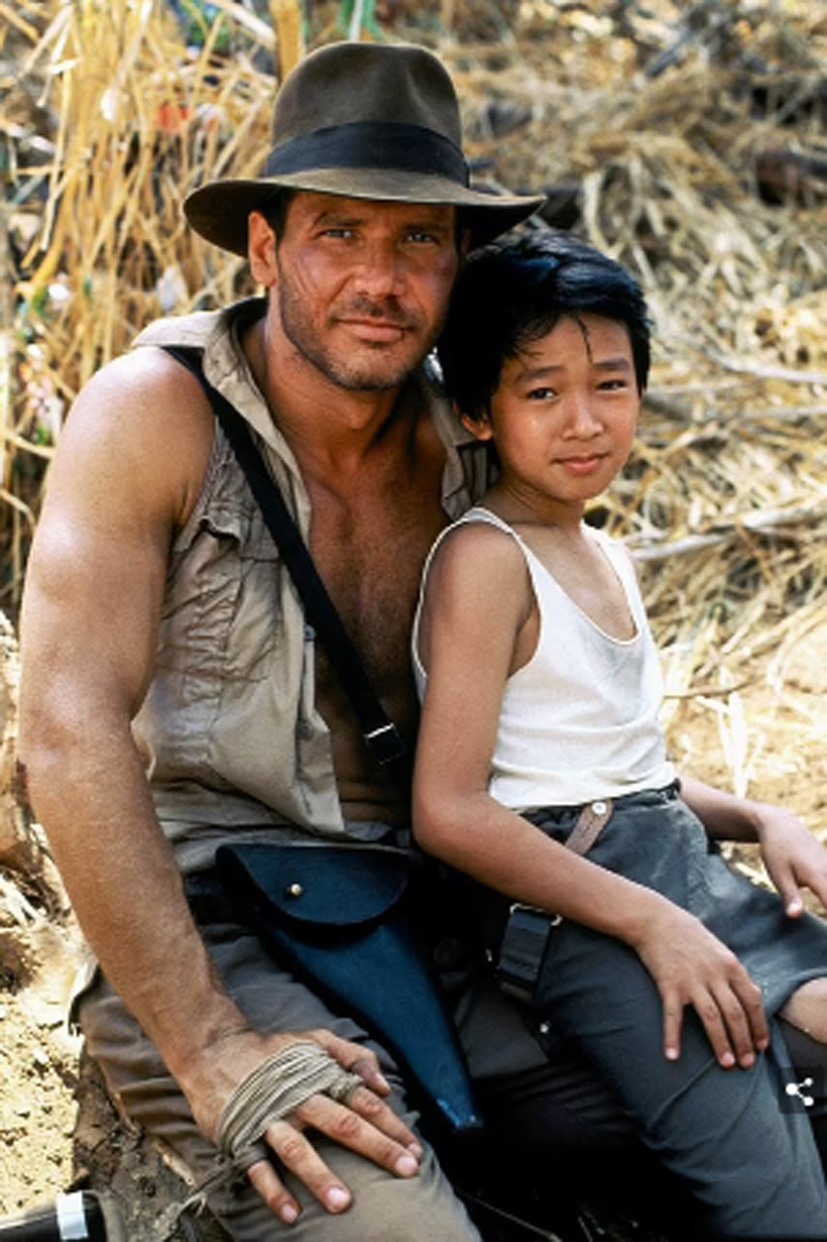
In the first, he was the energetic child star standing beside Harrison Ford in one of the biggest adventure films of the 1980s. In the second, he was an adult repeatedly waiting for opportunities that rarely came, watching the industry move forward without finding a place for him.
Then came a third version.
Holding the Oscar for Best Supporting Actor, Quan looked toward his mother and reminded the audience that his journey had begun on a boat and continued through a refugee camp. His voice broke as he spoke about dreams—especially the ones people nearly abandon because the world has given them little reason to keep believing.
The victory was widely celebrated as an extraordinary comeback. But Quan’s story was not simply about an actor who took a long break and later returned.
It was about what happens when a performer remains talented, prepared and eager to work, yet the industry cannot imagine enough characters who look like him.
An Unexpected Beginning in Hollywood
Quan was born in Saigon, in what was then South Vietnam, into a family of Chinese ancestry. After the Vietnam War, his family fled the country and was separated during the journey, with different relatives spending time in refugee camps before eventually reuniting in the United States.
The family settled in California. Quan was still learning English when an opportunity arrived that would completely change his childhood.
Casting representatives searching for a young Asian actor for Indiana Jones and the Temple of Doom held auditions at a school in Los Angeles’ Chinatown. Quan initially accompanied his younger brother, who intended to try out. While coaching him from the side, Quan caught the casting team’s attention and was asked to audition himself.
He won the role of Short Round, Indiana Jones’ quick-thinking young companion.
Released in 1984, the film placed Quan alongside Harrison Ford in elaborate action sequences directed by Steven Spielberg and produced from a story by George Lucas. Short Round was brave, funny and fiercely loyal—qualities Quan delivered with an energy that made him far more than a background sidekick.
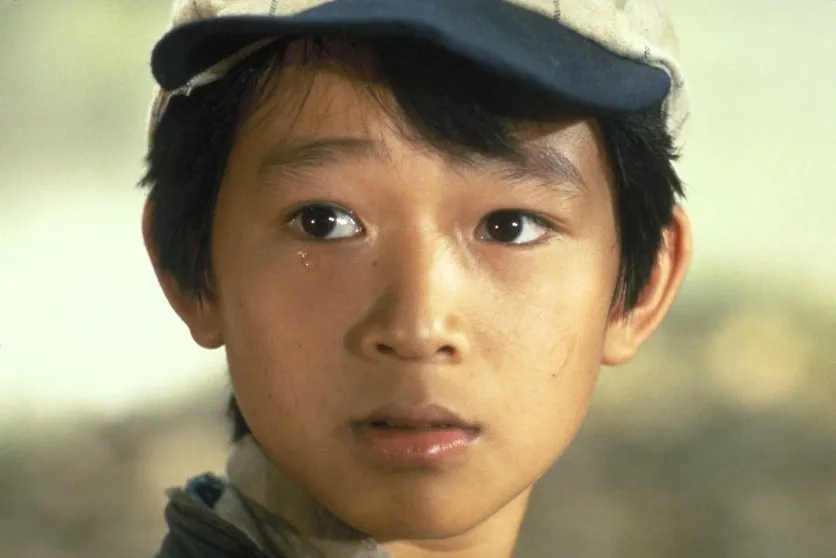
A year later, he appeared as the gadget-building Data in The Goonies. Once again, he became part of a major adventure that would remain beloved for generations.
Before reaching adulthood, Quan had starred in two movies that countless actors would have considered career-defining.
He assumed more roles would follow.
When the Auditions Disappeared
Quan continued acting in television and film, including appearances in Head of the Class and Encino Man. But as he grew older, meaningful opportunities became increasingly difficult to find.
The change was painful because it did not reflect a loss of interest in acting. Quan still wanted to perform. The problem was that Hollywood offered very few substantial roles to Asian actors, particularly Asian American men who did not fit the narrow stereotypes commonly written at the time.
He attended auditions and waited for calls. Too often, nothing happened.
Quan later recalled going long stretches without receiving even a single audition. When roles appeared, they were frequently minor or built around limiting ideas of Asian identity. The child who had once worked with Spielberg and Ford could no longer see a realistic path forward.
Eventually, he made a decision that he did not truly want to make: he stepped away from acting.
The absence is sometimes described as more than 20 years without a role, although the exact timeline is more complicated. Quan continued to work in entertainment and had occasional credits, but he spent roughly two decades away from a sustained on-camera acting career.
He did not leave filmmaking entirely. After studying film at the University of Southern California, he moved behind the camera, working in action choreography, stunt coordination and assistant directing. His credits included projects in Asia and Hollywood, including work with acclaimed filmmaker Wong Kar-wai’s team on 2046.
These jobs kept him close to the world he loved. They also carried a quiet ache.
Quan could help other performers execute scenes. He could contribute knowledge developed through years of martial arts and production experience. But he was no longer being invited to stand in front of the camera himself.
Watching other actors live the career he had once imagined was difficult. Over time, he tried to convince himself that acting belonged to his past.
The Movie That Made Him Reconsider
The turning point arrived in 2018 with Crazy Rich Asians.
The romantic comedy featured a predominantly Asian cast and became a major American theatrical success. For many viewers, it represented a cultural breakthrough. For Quan, the experience was intensely personal.
He watched Asian performers occupy the center of a glossy Hollywood production rather than appearing at its edges. The movie showed him that the industry might finally be changing—and forced him to confront how much he still missed acting.
Quan decided to try again.
The choice was frightening. He was approaching 50 and had been away from regular screen performance for years. A return would require him to face the possibility that Hollywood might reject him all over again.
He found representation and soon learned about an unusual film being developed by Daniel Kwan and Daniel Scheinert, the filmmaking duo known as the Daniels.
They were searching for someone to play Waymond Wang in Everything Everywhere All at Once.
The role required extraordinary range. One version of Waymond was a gentle, seemingly ordinary husband struggling to keep his family and laundromat together. Another was a confident action hero from an alternate reality. A third belonged to a glamorous world of unfulfilled romance.
Quan understood all three men.
His background in martial arts and action choreography helped with the physical demands. His years away from acting gave emotional depth to Waymond’s vulnerability. Even his relationship with Hollywood seemed reflected in a character whose kindness was repeatedly mistaken for weakness.
After auditioning, Quan waited anxiously. When the offer came, his wife, Echo, helped him prepare throughout the production and continued reassuring him when his doubts returned.
The performance would change his life.
Waymond’s Kindness Becomes His Strength
Released in 2022, Everything Everywhere All at Once followed Evelyn Wang, played by Michelle Yeoh, as she moved through alternate universes while confronting family conflict, regret and an apocalyptic threat.
The film was wildly inventive, but one of its most powerful ideas was remarkably simple: Waymond’s compassion was not naïveté. It was his way of surviving.
Quan moved effortlessly between comedy, action and heartbreak. In one universe, Waymond pleaded for people to treat one another with kindness. In another, he reflected on the life he might have shared with Evelyn.
The performance connected with audiences partly because viewers could sense the years behind it. Quan did not appear to be rediscovering how to act. He appeared to be releasing something he had been forced to hold inside for decades.
Awards followed rapidly. He won a Golden Globe and became the first Asian man to win an individual film acting category at the Screen Actors Guild Awards.
On March 12, 2023, he won the Academy Award for Best Supporting Actor.
Later that evening, Harrison Ford presented the Oscar for Best Picture to Everything Everywhere All at Once. Quan rushed toward his former Indiana Jones co-star, creating an emotional reunion nearly four decades after they had first appeared together.
The child adventurer had returned to Hollywood’s biggest stage as an Oscar winner.
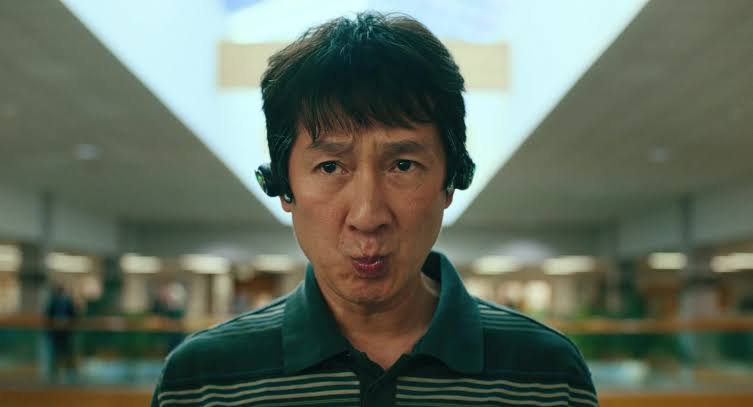
A Victory That Opened a New Chapter
Unlike many comeback stories, Quan’s did not end with the award.
He joined the Marvel series Loki, appeared in the action film Love Hurts, worked in The Electric State and added major voice roles to his growing career. The actor who once struggled to secure auditions was finally being considered for characters that allowed him to be funny, romantic, vulnerable and physically commanding.
His success does not erase the decades when Hollywood failed to create space for performers like him. Nor does one Oscar prove that inequality has disappeared. Quan’s career demonstrates how much talent can be overlooked when an industry’s imagination remains smaller than its audience.
Yet his return also shows why representation can have consequences far beyond a single production.
Quan saw Crazy Rich Asians and recognized a possibility for himself. Years later, audiences saw him hold an Oscar and heard him tell people not to surrender their dreams.
The most moving part of his journey is not that everything eventually worked out. For many years, it did not.
He kept learning, contributed behind the scenes and remained close to the art form even after it appeared to have rejected him. When the door finally opened again, he was ready—not as the child Hollywood remembered, but as the actor it had failed to imagine him becoming.