Jonathan Lipnicki Never Quit Hollywood—Hollywood Slowly Stopped Calling

By the time Jonathan Lipnicki was 11, millions of people already knew his face.
He had debated the weight of a human head with Tom Cruise in Jerry Maguire, welcomed a talking mouse into his family in Stuart Little and confronted supernatural danger in The Little Vampire. With round glasses, an expressive face and an unusually natural delivery, he became one of the most recognizable child actors of the late 1990s.
Then the large roles stopped coming.
For years, many viewers assumed Lipnicki had voluntarily left Hollywood to enjoy a normal adolescence. The truth was less tidy. He continued auditioning, but he was no longer consistently getting hired.
Lipnicki did not dramatically announce his retirement or reject the industry that had made him famous. He simply entered the difficult period when Hollywood stopped seeing the child it loved and had not yet decided what kind of adult actor he could become.
Decades later, he remains in the business—acting, producing and openly admitting that his adult career has not reached the place he hoped it would.
The Five-Year-Old Who Stole Scenes From Tom Cruise
Lipnicki made his feature-film debut in Jerry Maguire, released in December 1996.
He played Ray Boyd, the son of Renée Zellweger’s Dorothy Boyd. Ray’s curiosity, oversized glasses and unpredictable observations provided some of the film’s warmest comedy.
Lipnicki was only five during production, yet he appeared comfortable opposite established actors. His scenes with Cruise helped soften Jerry Maguire, the ambitious sports agent whose professional crisis forces him to reconsider the way he treats other people.
One of Ray’s most memorable moments involved his confident explanation that the human head weighs eight pounds. The line became closely associated with Lipnicki, much as the film’s other quotations became permanent parts of popular culture.
The performance brought him immediate recognition and a Young Artist Award. More importantly, it positioned him as a child actor capable of doing more than appearing cute on command.
He listened, reacted and delivered dialogue without seeming overly rehearsed.
Hollywood quickly found more uses for him.

Becoming George Little
In 1999, Lipnicki played George Little in Stuart Little, based loosely on E.B. White’s children’s book.
George initially struggles with his parents’ decision to adopt Stuart, a talking mouse voiced by Michael J. Fox. His disappointment gradually becomes affection as the two develop a genuine brotherly relationship.
The film combined live action with visual effects and became a major family success. Lipnicki returned for Stuart Little 2 in 2002.
Between the two movies, he starred in The Little Vampire, playing an American boy living in Scotland who befriends a young vampire. He also appeared alongside rapper and actor Bow Wow in the basketball comedy Like Mike.
These projects kept Lipnicki visible during the years when many children were forming their earliest movie memories. For viewers growing up around the turn of the millennium, he seemed to be everywhere.
But child stardom contains an expiration date no performer can control.
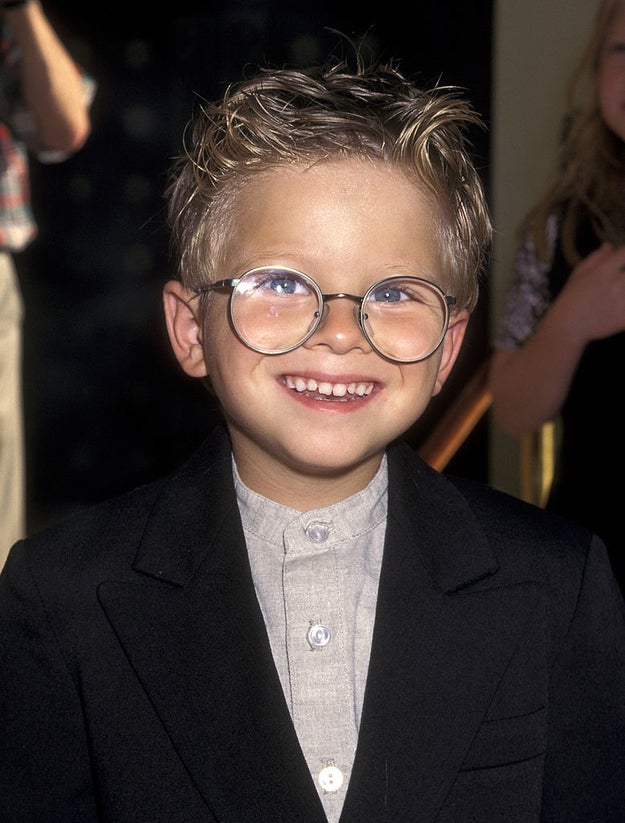
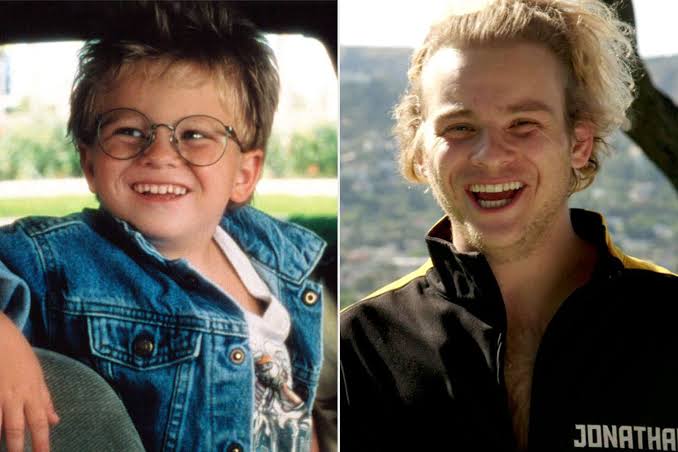
The qualities that made Lipnicki easy to cast—his small size, glasses, innocent face and distinct voice—were attached to a particular stage of life. As he moved into adolescence, those features changed.
The industry’s enthusiasm changed with them.
“I Didn’t Take a Break”
Lipnicki later pushed back against the idea that he had chosen to abandon acting.
He continued going to auditions. He simply stopped booking many of them.
That distinction matters because stories about former child stars are often rewritten into comforting explanations. Audiences are told that someone wanted a normal childhood, focused on school or deliberately escaped fame.
Lipnicki did reduce his workload while attending high school, and he participated in ordinary activities. But he did not lose interest in acting.
At one point, he had to acknowledge a more uncomfortable possibility: The skills that had worked naturally for him as a child were not automatically enough for adult roles.
He later said that he had not been a particularly strong actor during part of that transition. Instead of blaming every rejection on casting directors, he decided he needed more training.
Lipnicki returned to acting classes and treated the craft as something he had to learn again.
For a performer who had already worked beside Cruise and Zellweger and carried major studio films, that required unusual humility. Childhood success had given him experience, but it had not guaranteed that he would understand the needs of his adult body, voice or screen presence.
He had to stop relying on the boy audiences remembered.
Fame Followed Him Into School
Professional rejection was not the only difficulty.
Lipnicki has described being bullied through middle school and high school. Classmates called him a has-been and mocked the decline of his childhood fame.
The cruelty placed him in a painful contradiction. He was famous enough to be recognized but no longer successful enough, in the eyes of his peers, to receive admiration for it.
He later said the bullying became relentless and contributed to anxiety, depression and panic attacks. At night, he struggled with the psychological effects of being treated as though his best years had already ended before he had reached adulthood.
For most teenagers, childhood photographs are private reminders of an earlier self. Lipnicki’s childhood existed in blockbuster movies that could be replayed at any time.
People did not merely remember how he used to look. They could compare that version of him with the teenager standing in front of them.
Acting remained one of the places where he felt most alive, even as the business surrounding it became a source of disappointment.
He also found discipline through martial arts, eventually earning a black belt in Brazilian jiu-jitsu. Training gave him a space where progress depended on sustained work rather than childhood recognition.
On the mat, the boy from Stuart Little carried no special advantage.

Returning Without a Major Comeback
Lipnicki’s adult acting career developed mainly through independent films, stage productions and smaller television appearances.
After a long gap between feature releases, he returned in the 2012 crime drama For the Love of Money. Later projects included Loserville, Pitching Tents, Altitude, Andover, Broil and the horror film Camp Pleasant Lake.
He also appeared in television and reality programs, sometimes playing versions of himself or leaning into the contrast between his child-star identity and adult appearance.
Some of the work gave him performances he valued. Much of it received little attention.
In a 2025 interview, Lipnicki described his adult career as roughly “half-and-half.” Some projects, he said, were genuinely good but were seen by almost no one. Other experiences taught him to become more selective.
That assessment was notable for its honesty.
He did not pretend that every independent film had been an artistic triumph. He also did not describe himself as a victim whose entire adult career had been stolen.
Instead, he acknowledged that he was not where he wanted to be professionally.
He began turning down projects he believed would move him further from his goal, even though refusing work carried its own risk. Lipnicki said he wanted to turn the direction of his career around rather than continue accepting every available role simply to remain active.
Building a Place Behind the Camera
Lipnicki has also expanded beyond acting.
In 2023, he joined film and media company Buffalo 8 as an executive producer. The position allowed him to participate in developing and producing projects rather than waiting only for casting decisions.
It represented a practical response to an industry that had become less predictable for him.
As a child, Lipnicki entered finished productions created by powerful adults. As a producer, he could help determine which stories reached the screen and how they were assembled.
He continued auditioning and performing while building that second identity. His goal was not to erase Jerry Maguire or Stuart Little, but to establish a body of adult work large enough to stand beside them.
Even in 2026, however, nostalgic interviews continued to return him to the same beginning. He was still asked about Cruise, the glasses and the talking mouse.
Lipnicki has generally responded with gratitude. He understands that those films gave him experiences most actors never receive.
Gratitude does not eliminate ambition.
The Hardest Role Is the One After Yourself
Jonathan Lipnicki’s story does not follow the familiar extremes of child stardom.
He did not disappear because of a spectacular scandal. He did not reject Hollywood and build an entirely unrelated life. Nor did he move seamlessly into adult leading roles.
He remained close enough to the industry to keep trying.
That may be the more emotionally difficult path. Every new audition carries evidence that he once needed far fewer introductions. Every modest project exists beside movies that earned hundreds of millions of dollars and became childhood favorites.
His main competition is not another actor.
It is the five-year-old version of himself.
That child never struggled through an adult audition, worried about career momentum or watched a film disappear without an audience. He remains charming, confident and permanently framed beside Tom Cruise.
Lipnicki cannot defeat that image, and he no longer appears interested in trying.
He is attempting something more realistic: becoming a working adult artist whose value is not determined solely by how famous he was before puberty.
Hollywood gradually stopped calling his name as loudly as it once had.
Lipnicki never stopped listening for the next opportunity—and he has not given up on making the industry say it again.