A Faint Bark Led Flood Rescuers to a Chihuahua—and an Unexpected Guardian in a Tree
The flooded neighborhood appeared empty until rescuers heard a sound barely rising above the rushing water.
It was a dog barking.
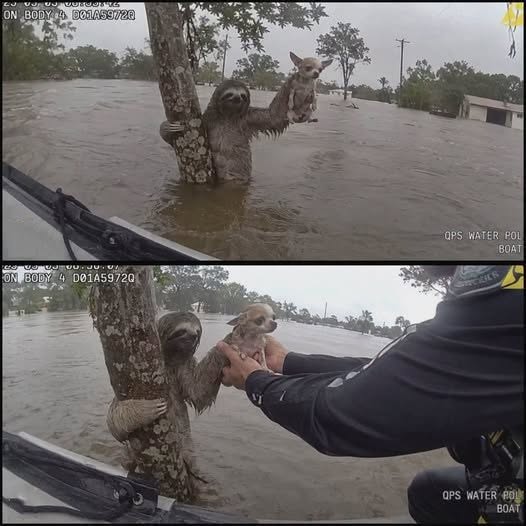
The cry was weak and distant, but it was enough to send emergency workers and volunteers wading through waist-deep water toward the remains of a family’s backyard. There, above streets transformed into muddy rivers, they discovered a tiny Chihuahua clinging to a narrow tree branch.
The soaked dog was trembling and struggling to keep its balance. Yet the Chihuahua was not alone.
Pressed against it on the same branch was a sloth.
The unlikely pair had somehow found refuge together as severe flooding swept through the area in Brazil. What happened next turned a routine search for stranded animals into a rescue that responders would remember long after the water receded.
One Last Search Through an Evacuated Neighborhood
Authorities had already helped residents leave the threatened community as floodwater rose around their homes. Families fled with the belongings they could carry, while buildings, yards and familiar streets gradually disappeared beneath the water.
Although the evacuation appeared complete, rescue teams continued checking the neighborhood.
Disasters rarely unfold predictably. A resident may refuse to leave. A frightened pet may hide inside a damaged house. An animal may become trapped in an attic, on a rooftop or behind a locked fence.
For that reason, officials and volunteers kept moving from property to property even after most human activity had vanished. The neighborhood had become unnervingly quiet, broken only by the movement of the current, the creaking of damaged structures and the hum of rescue boats.
Then someone heard the faint barking.
Following the sound, the rescuers reached a nearly submerged backyard. Most of the tree standing there was underwater, leaving only its upper branches visible.
Balanced high above the current was the Chihuahua.
Its fur was drenched, its body shook from cold and fear, and the narrow limb offered little room to move. A single slip could have sent the small dog into the dangerous water below.
Beside it, the sloth remained remarkably calm. One long arm held the branch while its body rested close to the Chihuahua, appearing to provide support or at least a steady presence during the frightening ordeal.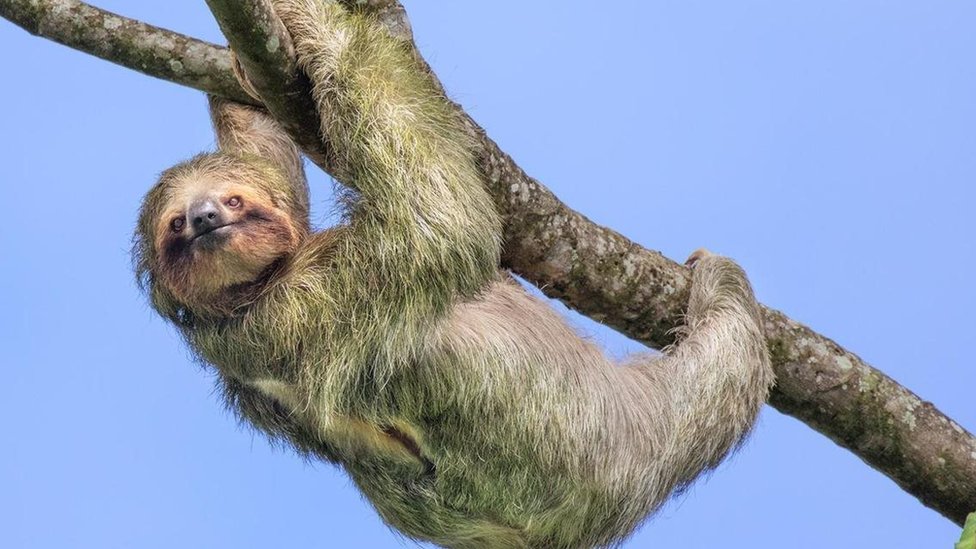
Two Animals That Should Never Have Met
No one at the scene could explain how the animals had ended up together.
Perhaps both had been driven upward as the water rose. The Chihuahua may have climbed onto the tree before the flood surrounded the yard, while the sloth could have already been living among its branches.
Whatever the sequence, the disaster had placed a domestic dog and a wild animal within inches of each other.
Under normal circumstances, the two species would have little reason to interact. They do not share the same habits, territory or daily routines. Yet with the ground beneath them gone, both had accepted the same tiny patch of safety.
One volunteer initially wondered whether the exhausted Chihuahua had become caught in the sloth’s fur. Only when the rescue boat moved closer did it become clear that the animals were simply occupying the branch together.
To those watching from below, they seemed almost as though they had been waiting side by side for help.
The Chihuahua Had to Come Down First
The current remained powerful, so the rescue team approached slowly.
They positioned a boat beneath the tree and prepared blankets, gloves and other equipment. Frightened animals can react unpredictably, particularly after spending hours surrounded by noise, cold water and unfamiliar people.
The responders expected the sloth to grip the branch more tightly or attempt to escape as they reached upward.
Instead, witnesses said the animal appeared to move one arm aside, leaving enough room for rescuers to reach the Chihuahua.
Gentle hands lifted the dog from the branch and carried it into the boat. Once secure, the Chihuahua collapsed against one of the rescuers.
The team wrapped the animal in a dry towel and examined it for injuries. The dog was cold, frightened and dehydrated, but appeared to have escaped the flood in surprisingly good physical condition.
Only after the Chihuahua was safe did the crew turn back toward its quiet companion.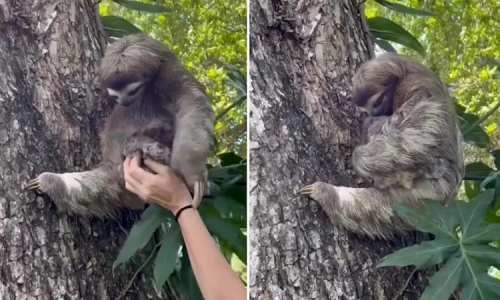
The Sloth Made a Different Choice
When rescuers reached toward the tree again, the sloth did not follow the dog into the boat.
It began climbing.
Without panic or sudden movement, the animal slowly made its way toward a higher branch beyond the rescuers’ reach. Once there, it remained in the tree.
The sequence created a powerful impression among those who witnessed it. The sloth had stayed still while the Chihuahua was removed, yet avoided being taken itself.
To the responders, it almost appeared that the animal had remained close to the dog only until help arrived.
No one could know whether that interpretation was correct. The sloth may simply have felt secure in the tree and had no reason to leave its natural environment. Its calm behavior could also reflect the species’ tendency to conserve energy and avoid unnecessary movement.
Still, the uncertainty did not make the moment less moving.
A vulnerable dog had survived on a branch beside a wild animal that showed no aggression toward it. Whether their closeness resulted from instinct, coincidence or simple necessity, the two creatures had endured the flood together.
What Happened After the Rescue
The Chihuahua was taken for veterinary care while efforts began to locate its owners.
Wildlife officials continued watching the flooded area until conditions allowed the sloth to return safely to its natural habitat. Rather than being removed from the tree, it was given the opportunity to remain where it appeared most comfortable.
As images and accounts of the encounter spread online, viewers offered their own interpretations. Some described the sloth as a guardian. Others saw the scene as a symbol of hope emerging from a disaster.
Many were equally grateful that rescuers had continued searching after the neighborhood was believed to be empty. Had they dismissed the distant barking or ended their work earlier, the Chihuahua might never have been found.
The rescue also drew attention to the risks animals face when natural disasters force people to evacuate quickly. Pets can become separated from their families, escape in panic or remain hidden inside homes. Wildlife may lose access to food, shelter and familiar habitats as water pushes into populated areas.
In those extreme conditions, animals that would ordinarily avoid one another may be forced onto the same rooftops, fences, trees or remaining patches of dry ground. Survival temporarily becomes more important than the boundaries that normally separate them.
A Moment the Rescuers Could Not Forget
Emergency crews regularly find dogs on roofs, cats inside damaged buildings and wild animals displaced by storms. Even experienced volunteers, however, said they had never encountered a scene quite like the one in that tree.
They had followed the sound expecting to rescue a single stranded pet.
Instead, they found a Chihuahua trembling beside a patient sloth, both holding on above the floodwater.
No one knows how long the pair shared the branch before the boat arrived. No one can say whether the sloth deliberately stayed close to the dog or merely tolerated an unexpected companion seeking the same refuge.
Those unanswered questions became part of the story’s emotional power.
The rescue lasted only minutes, but its meaning endured. It showed why teams continue checking one more house, crossing one more flooded yard and listening for one more distant sound.
Hope did not arrive with a dramatic signal that day.
It began with a faint bark—and was waiting on a narrow branch beside one of the most unlikely companions imaginable.