The 10 Most Unforgettable Scenes in Apocalypto — From the Solar Eclipse to That Haunting Final Reveal
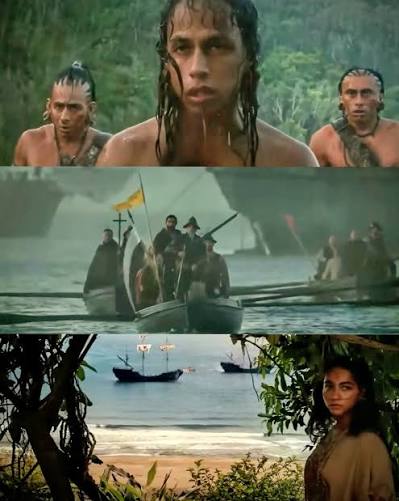
Nearly two decades after its 2006 release, Apocalypto remains one of the most visually relentless historical action films of its era.
Directed by Mel Gibson and starring Rudy Youngblood as Jaguar Paw, the film follows a young hunter whose peaceful forest community is destroyed by raiders. After being taken captive and marked for sacrifice, he escapes and begins a desperate race through the jungle to reach his pregnant wife Seven, played by Dalia Hernández, and their young son.
Shot largely in Mexico and performed in Yucatec Maya, the movie depends heavily on movement, faces, landscapes and physical action rather than conventional dialogue. Its representation of Maya history has also drawn significant criticism from archaeologists, who have argued that the film compresses different periods and practices into an intentionally dramatized vision rather than an accurate reconstruction.
Taken as cinema rather than documentary history, however, Apocalypto is packed with images that are difficult to forget.
Here are 10 scenes that define the film.
10. The Tapir Hunt Opens the World
Before Jaguar Paw becomes a fugitive, Apocalypto introduces him as a hunter.
The opening pursuit of a tapir immediately establishes the physical rules of the movie. Men race through thick jungle, communicate almost instinctively and use a carefully prepared trap to bring down their prey.
It is energetic, surprisingly playful in places and important for another reason: the hunting methods established here will matter again much later.
The opening also gives audiences a glimpse of Jaguar Paw’s community before everything changes. That brief sense of normal life makes the destruction that follows considerably more powerful. Critics at the time frequently singled out the tapir hunt as an immediate declaration of the film’s visceral style.

9. Flint Sky Warns His Son About Fear
Returning from the hunt, Jaguar Paw and his companions encounter refugees fleeing devastation elsewhere.
Jaguar Paw is visibly shaken by them.
His father, Flint Sky, recognizes what is happening and warns him against allowing another man’s fear to enter him.
It is one of the movie’s quieter moments, but it becomes the emotional foundation of everything Jaguar Paw later does. The story repeatedly places him in situations where surrendering to fear would be understandable.
Instead, survival increasingly depends on controlling it.
That lesson turns an early conversation between father and son into one of the film’s most important recurring ideas.
8. The Village Is Attacked at Dawn
The peaceful opening disappears with startling speed when Zero Wolf, played by Raoul Trujillo, leads raiders into Jaguar Paw’s village.
What follows is chaotic rather than heroic.
Jaguar Paw’s priority quickly becomes his family. He lowers his pregnant wife Seven and their small son into a deep pit where he believes they will be hidden from the attackers.
Then he returns to fight.
Eventually, Jaguar Paw is captured, the rope that could free his family is cut, and he is forced away knowing that Seven and his son have no way to climb out.
That single predicament gives the entire second half of the movie its urgency: Jaguar Paw is not merely running away from death. He is running toward people who may die without him.

7. The First Sight of the Maya City
The captives’ arrival at the city dramatically expands the scale of Apocalypto.
Jaguar Paw has come from a small forest community. Now he passes through a vast urban landscape filled with markets, laborers, wealthy elites, disease, damaged crops and enormous architecture.
Production designer Tom Sanders said the filmmakers deliberately designed the city to suggest a society consuming itself, contrasting poverty with wealth and presenting environmental and social deterioration alongside monumental construction. The massive pyramid used for the sacrifice sequence was built approximately nine stories high.
For Jaguar Paw, the city is not impressive for long.
He soon discovers why he has been brought there.
6. The Sick Girl Delivers Her Warning
During the captives’ journey, the raiders encounter an ill young girl who frightens the men who otherwise seem afraid of almost nothing.
She delivers a prophecy involving darkness during the day, a man associated with the jaguar and the destruction awaiting those taking the prisoners toward the city.
At first, it sounds mysterious.
Then the film begins fulfilling its imagery piece by piece.
The sequence works because the warriors’ reaction changes the atmosphere. For the first time, the hunters who have controlled everyone else appear uncertain about what may be coming for them.
5. The Solar Eclipse Stops Jaguar Paw’s Sacrifice
Jaguar Paw is taken to the top of the pyramid expecting to die.
Other captives are killed before him as an enormous crowd watches below. Then, just as his turn approaches, daylight begins disappearing.
A solar eclipse darkens the sky.
The sudden transformation of the sun changes the mood of the entire city, and Jaguar Paw’s execution is halted.
It is perhaps the film’s most famous visual sequence: terror, spectacle and an astronomical event converging within moments.
The scene is cinematically striking, although historians and archaeologists have challenged the film’s blending of Maya history and sacrificial practices. Maya civilization possessed sophisticated astronomical knowledge, one of several achievements critics argued the movie largely neglected.
Jaguar Paw has survived the altar.
His captors, however, are not finished with him.
4. The Prisoners Are Forced to Run the Gauntlet
The surviving captives are taken to an open field and offered something resembling a chance at freedom.
It is actually a game.
They must run while Zero Wolf’s men fire weapons at them.
Jaguar Paw watches others fall before his own attempt begins. He is wounded but keeps moving, eventually killing Zero Wolf’s son Cut Rock and escaping into the vegetation.
That changes the story instantly.
Until this point, Jaguar Paw has primarily been a captive reacting to events.
Now he is free.
And Zero Wolf has a deeply personal reason to hunt him.
Contemporary reviewers repeatedly identified the escape and pursuit that follows as the engine of the film’s extraordinary final act.
3. Jaguar Paw Returns to His Jungle — and Becomes the Hunter
Once Jaguar Paw reaches familiar territory, the balance begins shifting.
A jaguar attacks one of his pursuers. Jaguar Paw survives a waterfall leap, emerges from mud and starts using the forest itself against Zero Wolf’s remaining warriors.
The man who spent much of the movie fleeing finally understands that this is his home.
He knows its animals.
He knows its terrain.
He knows how to hunt.
The transformation gives his name new significance. Jaguar Paw is no longer simply trying to outrun stronger enemies; he begins predicting where they will move and building traps around their pursuit.
Eventually Zero Wolf charges directly into the kind of hunting trap introduced at the beginning of the film.
The story has come full circle.
2. Seven Gives Birth as the Pit Fills With Water
While Jaguar Paw fights his way home, another survival story has been unfolding underground.
Heavy rain begins filling the pit containing Seven and her son.
Seven is still pregnant.
With the water rising and no obvious escape, she goes into labor and delivers her baby while continuing to protect both children.
The sequence stands apart from the movie’s chase scenes because Seven cannot defeat the danger by running or fighting her way through an enemy army. She has almost no control over what is happening.
Jaguar Paw eventually reaches the pit and rescues his family, giving the film its most emotionally cathartic moment.
He has survived everything he promised himself he would survive.
Then he looks toward the sea.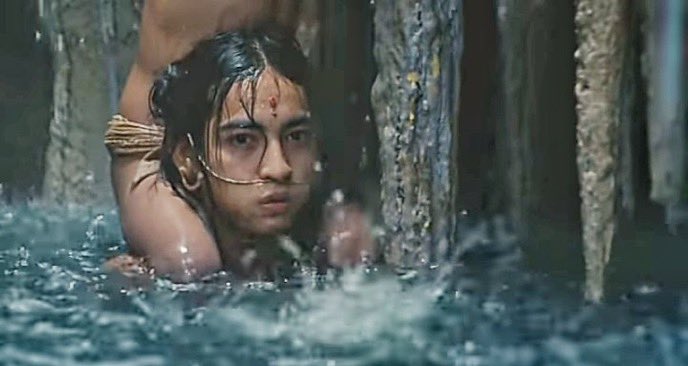
1. The Spanish Ships Appear on the Horizon
Few endings can change the scale of a story as quickly as the final revelation in Apocalypto.
Jaguar Paw reaches the beach with his remaining pursuers behind him.
Suddenly, everyone stops.
Ships sit offshore.
European newcomers are approaching the land, some carrying a large Christian cross.
For more than two hours, Zero Wolf and his warriors have represented the greatest threat Jaguar Paw can imagine. In seconds, their conflict seems almost insignificant beside the historical transformation implied by the people arriving from the sea.
The film does not show the conquest that will follow. It does not need to.
Jaguar Paw turns away.
When Seven asks about approaching the newcomers, he instead chooses the forest and the possibility of beginning again with his family.
The scene remains visually powerful precisely because viewers know history will not stop at that beach.
It is also where Apocalypto‘s historical controversy becomes impossible to ignore. Scholars have criticized the movie for compressing centuries of Maya history and for framing Spanish arrival alongside an already collapsing civilization.
Yet as a cinematic ending, the image is unforgettable.
Jaguar Paw has spent the movie escaping what appeared to be the end of his world.
Only at the shoreline does he—and the audience—realize that an even larger upheaval has just appeared on the horizon.