LINDSAY CLANCY TRIAL: PHONE SEARCHES AND PRIVATE NOTES PUT HER MENTAL STATE UNDER THE SPOTLIGHT
LINDSAY CLANCY TRIAL: PHONE SEARCHES AND PRIVATE NOTES PUT HER MENTAL STATE UNDER THE SPOTLIGHT
Day 13 of Lindsay Clancy’s murder trial focused heavily on digital evidence from her phone, including private notes, internet searches and messages recorded in the weeks before her three children died. The evidence is now becoming central to the courtroom battle over her mental state.
A SEARCH MADE FOUR DAYS BEFORE THE TRAGEDY
Massachusetts State Police investigator Timothy Chiappini testified that Clancy’s phone was used to search:
“Can you treat a sociopath?”
The search was made on January 20, 2023 — four days before the deaths of her children.
Investigators also described searches involving hallucinations, psychosis, bipolar disorder, insomnia and suicide methods.
The prosecution is presenting the digital evidence as part of its case.
The defence, however, argues that the searches and writings provide evidence of a rapidly deteriorating mental state consistent with postpartum psychosis and bipolar disorder.
HER PRIVATE NOTES REVEALED A STRUGGLE WITH MOTHERHOOD
Jurors also heard excerpts from a lengthy note Clancy wrote in October 2022.
In it, she described feeling depressed about not being able to parent her third child, Callan, in the same way she had parented her older children.
She also wrote about feeling less connected to the baby after stopping breastfeeding and expressed guilt over her parenting decisions.
The note is significant because it gives jurors a window into Clancy’s thoughts months before the January 2023 deaths.
THE DEFENCE HAS NOT DENIED WHAT HAPPENED
A critical point in the trial is that Clancy’s defence is not disputing that she was responsible for the deaths.
Instead, her attorneys argue that she was suffering from severe mental illness and postpartum psychosis and therefore should not be held criminally responsible.
That makes her mental state at the time of the killings one of the central issues for the jury.
 THE COURT HAS ALSO SEEN THE FAMILY BEFORE THE TRAGEDY
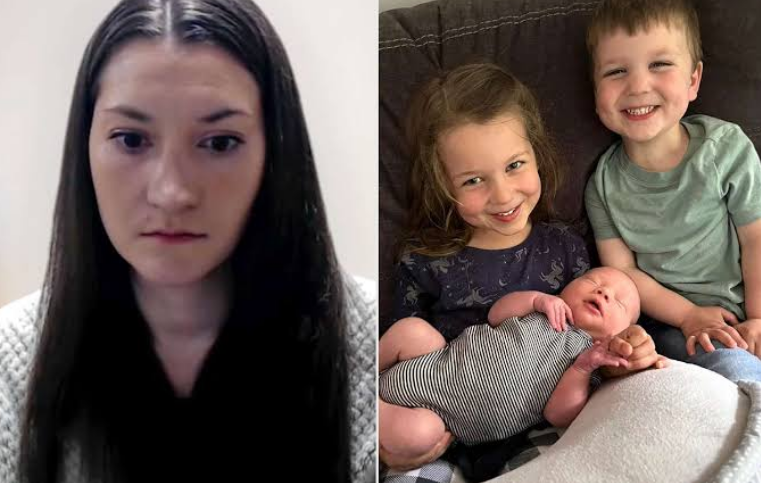
Evidence presented during the trial included photographs, text messages and video from the family’s life before January 24, 2023.
Messages exchanged between Clancy and her then-husband, Patrick, showed them discussing ordinary parenting responsibilities shortly before the killings.
One message from Patrick told her:
 “You’re a good mamma.”
Clancy responded with heart and smiling emojis.
The contrast between those ordinary exchanges and the events that followed has made the digital evidence particularly emotional.
A TRIAL ABOUT RESPONSIBILITY — NOT WHETHER THE CHILDREN DIED
Clancy has pleaded not guilty to three murder charges involving Cora, Dawson and Callan.
The prosecution and defence are presenting fundamentally different interpretations of the same history.
Prosecutors: the evidence shows criminal responsibility.
Defence: the evidence reflects severe psychiatric illness and postpartum psychosis.
Phone data: searches, messages and personal notes are now being examined by the jury.
The ultimate question: whether Clancy was legally responsible for her actions.
THE QUESTION JURORS MUST EVENTUALLY ANSWER
The phone evidence does not, by itself, resolve the central legal question.
A search for a particular phrase does not establish why someone made that search.
A private note does not automatically establish a psychiatric diagnosis.
And evidence of mental illness does not automatically eliminate criminal responsibility.
The jury must consider the entire body of evidence.
For now, however, one thing is becoming increasingly clear:
Clancy’s phone has become one of the most important windows into the weeks before January 24, 2023.
And the question surrounding those digital traces is no longer simply what she searched.
It is what those searches reveal about what was happening inside her mind at the time.
This post summarizes publicly reported courtroom evidence. The charges remain allegations, and the jury has not yet reached a verdict.