24 Years Later, There’s One Reason Sam Raimi’s Spider-Man Still Feels So Different
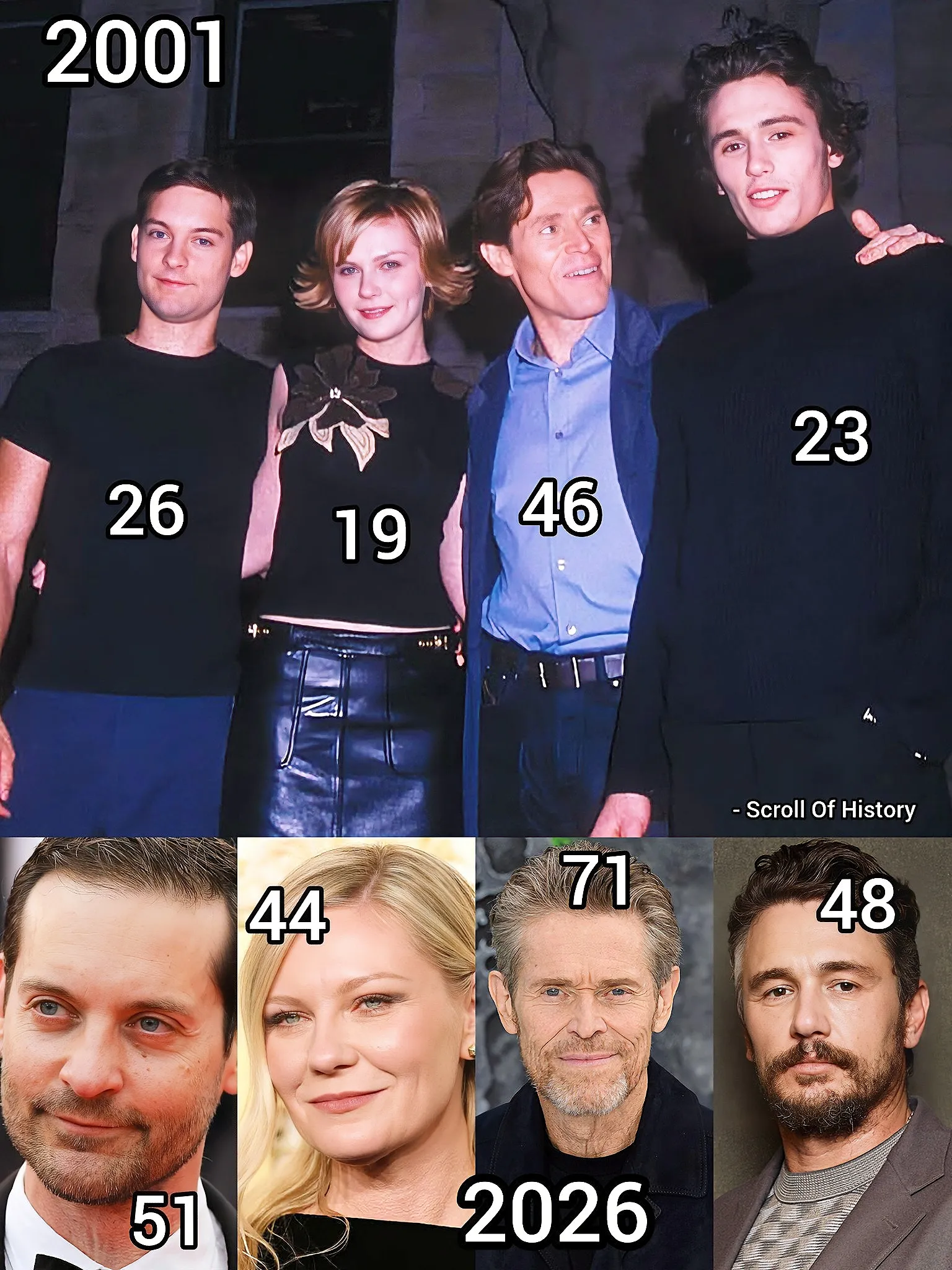
Before superhero movies became universes, timelines and multiversal events, Spider-Man was mostly about a lonely kid trying to do the right thing — and discovering that doing the right thing could cost him almost everything.
That may be why Sam Raimi’s 2002 film still feels strangely intimate today.
Yes, there was a genetically altered spider. There was a Green Goblin flying over Manhattan. There were collapsing buildings, explosions and one of the most recognizable superhero costumes ever put on screen.
But beneath all of that was something much smaller.
Peter Parker wanted the girl next door.
Harry Osborn wanted his father’s approval.
Norman Osborn wanted to prove that he was still powerful.
Mary Jane wanted a life that felt bigger than the one she had been given.
And almost every major conflict in the movie came from those four desires colliding.
Peter Parker Was Allowed to Be Awkward
Tobey Maguire’s Peter was not introduced as someone waiting to become cool.
He was uncomfortable before the spider bite, and in many ways he remained uncomfortable afterward.
That mattered.
The powers changed what Peter could do, but they didn’t instantly change who he was. He still hesitated. He still made bad decisions. He still struggled to say what he actually felt.
Even his greatest victory came with a loss.
By the end of the movie, Peter had defeated the Green Goblin and saved Mary Jane — but when she finally told him what he had wanted to hear, he walked away.
It was a superhero ending built around sacrifice rather than reward.
The Villain Wasn’t Really a Stranger
Willem Dafoe’s Norman Osborn worked because the movie gave Peter reasons to care about him before he became the Green Goblin.
Norman was Harry’s father.
He admired Peter.
He became part of the strange little family surrounding Peter’s life.
That made their final confrontation more than hero versus villain.
Peter wasn’t simply fighting someone who wanted to destroy New York.
He was fighting the father of his best friend.
And Norman knew exactly how much that would hurt.
Dafoe also brought an unusually physical quality to the role. He insisted on wearing the elaborate Green Goblin suit himself rather than leaving the performance entirely to a stunt double.
That commitment helped make Norman feel like a person even when the costume threatened to turn him into a comic-book abstraction.
Harry Was Already Becoming the Next Tragedy
One of the smartest things in the first film is that Harry Osborn’s story doesn’t end when Norman dies.
It begins.
Harry sees Spider-Man with his father’s body and reaches exactly the wrong conclusion.
From his perspective, the hero Peter has become is responsible for destroying his family.
Peter knows the truth.
Harry does not.
And Peter cannot explain it without revealing everything.
That single misunderstanding becomes the emotional engine for much of what follows in the trilogy.
The superhero conflict is inseparable from the friendship.
Mary Jane Was More Than Peter’s Reward
Mary Jane could easily have existed only as Peter’s dream girl.
Instead, Raimi’s film constantly reminds us that she has problems Peter cannot solve by putting on a mask.
Her home life is painful.
Her relationships are unstable.
She wants to act, but adulthood turns out to be harsher than she expected.
Peter idealizes her from across the street, but the audience gradually sees something Peter has to learn himself:
Mary Jane is not the perfect girl he imagined.
She is another frightened young person trying to figure out who she is.
That makes their relationship far messier — and far more believable.
Even the Movie’s Most Famous Moments Were Surprisingly Practical
One of the enduring charms of Spider-Man is how tactile it feels.
The famous cafeteria moment in which Peter catches Mary Jane and an entire tray of food was not simply created in post-production. Maguire actually performed the trick, with adhesive helping secure the tray, and the shot reportedly required 156 takes.
The upside-down kiss was no easier. Rainwater repeatedly ran into Maguire’s nose while he was hanging inverted, making the romantic moment far less glamorous to film than it looks onscreen.
Those details are minor, but they help explain something about the movie as a whole.
Even its fantasy had weight.
It Arrived Before the Superhero Template Was Fully Written
When Spider-Man opened in May 2002, there was no Marvel Cinematic Universe.
There was no expectation that every scene might be setting up another movie five years later.
The film had sequels in mind, but it could still concentrate almost completely on Peter Parker’s immediate world. Contemporary retrospectives continue to credit Raimi’s movie with helping usher in the modern wave of superhero cinema.
And yet, ironically, it feels unlike much of the genre it helped create.
The stakes were often personal before they were global.
Peter wasn’t trying to save a universe.
He was trying to save Aunt May.
He was trying to protect Mary Jane.
He was trying not to lose Harry.
And he was trying to live with the fact that one selfish decision had already cost him Uncle Ben.
That May Be Why People Still Return to It
There have been more Spider-Men since.
The technology has improved.
The action has grown larger.
The mythology has expanded far beyond anything the 2002 film attempted.
But Raimi’s first Spider-Man continues to hold a particular place in the genre because it understood something simple:
The costume only matters if you care about the person inside it.
Peter Parker’s powers made him extraordinary.
His guilt, loneliness, love and mistakes made him recognizable.
Twenty-four years later, that may still be the movie’s greatest special effect.