Teachers Walked Into a Mystery Meeting — Then Opened Envelopes Worth More Than $9,000 Each

A group of California teachers arrived at what seemed like an ordinary district meeting without knowing why they had been called in.
Minutes later, they were holding checks for $9,161.70.
For 100 educators in the Ross Valley School District in Marin County, the surprise on Aug. 13 came from local resident Maja Kristin, who gave $1 million directly to teachers after learning how poorly the district was funded compared with the wealth surrounding it.
The gift quickly turned a conference room meeting into an emotional celebration, with teachers cheering, thanking Kristin and imagining what the unexpected money could mean for their families.
For some, it was far more than a bonus.
“It’s life-changing,” teacher Sydney Dean said.
A Meeting With a Secret
The teachers had been asked to gather on Thursday, Aug. 13, but they had not been told the reason for the meeting.
Once everyone was assembled, Kristin stood before the group and asked the principals in the room to distribute envelopes to each teacher.
She explained that ordinary citizens could choose to support educators directly.
Then the teachers opened the envelopes.
Inside each one was a check for $9,161.70. Altogether, Kristin had committed $1 million to the district’s teachers.
The size of the gift was remarkable on its own. But Kristin’s reason for making it centered on something she had recently discovered about public education in her community.
Marin County has been recognized as one of the wealthiest counties in the United States. Yet Ross Valley School District sits near the opposite end of the spectrum when it comes to school funding.
Kristin said she learned that the district ranked in the bottom 4% for funding among California school districts. Its teachers were also the lowest paid in Marin County.
That contrast disturbed her.
She described the situation as an “injustice” and decided she wanted to do something tangible rather than simply express concern.
Wealthy Homes, but a Limited Tax Base
The funding problem may seem surprising in a community where property values can be extremely high.
Ross Valley Superintendent Tyler Graff explained that the district’s circumstances are shaped partly by the way California property taxes work.
Many local residents have owned their homes for long periods. Although the market value of those properties may have risen dramatically, their assessed values can remain much lower.
Graff said that dynamic, connected to California’s Proposition 13, has kept the district’s tax base lower than those of some other districts in Marin County.
The result is an unusual financial contrast: an affluent area where public school educators can still find themselves working under significant funding constraints.
For Kristin, learning about that gap helped inspire the million-dollar donation.
For the teachers receiving it, however, the meaning of the money became much more personal.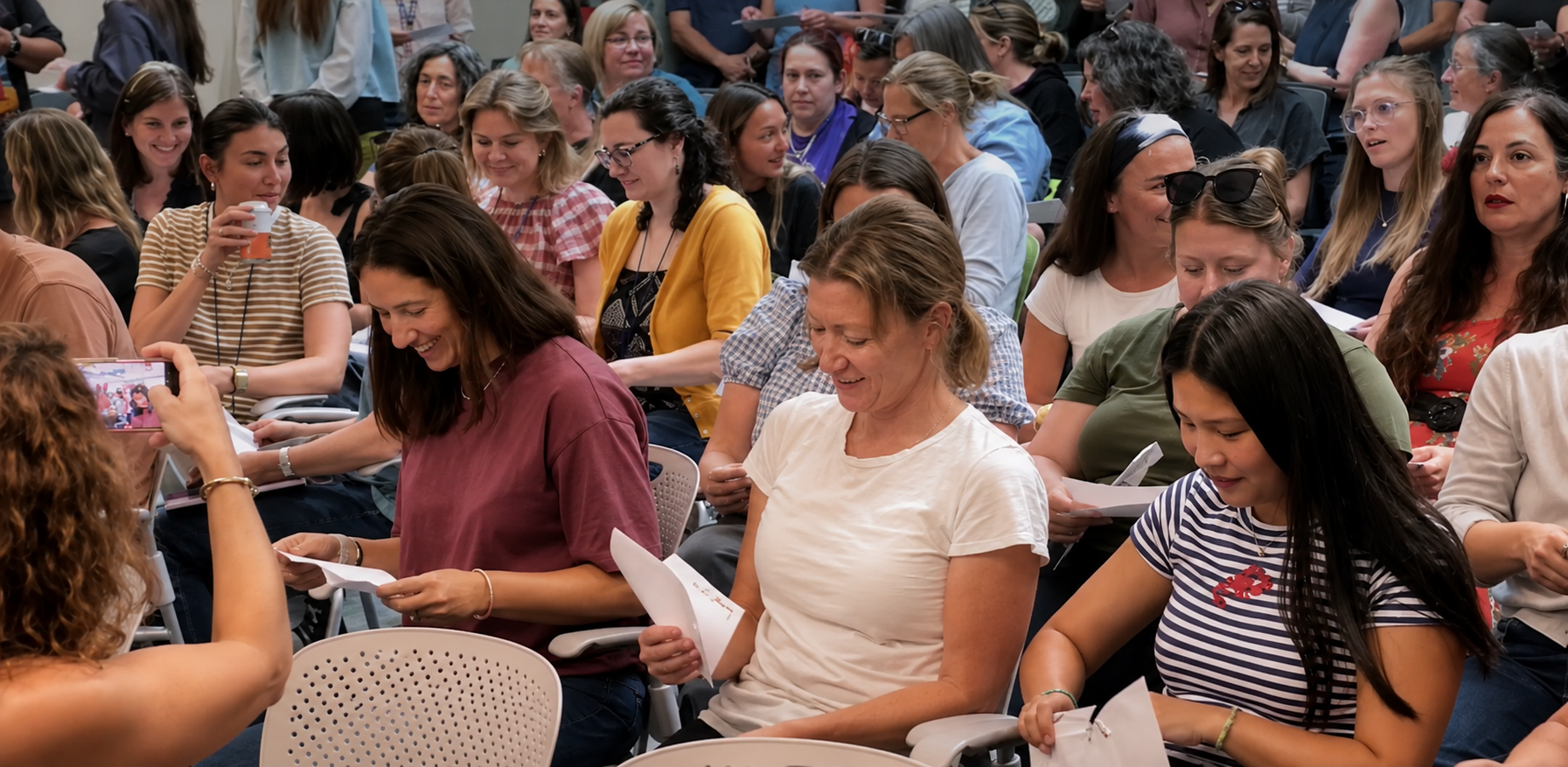
One Teacher Thought About Her Children
After the surprise was revealed, teachers began sharing what an additional $9,000 could change in their everyday lives.
Anna Schnell immediately thought about her three children.
She explained that there are activities her children want to participate in that her family cannot always afford on her teaching salary.
The bonus, she said, could allow her to say yes to some of those opportunities.
For Schnell, that possibility made the gift “really exciting and huge” for her family.
Her reaction highlighted what can be easy to overlook when discussing school budgets and teacher compensation in abstract terms.
A salary affects far more than a classroom.
It can determine whether a parent can afford extracurricular activities for a child, handle an unexpected expense or make choices that other families may take for granted.
Teacher Amber Bunnell-Wild was struck by another part of the donation: Kristin was not someone whose child she had taught.
She described it as an unusually beautiful gesture from a person she did not even know personally.
That distinction made the moment especially meaningful.
The checks were not thank-you gifts from individual families to specific teachers. They were a community member’s broad statement of support for public educators as a group.
The Room Erupted in Celebration
The teachers reportedly cheered when they realized what was happening.
Afterward, they lined up to thank Kristin personally.
Eric Brandt said it felt meaningful to know that people within the community wanted to support both public education and the educators responsible for carrying it out.
For teachers accustomed to conversations about budgets, shortages and salaries, the meeting offered a very different message.
Someone had learned about their financial situation and decided their work deserved direct recognition.
Kristin, however, does not want her contribution to be the end of the story.
She hopes it becomes a beginning.
She Wants Other Residents to Follow
Kristin said part of her goal was to draw attention to the district’s funding challenges and encourage other Marin County residents who care about public education to become involved.
That involvement, she suggested, does not have to look exactly like her million-dollar gift.
People could contribute directly, support foundations or pursue political action aimed at improving public school funding.
Her hope was that news of the teachers’ surprise would spread and motivate others to respond in whatever way they could.
The scale of Kristin’s donation makes the story extraordinary. Most people will never be in a position to hand out nearly $10,000 checks to 100 teachers.
But the reactions inside that meeting showed why the gesture resonated so strongly.
For one educator, the money meant new opportunities for her children.
For another, it was moving simply to know that a stranger valued her work enough to help.
And for the district as a whole, the moment drew attention to a contradiction that might otherwise remain hidden behind Marin County’s reputation for wealth.
One million dollars could not permanently solve the structural questions surrounding school funding.
But on one August afternoon, it gave 100 teachers something immediate and unmistakable: financial breathing room, recognition and the knowledge that someone in their community had been paying attention.