Bryce Dallas Howard Was Born Into Hollywood — But Spent Years Trying Not to Use Her Famous Name
Bryce Dallas Howard could have had one of the easiest introductions to Hollywood imaginable.
Her father was Ron Howard.
By the time Bryce was growing up, he had already lived two lives that most people would consider extraordinary careers on their own: first as one of America’s most recognizable child actors, and then as an Oscar-winning filmmaker.
Movie sets were not mysterious places to her.
Famous actors were not mythical creatures.
The entertainment industry was quite literally part of the family.
And yet, when Bryce wanted to become an actress herself, her parents did something surprising.
They told her no.
Ron Howard Knew Exactly What Child Stardom Could Cost
Ron Howard had started working professionally when he was still a little boy.
That experience was precisely why he and his wife, Cheryl, drew a firm line with their daughter.
Bryce has said that although she would have happily acted professionally when she was younger, her parents would not support her becoming a child actor. Instead, they encouraged her to get ordinary jobs and life experience. She worked weekends at a deli among other jobs.
Ron later explained that his decision came partly from knowing firsthand how complicated life could become for a working child.
He also worried that Bryce would immediately be compared with the enormously famous child character he had once played, Opie Taylor on The Andy Griffith Show.
So Bryce Dallas Howard grew up surrounded by Hollywood while being deliberately kept from becoming one of its child stars.
Years later, she would become famous anyway.
But first, she tried something else.
She tried hiding the name.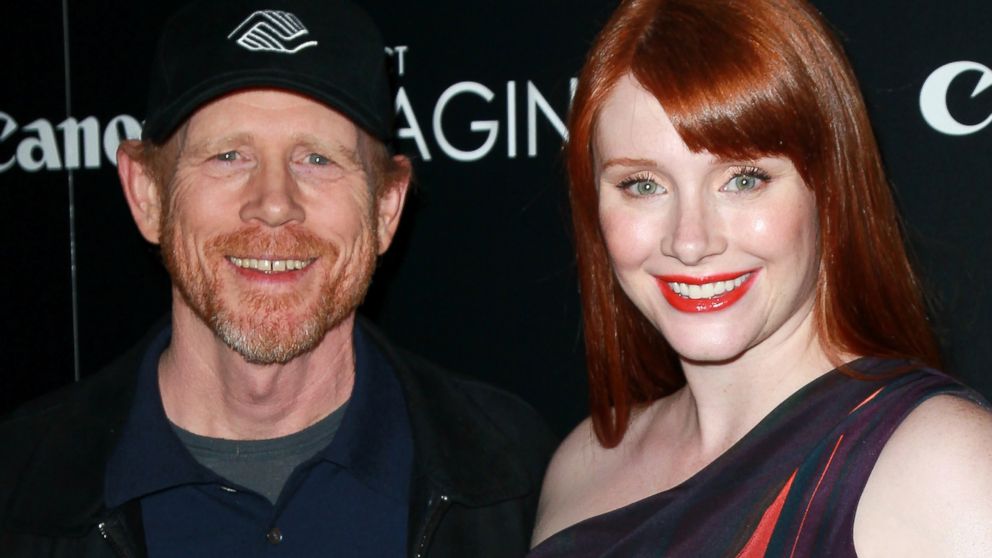
At NYU, She Became “Bryce Dallas”
Howard studied acting at New York University’s Tisch School of the Arts.
But she did not initially want her classmates thinking about Ron Howard every time she entered a room.
So she dropped the surname.
She performed as Bryce Dallas and even applied to college under that name, later explaining that she did not want to trade on her father’s status.
It is a fascinating decision in hindsight.
Hollywood is full of people trying desperately to get the right person to recognize their last name.
Bryce had one of the most recognizable names available to her — and was trying to make people forget it.
Eventually, a conversation with her father changed her thinking.
Ron told her he was proud of the family legacy.
Bryce realized she was proud of it, too.
She reclaimed Howard.
But the role that changed everything would not come from her father.
It came from a director sitting in a theater audience.
M. Night Shyamalan Saw Her Once — And Didn’t Ask for an Audition
Before movies made Bryce Dallas Howard famous, she was working onstage in New York.
In 2003, she appeared as Rosalind in a production of Shakespeare’s As You Like It.
M. Night Shyamalan saw her perform.
He had been considering Kirsten Dunst for the lead role in his next movie, The Village. But after seeing Howard onstage, Shyamalan became convinced that he had found Ivy Walker.
When asked whether he wanted Howard to audition, his answer was essentially no.
He had seen what he needed to see.
Shyamalan later explained that he felt a rare kind of “magic” watching her perform.
Howard suddenly found herself starring opposite actors including Joaquin Phoenix, Adrien Brody, Sigourney Weaver and William Hurt.
She was 23 when The Village arrived in 2004.
One year earlier, she had still been preparing for the possibility that acting might not sustain her.
Then she was leading a major studio movie.
She Could Have Spent the Next 20 Years Playing the Same Woman
Howard’s breakthrough suggested a fairly obvious Hollywood lane.
Red hair.
Period costumes.
Romantic drama.
Ethereal heroine.
She did not stay there.
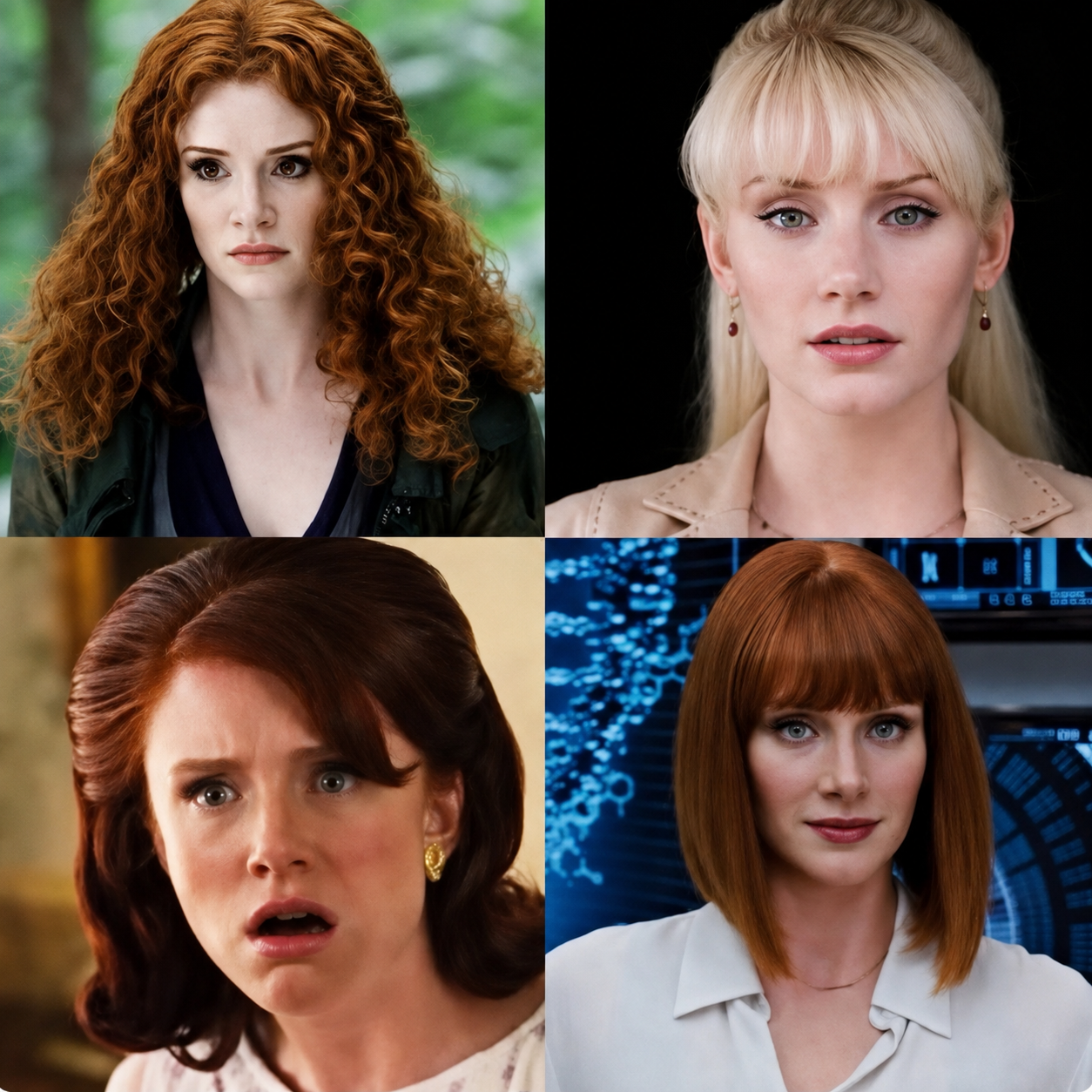
She played Gwen Stacy in Spider-Man 3.
She replaced Rachelle Lefevre as Victoria in The Twilight Saga: Eclipse.
Then came one of the least sympathetic characters of her career: Hilly Holbrook in The Help.
In Black Mirror’s “Nosedive,” she became Lacie Pound, a woman smiling herself into psychological collapse while desperately chasing social approval.
And then Jurassic World turned her into something else entirely:
a blockbuster franchise star.
The trilogy placed Howard opposite Chris Pratt and eventually brought her into the same cinematic world as original Jurassic Park stars Laura Dern, Sam Neill and Jeff Goldblum.
But becoming the face of a billion-dollar franchise brought another side of Hollywood into focus.
Success Did Not Mean Hollywood Stopped Trying to Change Her
Howard has spoken openly about being asked to change her body for roles.
She later said that during the Jurassic World era, discussions about her weight continued behind the scenes and that director Colin Trevorrow pushed back when the subject came up again before Jurassic World Dominion.
By the time she made Argylle, Howard had changed the conversation.
She said she told director Matthew Vaughn before filming that if he wanted a significantly smaller version of her, he should hire another actor.
His answer was that he was hiring her.
It was an unusually simple statement.
But it fits surprisingly well with the story of her career.
First she tried not to be defined by her father’s name.
Then Hollywood repeatedly tried to decide what kind of actress she was supposed to be.
Eventually, she became much more comfortable defining herself.
And increasingly, she was doing it from the other side of the camera.
Then She Started Sitting in the Director’s Chair
The Howard family story contains a remarkable bit of symmetry.
Ron Howard started as an actor before becoming a filmmaker.
Bryce Dallas Howard began moving in the same direction.
She directed episodes of The Mandalorian, entering one of cinema’s most famous fictional universes not as the face onscreen, but as the person responsible for telling the story. StarWars.com lists her among the series’ directors, and she later directed “Return of the Mandalorian,” a notable episode of The Book of Boba Fett.
She also directed an episode of Star Wars: Skeleton Crew.
And her interests behind the camera have gone well beyond spaceships and franchises.
Her documentary work includes Dads and, in 2025, Pets, a feature-length Disney+ documentary exploring relationships between animals and the people who love them.
Suddenly, the trajectory becomes difficult to ignore.
The daughter who once worried that her famous last name would define her had become a filmmaker in her own right.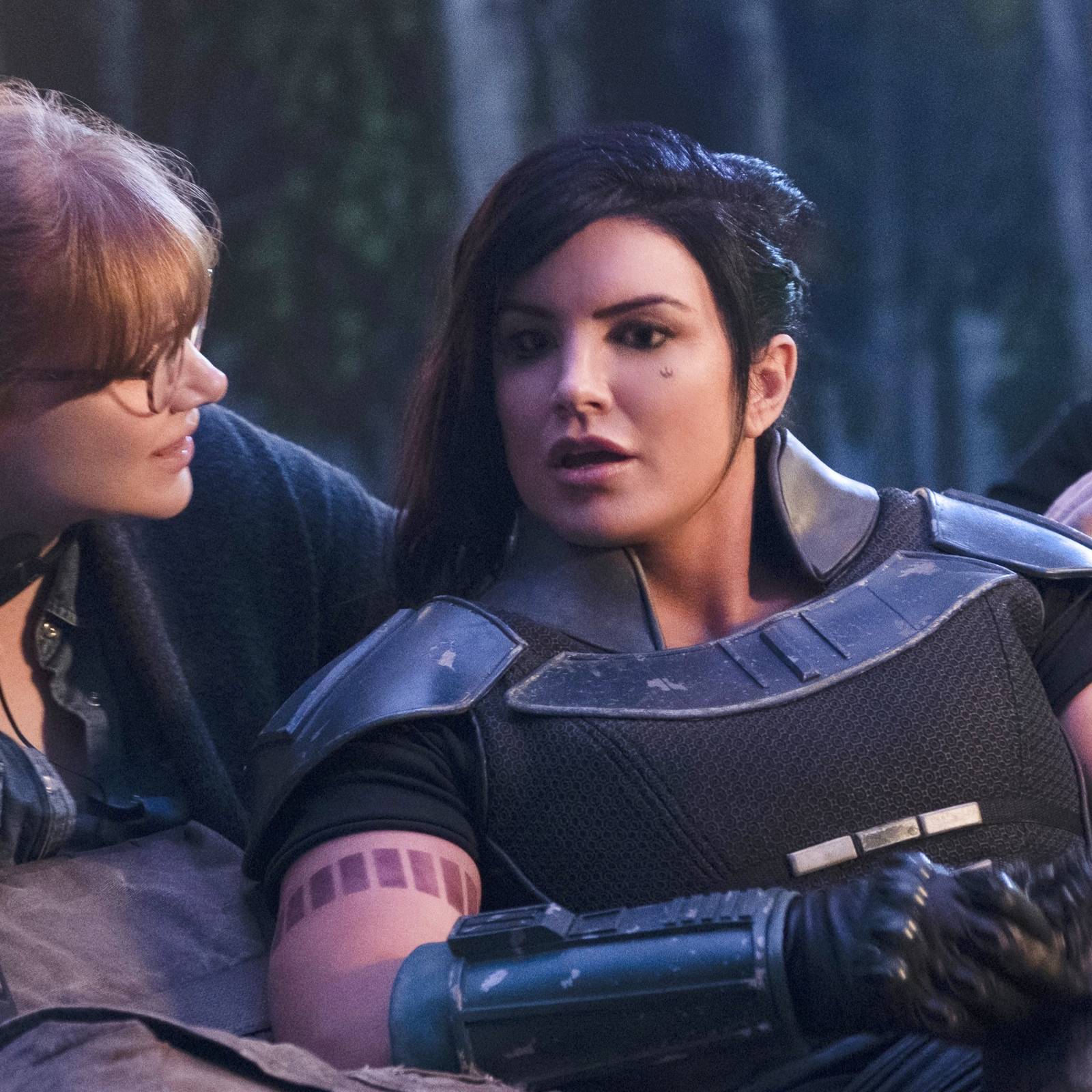
The “Nepo Baby” Label Tells Only the Beginning of the Story
It would be absurd to pretend Bryce Dallas Howard did not grow up with extraordinary access.
She has acknowledged that privilege herself, describing her proximity to power in Hollywood since childhood as immense.
Her story is not compelling because she secretly had no advantages.
She did.
The interesting part is what happened after that.
Her parents deliberately kept her from becoming a professional child actor.
She tried to remove the family name when she began establishing herself.
Her major breakthrough came when another filmmaker saw her performing onstage.
She spent the following decades moving between unusual character roles, giant franchises and eventually directing.
That does not erase where she came from.
It makes what she chose to do with it more interesting.
In the End, She Became More Like Her Father Than She Expected
There is a neat irony in Bryce Dallas Howard’s career.
As a young actress, she was so worried about being perceived only as Ron Howard’s daughter that she temporarily stopped using his surname.
Today, she has nothing to hide from.
She has been Ivy Walker.
Gwen Stacy.
Victoria.
Hilly Holbrook.
Lacie Pound.
Claire Dearing.
She has stood in front of enormous cameras on blockbuster sets.
And now she increasingly stands behind them.
Perhaps the most interesting part of her famous last name is not that it opened doors.
It is that Bryce Dallas Howard spent years trying to establish who she was before finally realizing she did not need to run away from where she came from.
She could carry the name.
And still make it her own.