COULD NEW DNA ANALYSIS FINALLY BREAK OPEN THE MADELEINE MCCANN CASE?
COULD NEW DNA ANALYSIS FINALLY BREAK OPEN THE MADELEINE MCCANN CASE?
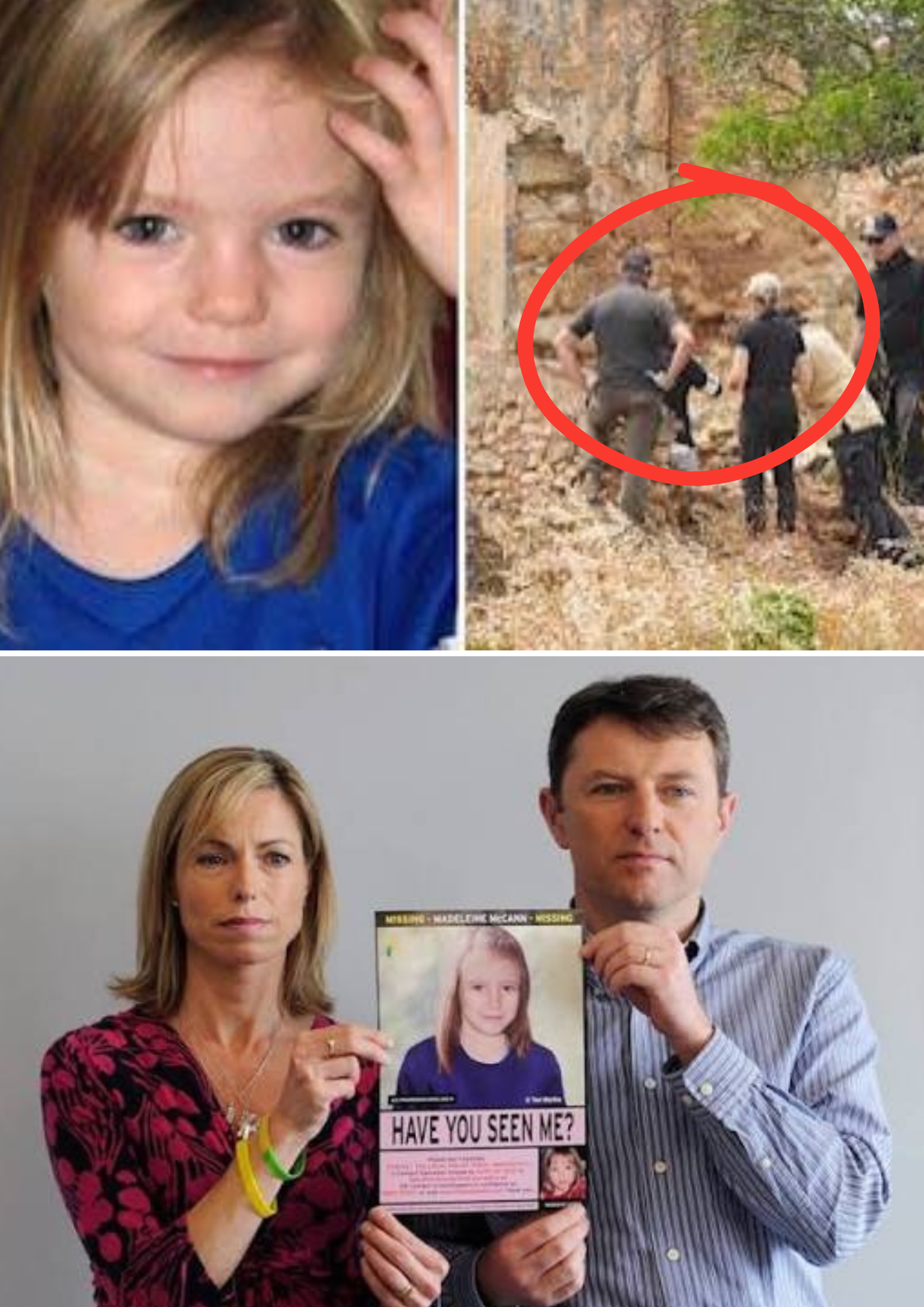
Nearly two decades after 3-year-old Madeleine McCann disappeared from a holiday apartment in Portugal, investigators are still searching for answers. A new A&E report examines whether advances in DNA analysis and forensic technology could help resolve questions that have remained unanswered since 2007.
PRAIA DA LUZ, Portugal — On the night of May 3, 2007, a family vacation became one of the world’s most enduring missing-child mysteries.
Madeleine McCann, a British girl just three years old, disappeared from her family’s holiday apartment in Praia da Luz while her parents were dining nearby with friends.
Her disappearance triggered an international investigation, thousands of reported sightings and years of speculation.
Nearly 20 years later, however, Madeleine’s whereabouts remain unknown.
And now, renewed attention is turning to one question:
Could modern DNA technology uncover something investigators could not detect in 2007?
 THE NIGHT MADELEINE DISAPPEARED
Madeleine and her younger twin siblings were staying with their parents, Kate and Gerry McCann, at a holiday apartment in Portugal’s Algarve region.
According to the A&E account, the adults had been dining at a nearby restaurant and regularly checking on the children.
The apartment’s patio doors had been left unlocked, allowing the adults to enter and check on the children.
At approximately 10 p.m., Kate McCann discovered that Madeleine was missing.
Police were called that night.
Within hours, the search expanded dramatically.
But Madeleine was nowhere to be found.
A CASE THAT NEVER DISAPPEARED
What followed became an extraordinary international investigation.
Search teams examined the surrounding area.
Investigators interviewed witnesses.
Authorities received countless alleged sightings from around the world.
And Madeleine’s photograph became one of the most recognizable images associated with a missing-child case.
But despite years of investigation, no definitive evidence has established what happened to her after she disappeared.
A&E notes that the case remains unsolved nearly two decades later.
 THE SUSPECT WHO CHANGED THE INVESTIGATION
In recent years, investigators have increasingly focused on Christian Brueckner, a German convicted sex offender who was living in Portugal’s Algarve region around the time Madeleine disappeared.
German authorities have said they believe Madeleine is dead and that Brueckner was responsible.
Portuguese authorities formally made him an arguido, or formal suspect, in 2022.
But there is a crucial distinction:
Brueckner has never been charged with Madeleine’s disappearance.
He has also denied involvement.
That means the central mystery remains legally unresolved.
WHY DNA STILL MATTERS
Nearly 20 years after a disappearance, investigators face an obvious problem: evidence can deteriorate, disappear or become contaminated.
But forensic science has changed dramatically since 2007.
Modern DNA techniques can sometimes extract usable genetic information from extremely small or degraded biological samples.
That has fueled renewed interest in whether evidence collected during the original investigation could potentially be examined using technologies unavailable nearly two decades ago.
The possibility is intriguing — but it is important not to confuse potential new analysis with a confirmed breakthrough.
There has been no publicly established DNA result proving what happened to Madeleine.
THE 2025 SEARCH IN PORTUGAL
The case has not simply remained a historical investigation.
Portuguese and German police conducted a new search operation in Portugal’s Algarve region in June 2025, looking for potential evidence connected to Madeleine’s disappearance.
Reuters reported that the searches took place from June 3 through June 5.
The renewed operation demonstrated that investigators were still pursuing physical evidence years after the original disappearance.
But the searches did not publicly produce a definitive answer about Madeleine’s fate.
BRITISH POLICE ARE STILL INVESTIGATING
Another important point has been repeatedly obscured by misinformation online.
Britain’s Metropolitan Police has not abandoned the Madeleine McCann investigation.
Reuters reported that Operation Grange, the Met’s dedicated investigation into Madeleine’s disappearance, remained active and continued to receive government funding.
The investigation has been active since 2011.
That means British detectives remain involved even though Madeleine disappeared in Portugal and German and Portuguese authorities have also pursued the case.
THE DNA QUESTION IS BIGGER THAN ONE SAMPLE
When people hear “new DNA analysis,” it can sound as though investigators have discovered a single piece of evidence that will immediately solve the case.
Real forensic investigations are rarely that simple.
DNA evidence must be:
- properly recovered,
- scientifically analyzed,
- compared against relevant profiles,
- assessed for contamination or secondary transfer,
- and interpreted within the larger body of evidence.
Even a DNA match would need to be understood in context.
And a failed test would not necessarily prove that a particular person was not involved.
That is why investigators have continued examining the entire evidentiary record rather than relying on one forensic technique.
THE MOST IMPORTANT FACT MAY BE WHAT WE STILL DON’T KNOW
Despite years of headlines, theories and alleged sightings, several fundamental questions remain unanswered.
Where did Madeleine go after leaving the apartment?
Was she taken by someone?
Did she leave the apartment voluntarily or was she removed?
What happened after she disappeared?
And can investigators still recover physical evidence capable of answering those questions?
Those are the questions that continue to drive Operation Grange and the international investigation.
A CASE THAT HAS OUTLIVED GENERATIONS OF TECHNOLOGY
Madeleine disappeared in 2007.
At that time, forensic technology was already sophisticated — but today’s investigators have access to tools that were either unavailable or far less developed.
Advanced DNA analysis, improved digital investigation techniques and increasingly sophisticated forensic databases have transformed cold-case investigations around the world.
That is why investigators and forensic specialists continue to revisit older cases.
Evidence that once appeared useless may not necessarily remain useless forever.
BUT THERE IS STILL NO CONFIRMED SOLUTION
The most important distinction is this:
There is currently no publicly confirmed DNA breakthrough proving what happened to Madeleine McCann.
Christian Brueckner remains a suspect, not a convicted perpetrator in Madeleine’s case.
German authorities believe she is dead, but Madeleine’s body has never been found.
And British police continue to investigate.
After nearly two decades, the case remains open.
THE QUESTION THAT REFUSES TO GO AWAY
For Kate and Gerry McCann, the disappearance of their daughter is not an old mystery.
It is a missing child who was three years old when she vanished.
For investigators, it is one of the most challenging international missing-person investigations ever undertaken.
And for the public, it remains a case defined by one haunting question:
What happened to Madeleine McCann on the night of May 3, 2007?
New technology may offer investigators another opportunity to examine evidence that has already been studied countless times.
But until that evidence produces something definitive, the mystery remains.
Madeleine disappeared nearly 20 years ago.
The investigation is still alive.
And investigators are still looking for the evidence that could finally tell the world what happened to her.